







Building Equipment
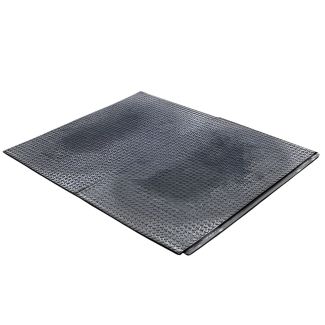
HERMEQ supplies building equipment for the support, access, lifting and handling work on a construction site. Adjustable steel props, known on site as acrow props, give temporary support to walls and ceilings, and push-pull props hold formwork and falsework at an angle. Kerb stone handles lift kerbs and other heavy units by hand or from a crane hook. Builders buckets carry mortar, water and debris for hand work. Builders trestles take scaffold boards to form a low working platform, with stabilisers and safety posts to make it secure. Hole covers are slim, highly visible non-slip plastic boards fixed over temporary openings in a floor.








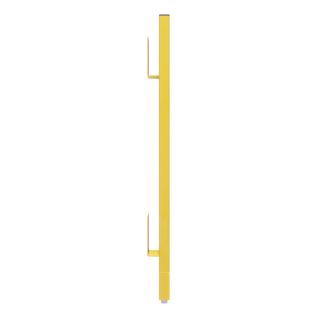
Acrow props, push-pull props and steel support
The choice of support follows the direction of the load: a vertical prop carries weight from above, a raking prop holds a face against sideways movement, and a steel beam takes over the load once the opening is formed.
Adjustable steel props
Adjustable steel props, known across the trade as acrow props or building props, carry loads that bear straight down: floors, ceilings, beams and the wall above an opening while it is formed. The full range of sizes and fittings is in the acrow props category.
Push-pull props
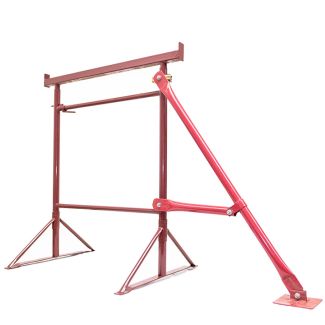
Push-pull props work at an angle, holding a face in position where the load pushes sideways. They brace wall formwork plumb during a pour, hold precast and tilt-up panels until they are tied in, back-prop structures and support walls during demolition or alteration work.
U-heads, PropMate lintel supports and bracing couplers
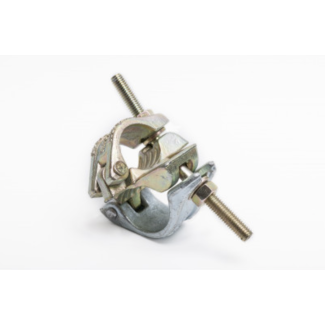
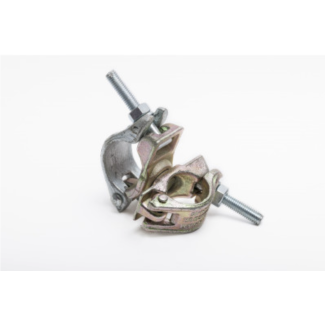
U-heads for props, in fixed and adjustable versions, sit on a steel prop or system scaffold to hold a timber beam or bearer securely under a soffit. The PropMate lintel support fits an adjustable steel prop to carry brickwork above an opening while the old lintel comes out or a new one goes in. Where props stand in a run, prop bracing couplers tie them to scaffold tube at right angles, and prop swivel couplers do the same at any angle.
RSJ steel beams
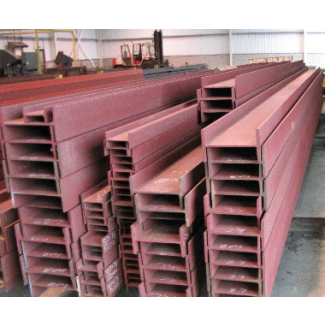
RSJ steel beams are the permanent steel that spans an opening once the wall above is propped, such as when a load-bearing wall is knocked through or a wide opening is formed. The range carries a 127 x 76 x 13 section cut to any length. The engineer's design confirms the section and bearings for each opening, and the props stay in until the beam is bedded and packed.

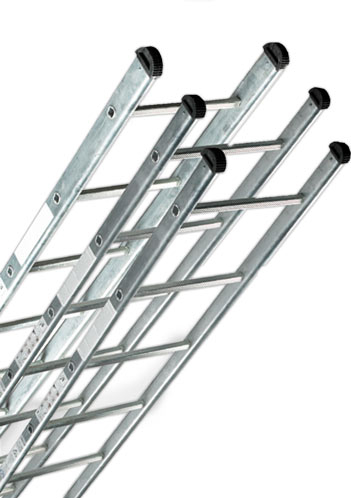
Building equipment for access and work at height
The range covers four means of access, and the right one depends on how long the access is needed, how many people use it and whether they carry tools and materials as they go.
Steel scaffold ladders and aluminium extension ladders
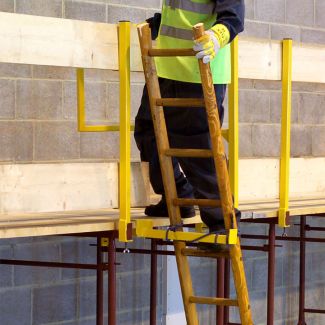
A ladder suits short-duration work and access to a scaffold lift where a stairway would be out of proportion to the task. Steel scaffold ladders are the heavier choice for a fixed access point tied into a scaffold. For a ladder that moves around the job, professional aluminium extension ladders suit general trade use. The industrial aluminium extension ladders are tested to loads above those the standard requires, and all three are tested to EN 131.
Temporary stairways
A temporary stairway replaces a ladder when a route is used all day, by several trades, or by people carrying materials. The modular steel stairway is built from connecting units to climb between floors, up embankments or out of excavations, and it fixes to scaffold or a concrete slab. The temporary aluminium stairway is light enough to carry in by hand and erect in minutes where plant cannot reach the work area.
Staging boards and handrail walkways
Staging boards, which many sites still call Youngman boards, span between trestles or other supports to form a platform or walkway across a span. The handrail and board walkway adds aluminium handrails on one or both sides for a guarded route, and staging posts and universal handrail posts take scaffold boards as toe boards and tube as the handrail.
Builders trestles and trestle accessories
Builders trestle tables are set to the height the work needs and carry scaffold boards as a low platform for bricklayers, plasterers and carpenters. A trestle run is made safe with its accessories. Trestle stabilisers steady each trestle against tipping, and trestle safety posts fix to the trestle to hold boards as a guardrail and toe board. A trestle gate controls the point of access, a ladder bracket gives a fixed climb onto the deck, and S brackets lock overlapping boards together. The full range is in the builders trestles category.
Stair guard posts, hole covers and scaffold lights
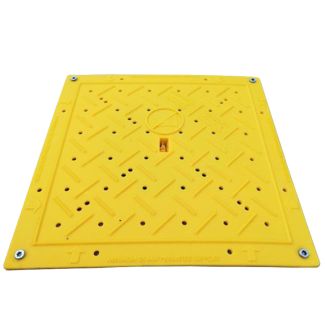
Open stairwells and service holes need guarding as soon as they are formed. Stair guard safety posts take scaffold boards to form temporary edge protection around a stairway, and each post works as a corner or a straight-run post. Hole covers close service openings in a floor slab, in sizes for small and larger holes. Scaffold lights clamp to scaffold tube and flash to mark poles and corners in poor light.
Kerb lifters and construction site lifting equipment
Heavy units on a site are moved by hand, from a crane hook or on the forks of a forklift or telehandler, and the range has a lifting tool for each method.
Kerb stone handles and lifters
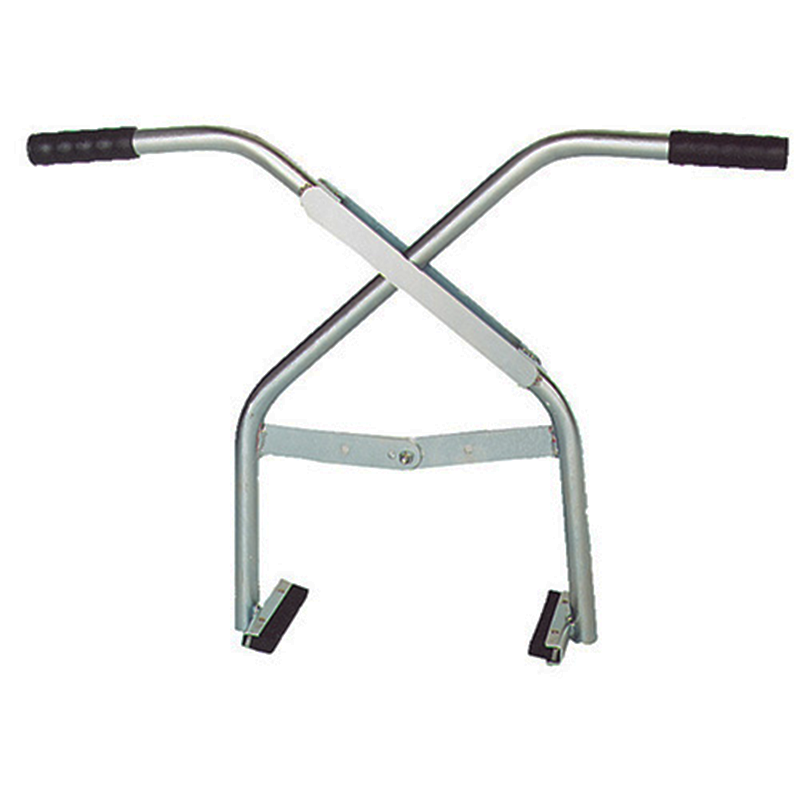
A manual kerb stone handle is a clamp carried by hand, for a groundworks gang setting kerbs to line and level along a footpath or road edge. The multipurpose handle takes heavier kerbs, and the universal kerb stone lifter also grips steps, edging and corner units. For the heaviest units, the crane lift kerb stone handle has a lift ring for a crane or hoist hook, and the range handles units up to 500 kg.
Fork mounted jibs and roof truss jibs
A fork mounted jib slides onto the forks of a forklift or telehandler and turns the machine into a lifting appliance, with an articulated, extendable arm for tall and awkward loads. The roof truss jib is a quick hitch attachment for lifting roof trusses up to the wall plate and placing them from the telehandler already on site.
Gas bottle forklift support
The gas bottle forklift support is used to load and unload gas bottles with a forklift truck, so they are not lifted by hand.
Mortar tubs, rota trolleys and builders buckets
Mortar, plaster and waste move in tubs, trolleys or buckets, depending on the quantity and the route between the mixer and the work.
Mortar tubs
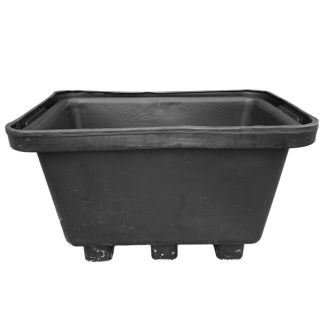
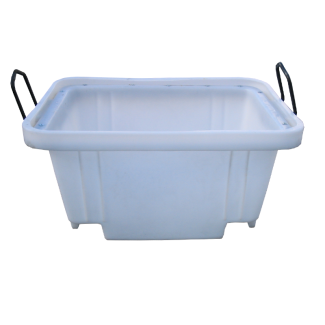
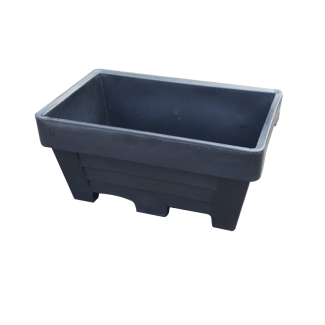
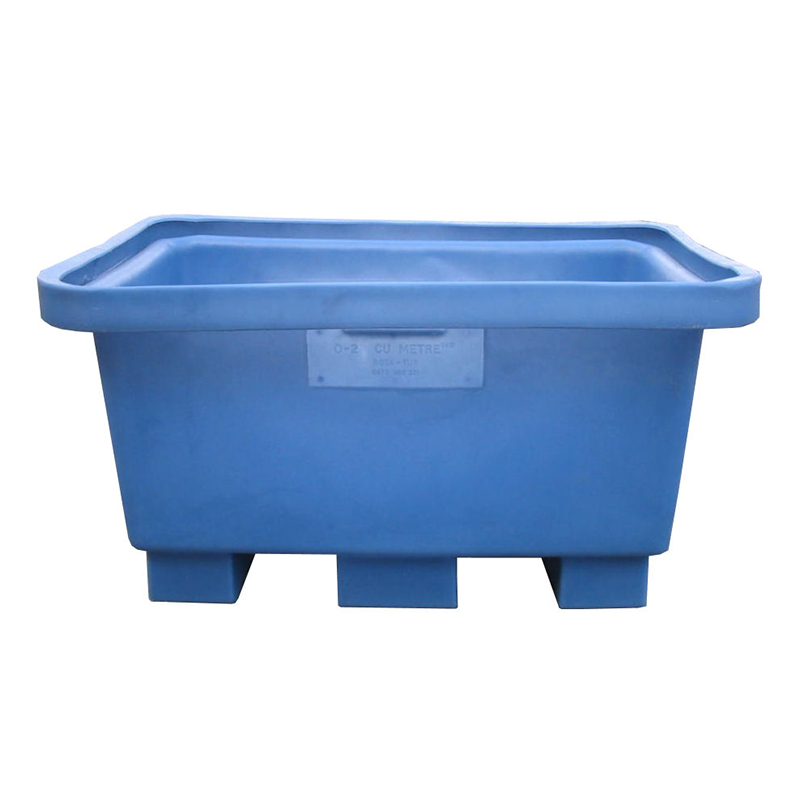
Mortar tubs hold mortar, plaster and concrete for a gang, store materials on a scaffold lift or loading bay, and collect waste for the skip. Sizes run up to 500 litres, and the twin skin tub has a double polymer wall for the heaviest industrial use. Mortar tub liners stop mortar sticking to the sides of the tub and help it hold its moisture for longer. The full range is in the mortar tubs category.
Rota trolleys
Rota trolleys are wheeled polyethylene containers on castors for moving materials and waste across a finished slab or floor, inside a building or on a level where a forklift cannot work.
Builders buckets
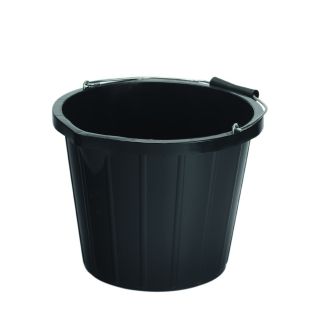
Builders buckets are for hand work at the face: carrying mortar to the spot board, water for mixing, or debris out of a room.
Boot wash stations and site welfare
Boot cleaning is sized to the number of people coming off the ground at once and the space at the cabin door.
Boot wash tanks
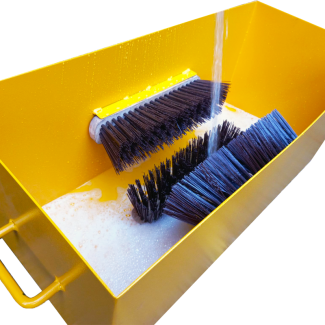
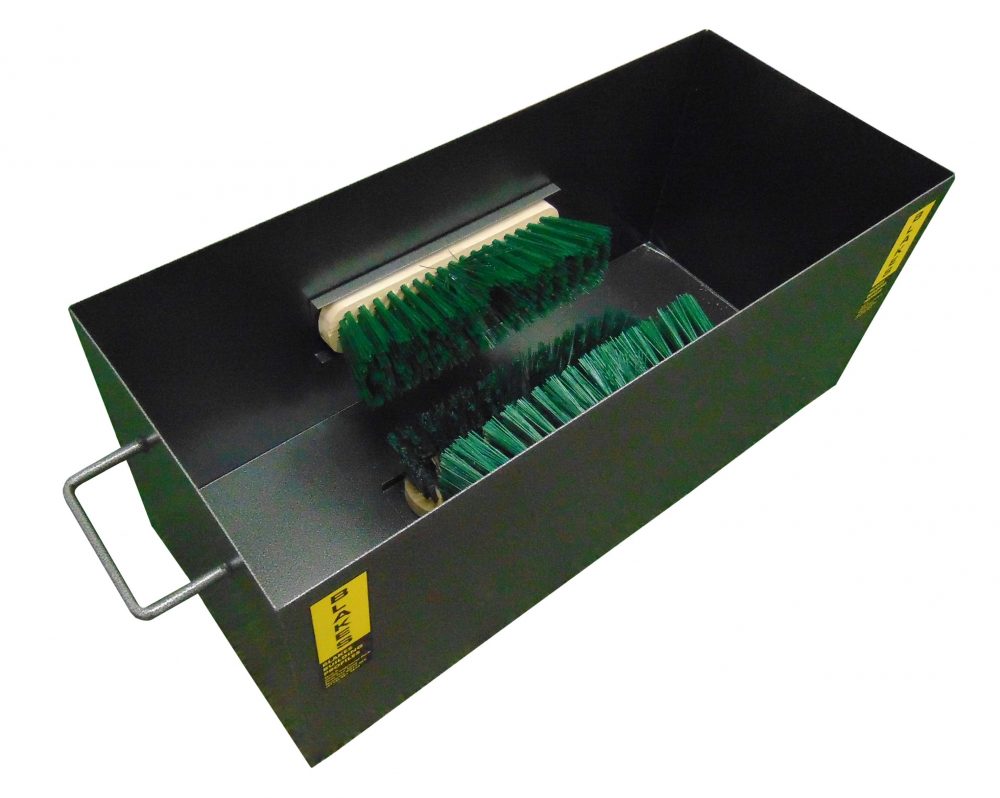
A boot wash tank is a freestanding unit filled with water, with fixed brushes that clean the sides and soles of a boot, placed at the door of a welfare cabin or site office. The steel boot wash tank is heavy and hard to tip over. The Kinnie boot wash is a compact unit for a smaller entrance, and both suit a small team using one door.
Boot wash stations
A boot wash station is a galvanised framed unit for a larger workforce, with several people cleaning boots side by side at a shift change. The in-line version suits a wide walkway, and the back-to-back version places users either side of the frame where space is tight.
Site sanitation stations
Site sanitation stations are galvanised mobile cleaning stations for hand hygiene at a welfare area, canteen or site gate, and they move with the work as the site layout changes.
Acrow prop sizes and mortar tub lifting
Prop sizes 0 to 4
Adjustable steel props and push-pull props are numbered from size 0 to size 4, with the number rising with height across the five sizes. Measure the clear height from the base to the underside of the load, and choose the size that reaches it with travel to spare, so the prop is not set near full extension.
Handling by hand, forklift or crane
Each tub and attachment is matched to the plant that will lift it. Forklift mortar tubs have fork channels or ridged feet for a forklift or telehandler. Crane lift mortar tubs, and the universal crane lift tub with its galvanised steel frame, hang from a crane hook. The rim lift tub lifts by its rim or sits flat on a pallet, and the top and base lift tub takes either a hook or forks. On a job with a telehandler and no crane, forklift tubs and a fork mounted jib keep every lift on the one machine.
Popular Categories

Acrow Props
View Products >

Builders Trestles
View Products >

Mortar Tubs and Mortar Bins
View Products >
Frequently Asked Questions
Yes. Adjustable steel props are sold one at a time, so an order can be made up to the exact number a job needs and mixed across sizes.
Stabilisers are recommended on builders trestles used at a height of 1.2 m or more. They are fitted before the boards and materials go on.
The Safety, Health and Welfare at Work (General Application) Regulations 2007 cover work at height, which in practice means planning the work, preventing falls with guarded platforms and edge protection, and choosing the right means of access. On construction work the Safety, Health and Welfare at Work (Construction) Regulations 2013 also apply, and the Project Supervisor Construction Stage (PSCS) coordinates safety on site, including how openings, stairwells and edges are protected.
Yes. RSJ steel beams are supplied cut and finished to any length the job needs, and bespoke sizes can be ordered.
Hole covers are screwed down over the opening, so they cannot be kicked aside or lifted by foot traffic. Each cover is chosen larger than the hole so that it bears on the floor on every side: the small cover suits holes up to 200 mm square and the large cover holes up to 300 mm across.
Most building sites need temporary support such as acrow props, safe access such as ladders, temporary stairways and trestles, and guarding for stairwells and floor openings. Mortar tubs and kerb lifters move materials, and boot wash units at the cabins keep mud out of the welfare areas. The mix follows the stage of the job, from groundworks through to fit-out.