







Expandable Barriers
HERMEQ supplies expandable barriers for places where space is short. Each one opens out across a hazard, doorway or work area when it is needed and folds back into a compact unit when the job is done. The range runs from waist-height plastic and steel barriers that mark a hazard to 1.3m and 1.8m barriers that close an opening, with extended widths up to 4 metres. The Titan expandable safety barrier is the core waist-height barrier for temporary barricaded areas. Several types also link to one another to make a longer collapsible run.

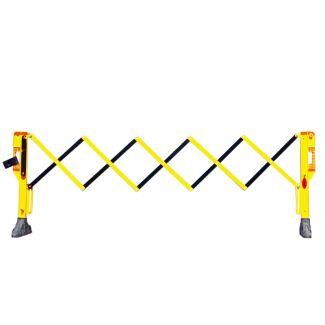
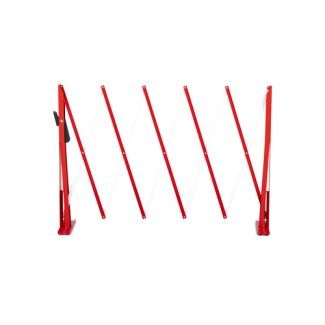
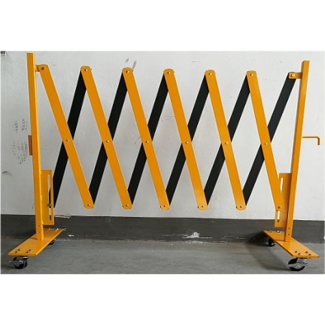
Expanding, concertina and folding barriers
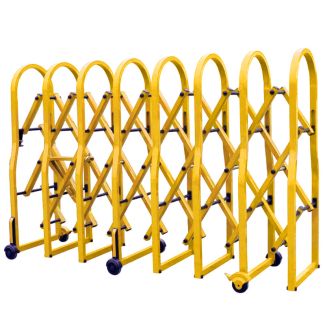
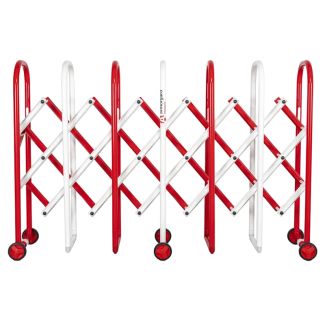
Expandable barriers are also sold as expanding, extendable, concertina, folding, accordion or collapsible barriers, and they divide by height into two groups: waist-height barriers in plastic or steel that mark a hazard, and taller concertina and gate-style barriers that close an opening.
Titan expandable safety barriers
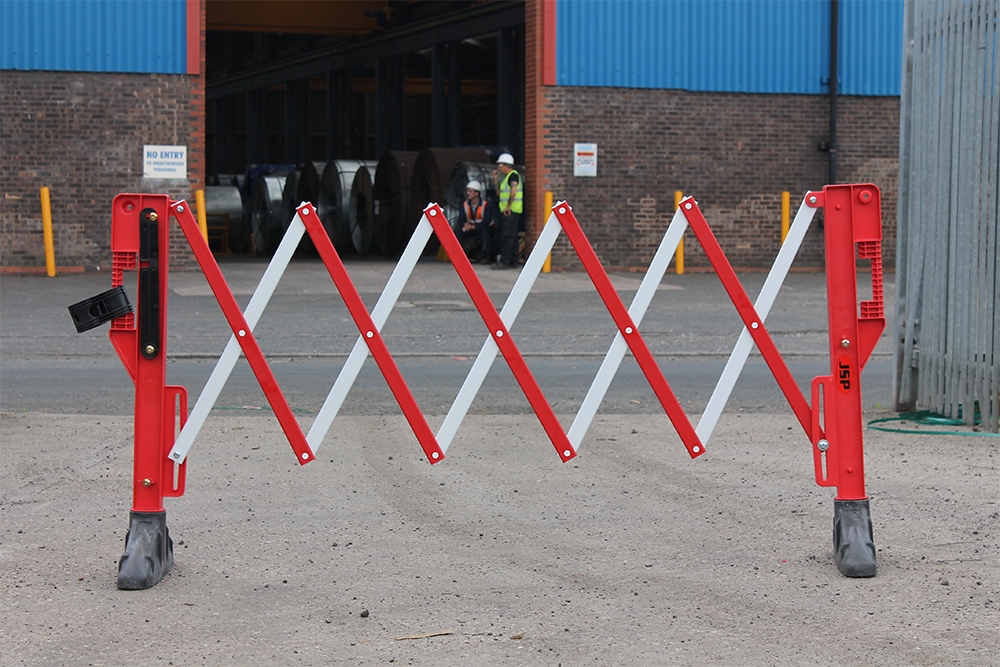
The Titan folds to 550mm wide and opens to a 3.1m waist-height barricade. It suits hazards that come and go through the working day, such as a spill in a corridor, an open floor access panel or a contractor working in a shop. It is available as a Titan expandable safety barrier in red and white and as a yellow and black Titan expandable barrier, so one model covers both colour codes on a site.
Plastic expandable barriers
The plastic expandable barrier gives the widest single span of the waist-height types. One unit covers a wide hazard such as a shopfront under repair, a wet section of warehouse floor or a closed row of car park spaces.
Steel concertina barriers
The steel concertina barrier is made for marking prohibited areas and guiding pedestrians away from an entrance or exit. Choose it for barriers that are put up and taken down every day.
Metal expanding barriers on castors
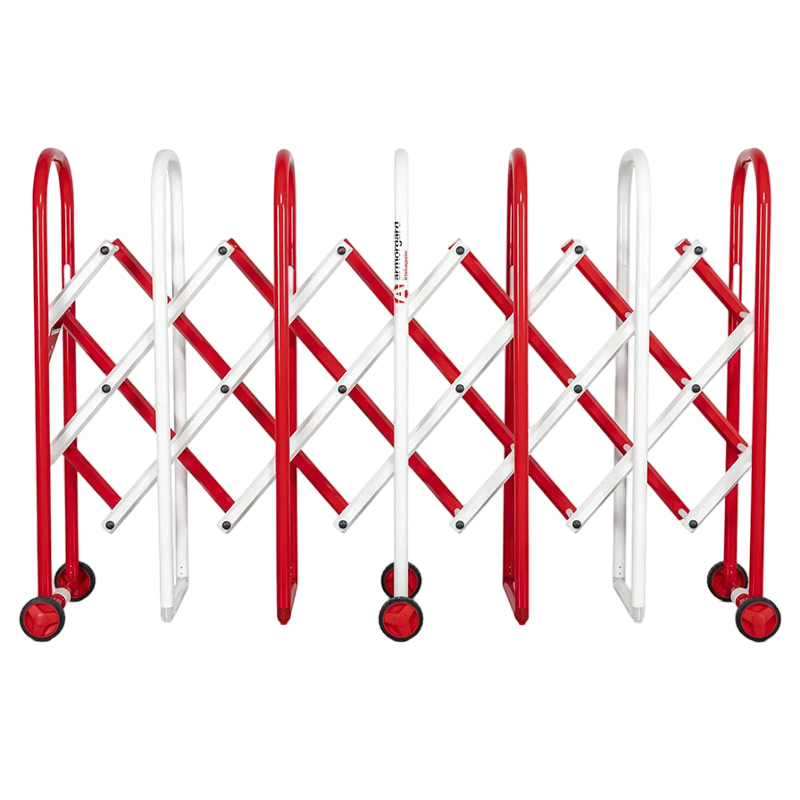
The metal expanding barrier on castors is for security and pedestrian control inside buildings. There, a barrier is wheeled across a reception, a loading door or a closed aisle and back again several times a shift. Choose this type when the barrier moves more often than it stays put.
Full-height concertina barriers
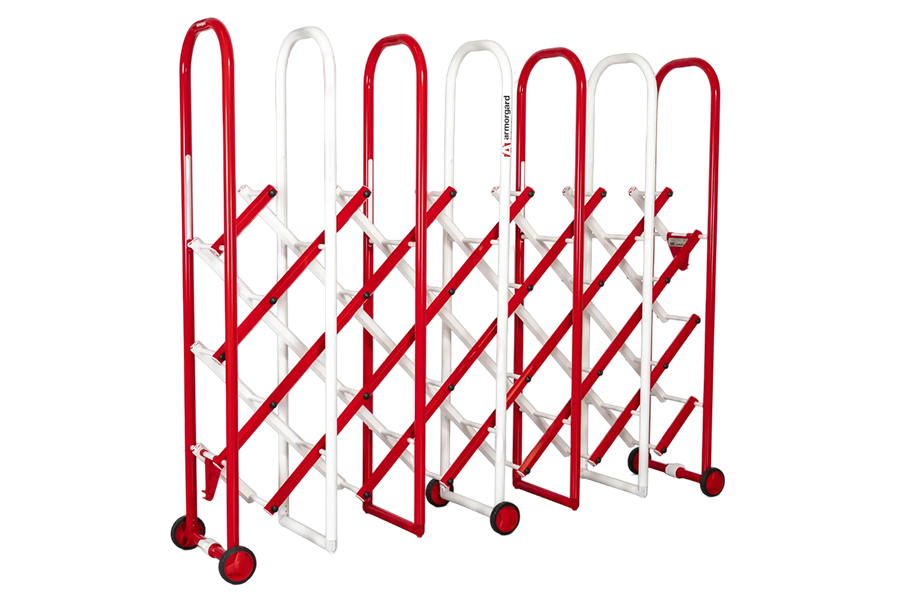
The full-height concertina barrier closes entrances and exits at 1.3m or 1.8m high, in widths that suit a single doorway or a wider opening. Choose it when a gap in hoarding, a site gate or a fit-out doorway has to be closed to anyone on foot and opened again by hand.
Instagate expanding barrier
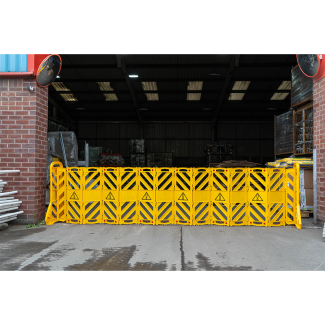
The Instagate expanding barrier is a full-height, gate-style barrier for construction sites, event management and public buildings such as train stations. It is built for openings that have to be shut and reopened easily where there is little room beside them to store a gate.
Waist height or full height expanding barriers
A barrier around waist height tells people where they should not go, while a full-height barrier at 1.3m or 1.8m stops them walking through. The Titan, plastic, steel concertina and metal expanding barriers work at waist height. They mark a hazard, steer pedestrians round a work area and show that a space is closed, and they rely on people keeping to the line they set. The Instagate and the full-height concertina barrier are tall enough that nobody steps over them, so they close an opening to anyone on foot. Choose waist height for a hazard that people walk past, and full height for an opening that must stay shut when nobody is there to watch it.
Expandable barrier materials, widths and colours
Plastic or steel
HDPE plastic is light, does not rust and wipes clean, so the plastic barrier moves easily between indoor and outdoor work. Steel, powder coated on the steel concertina barrier, is the choice for barriers that are handled hard and put up and taken down every day.
Extended width and linking a run
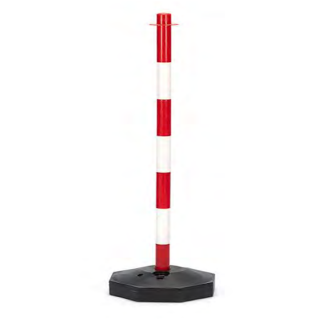
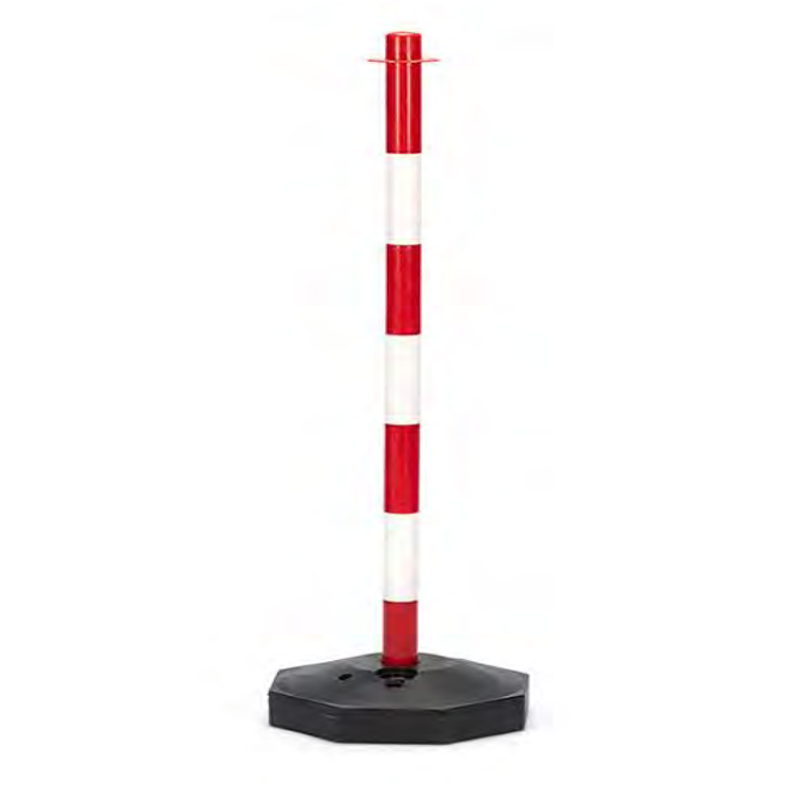
Extended widths across the range reach up to 4m from a single unit. To plan a run, measure the opening or the edge of the area to be closed, divide it by the extended width of the chosen barrier and round up to a whole number of units. The steel concertina barrier links end to end with its 3-in-1 latching system, so a longer run stays continuous with no gaps between units. Where a run falls just short of a wall, or has to join a chain cordon, a post and stand closes the gap and ties the end in.
Castors, feet and storage
The metal expanding barrier rolls into position on castors, which are removable when it needs to stand still. The steel concertina barrier stands on non-marking rubber feet that grip finished floors such as polished concrete, tiles or vinyl. For storage, the Titan folds to 550mm, and the folded unit is what has to fit in a van, a lift lobby or a cleaner's cupboard between jobs.
Red and white or yellow and black barriers
Both combinations are high visibility, and the choice works best as part of the site's own colour code. For example, red and white can mark no-entry closures and yellow and black can mark hazard warnings, so the colour tells people what kind of closure they are looking at.
Construction sites, events and facilities
Construction sites and groundworks
On site, expandable barriers close openings in hoarding during the working day and mark plant areas, material stores and work zones, while locked hoarding gates secure the line outside working hours. This is part of the site layout the PSCS plans under the Safety, Health and Welfare at Work (Construction) Regulations 2013. Where a closure meets an access used by lorries and plant, water filled road barriers or concrete barriers separate vehicles from the works, and traffic barriers mark the route.
Events, stations and public buildings
Here an expandable barrier shuts an entrance or exit that is not in use and turns pedestrians towards the one that is. Holding a crowd back is a separate job, done by crowd control barriers along the route and stage barriers at the front of a stage.
Facilities, maintenance and lift work
Facilities teams use waist-height barriers indoors to isolate a lift under maintenance, a spill or a floor being cleaned. Queue lines in a foyer are the work of retractable belt and rope barriers, and a permanent car park entry belongs with parking and security barriers.
Popular Categories

Crowd Control and Pedestrian Barriers
View Products >

Traffic Barriers
View Products >

Water Filled Plastic Road Barriers
View Products >
Frequently Asked Questions
An expandable barrier is a single folding frame that opens across an area and stands on its own. A retractable belt barrier is a post with a belt that pulls out to another post or a wall fitting, used mainly for queue lines and cordons on smooth indoor floors. Choose an expandable barrier to block a hazard or an opening, and belt barriers to shape a queue.
Yes. All of these names describe a frame of linked, pivoting bars that folds flat and opens out like the bellows of a concertina or accordion. Suppliers and buyers use expandable, expanding, extendable, folding and collapsible for the same kind of barrier, whatever it is made of.
No. An expandable barrier is built to mark and close areas for people on foot and is not designed to contain a vehicle. Temporary traffic management at roadworks is planned and laid out to Chapter 8 of the Department of Transport's Traffic Signs Manual. Vehicle separation on a road, lane or site access comes from water filled road barriers or concrete barriers.
No. Protecting people from a fall at an open edge or into an excavation is part of planning work at height under the Safety, Health and Welfare at Work (General Application) Regulations 2007. In practice, that protection is a guardrail or edge protection system fixed for the purpose. An expandable barrier can mark the approach to the restricted zone, set back from the edge.
An expandable barrier shows a crowd where not to go, but it is not built to take the weight of people pressing against it. For holding lines, queues at gates and front-of-stage areas, use crowd control barriers or stage barriers. Expandable barriers then close side exits and service doors.