







Traffic Barriers
HERMEQ supplies traffic barriers for roadworks, utility works, construction sites and events, from lightweight plastic road barriers to water filled and crash tested systems. Road contractors, utility crews and maintenance companies use them to close off excavations, keep pedestrians apart from traffic and set out work zones to the traffic management plan.
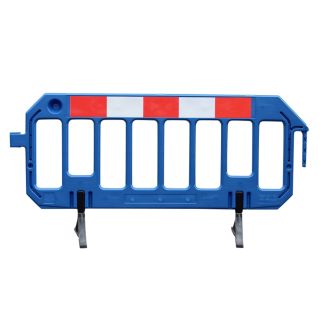
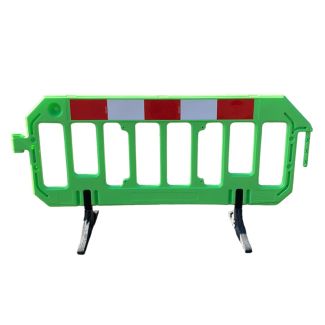
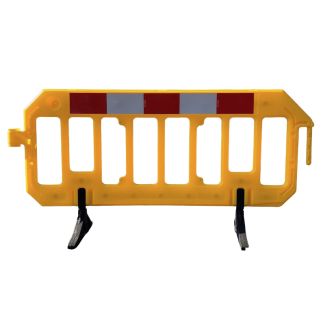
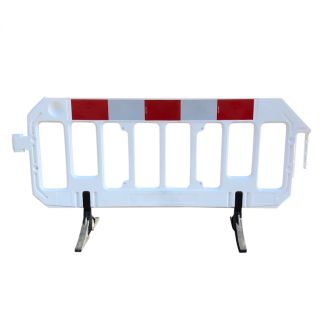
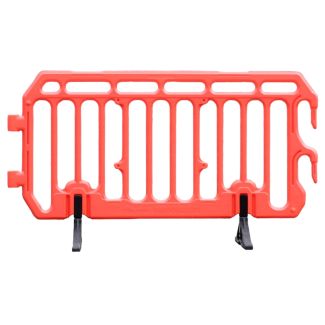
The most popular barrier in the range is the Chapter 8 road barrier, a plastic barrier that stacks for transport and storage. It is made in orange, blue, green, yellow and white, with a choice of standard or anti-trip feet.


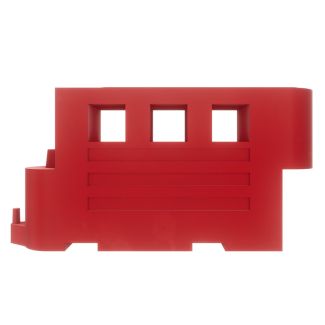
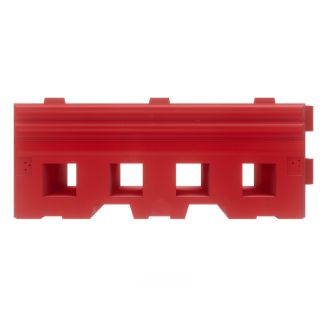
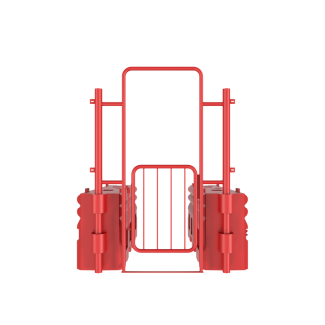
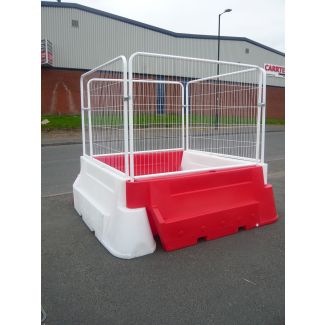


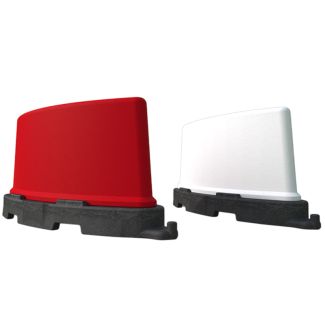
Plastic, water filled and crash tested traffic barriers
The range divides by job: plastic barriers mark and guide, utility barriers enclose openings in the ground, self-weighted and water filled barriers hold a perimeter, crash tested systems contain a vehicle, and track barriers and goalposts cover the special cases.
Chapter 8 plastic road barriers
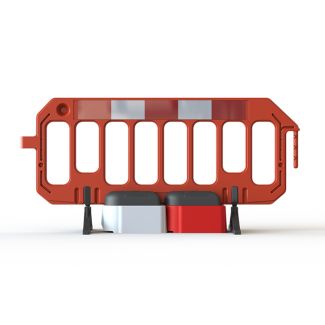
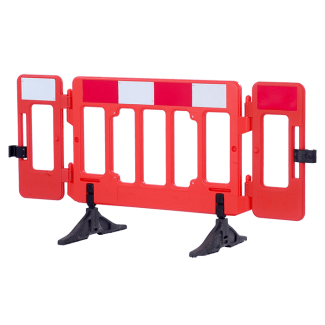
Lightweight plastic road barriers are the everyday choice for roadworks, footpath works and site boundaries, where the task is to show where the work starts and keep pedestrians on a defined route. The Chapter 8 road barriers link end to end into a continuous run and lift by hand. On busy city centre footpaths and crossings, the Centurion traffic barrier is a common choice for separating large numbers of people from vehicles. The Avalon Chapter 8 barrier is used on indoor and outdoor work sites, and the European traffic barrier links with its heavy footplate into a run that is very hard to knock over.
Heavy duty and self-weighted barriers
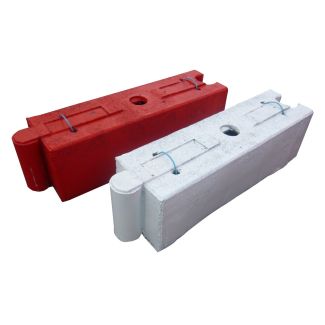
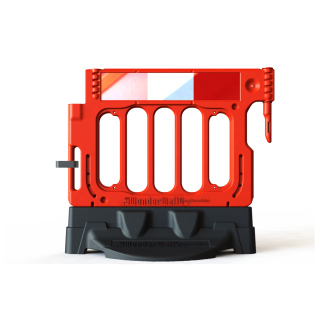
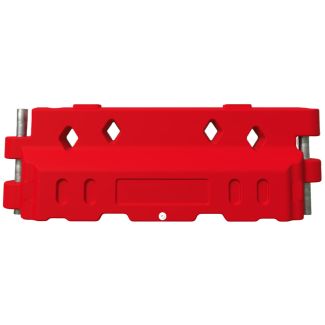
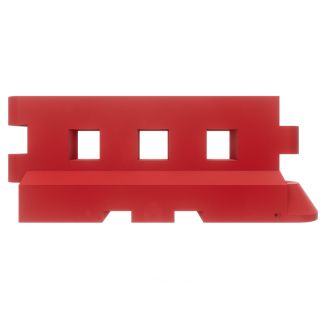
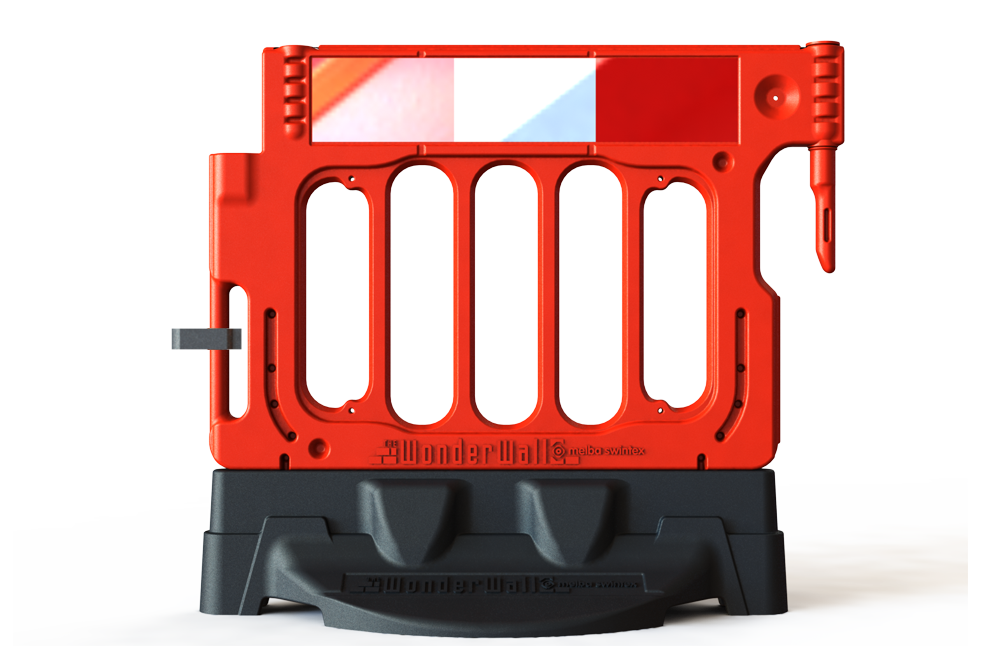
Self-weighted barriers carry enough mass in their own moulding to stand without water, sand or added ballast, so there is no filling or draining on short jobs. The Wonder Wall heavy duty traffic barrier is a solid plastic wall that stands without water or ballast, for road edges and site boundaries beside traffic. The Oaklog self-weighted barrier is a rigid one-piece unit with interlocking joints for temporary or semi-permanent blockades, and the Road Runner 500 self-weighted barrier manages light vehicle traffic and pedestrian flow on sites, at events and at roadworks.
Utility and manhole barriers
An opening in the ground needs a barrier that closes it off on every side and follows its shape. Three and four sided utility barriers enclose a manhole, inspection chamber or small pit, with the four sided set for an opening in open footpath and the three sided set where one side meets a wall or building line. The Olympic barrier has hinged wings that rotate and lock at right angles, so a set can be shaped around an irregular footpath excavation. For a long utility trench, the heavy duty plank barrier system builds a run of bases, posts and planks that extends as the dig advances.
Water filled road barriers
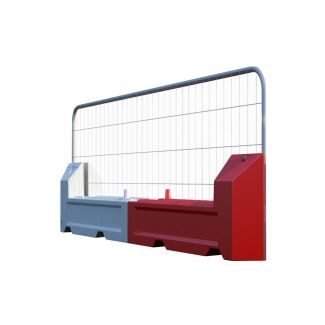
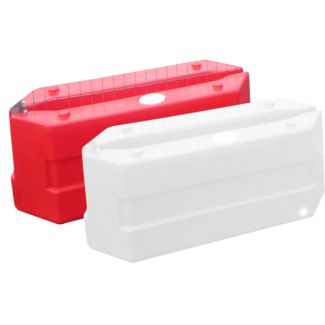
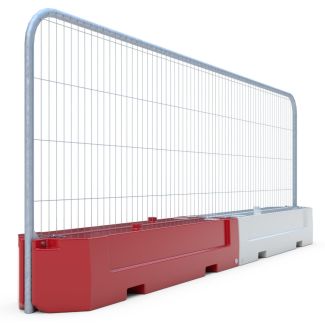
Water filled barriers are light to place when empty and heavy once filled, so they suit perimeters and lane closures that stay in place for weeks or months. The full selection sits under water filled road barriers, and the water filled barrier with mesh fence extension is the one to choose when the line also needs height.
Crash tested barriers
Crash tested barriers are the choice where a vehicle leaving the carriageway must be stopped before it reaches the workforce. The RB22 crash tested water barrier and the Defender50 crash barrier are both water filled, and the Defender50 has been tested with fence panels fitted on top. The construction site pit lane is built from SVEA concrete barriers and designed around a site's access, with gates, lighting, matting and hoarding as options.
Track barriers
Track barriers are low, interlocking units that line indoor and outdoor racetracks and motorsport venues, and they curve to follow a bend without leaving gaps between sections. The RB500 low track barrier is the lowest in the series and the RB1500 track barrier is a medium height barrier for racetracks, with the RB1000 and RB1300 completing the series.
Height restriction goalposts
Goalposts are a warning at height: telescopic poles carry bunting or a solid crossbar across a route so that drivers of plant, tippers and lorries see overhead power lines or structures before they reach them. Height restriction goalposts come as two-post sets or as a single cantilever arm.

Road barrier or crash barrier
A plastic or self-weighted road barrier marks the edge of the work, guides traffic past it and keeps pedestrians apart from moving vehicles, and it can be moved by hand as the work moves. It is not built to stop a vehicle. Where people work beside live traffic and an impact has to be contained, choose a barrier with a vehicle crash test to EN 1317: across this range, the Defender50 is tested to N1 at 80 km/h, and the Construction Site Pit Lane system holds N1 and N2 classes.
For protection that stays in place for months or years, or a road edge that takes heavier vehicles, Armco crash barriers and concrete barriers are the next step.
Feet, ballast and colours for plastic road barriers
Standard or anti-trip feet
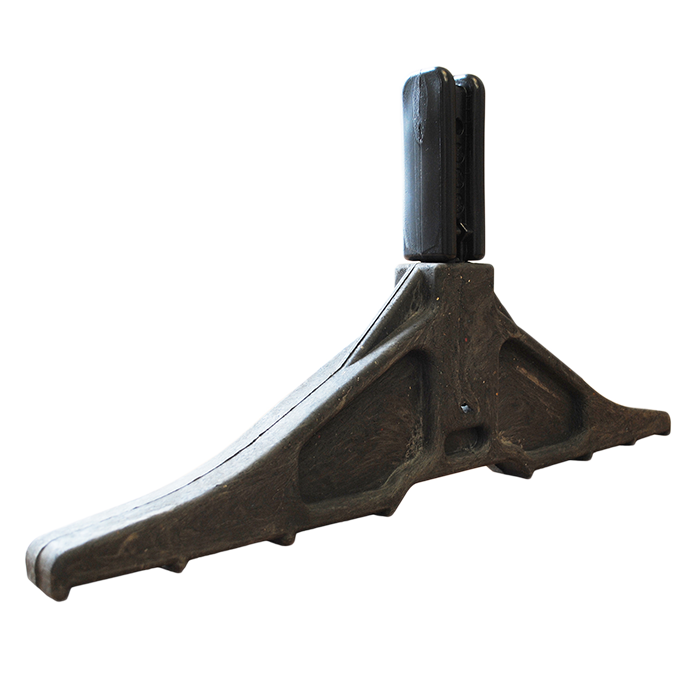
Standard feet suit carriageway and site use, where the barrier line is not itself a walking route. Where people walk along the run, on a footpath diversion or a pedestrian route through a site, anti-trip feet are the better choice, because they are shaped to reduce the trip hazard at the base of each barrier. Most plastic barriers in the range come with either foot, and replacement road barrier feet in both types fit the plastic Chapter 8 barriers when one is lost or damaged.
Wind exposure and ballast
Plastic barriers are light, and on open roads, bridges, car parks and coastal sites the wind is what moves them. Barriers such as the Olympic and the Centurion are wind tested from Class C up to Class A, and the higher classes are reached with ballast added at the feet. On an exposed run, fit a road barrier stabiliser to each barrier, or choose a self-weighted barrier such as the Wonder Wall, which stands without ballast.
Colours and branded barriers
The five barrier colours let a large site run its own colour code, so that each contractor's work areas can be told apart at a glance: blue road barriers around one firm's excavations, for example, and green road barriers around another's. Yellow road barriers and white road barriers extend the code to separate phases or activities, or match a client's colours. The code belongs to the site, so it goes into the induction and the site rules, since drivers and the public will not know it.
On larger orders, branded road barriers carry a company logo on a plate, and the Centurion's centre plate takes a logo or a message such as Stop or Caution.
Barrier lights, stillages and fence extensions
Barrier lights
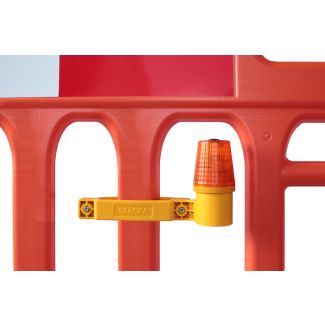
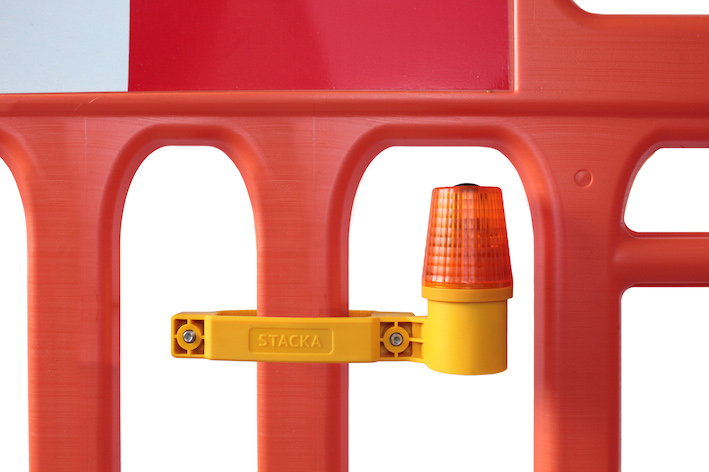
Barrier lights clip and screw onto the plastic road barriers to mark the run at night and in poor light, and they stay fitted when the barriers are stacked.
Stillages for storage and transport
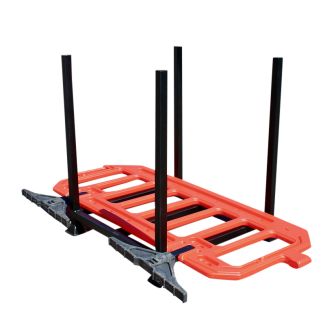
Road barrier stillages hold plastic barriers upright in a steel frame with a central bar for forklift handling, so a full stack goes onto a lorry or into the yard in one lift. Sizes hold 20 to 40 barriers, and the stillages stack on top of one another on their square feet.
Fence extensions and pedestrian gates
Mesh fence extensions fit on top of water filled barriers and add anti-climb mesh above them, so a line of barriers becomes a full-height perimeter for a compound or construction site. Where people need a way through that perimeter, the RB22 pedestrian gate connects to RB22 barriers and gives a controlled walkthrough without a break in the line.
Popular Categories

Crowd Control and Pedestrian Barriers
View Products >

Expandable Barriers
View Products >

Water Filled Plastic Road Barriers
View Products >
Frequently Asked Questions
The name comes from Chapter 8 of the Traffic Signs Manual, the chapter that deals with temporary traffic management at roadworks, and the trade has long used it for the lightweight barriers that fence a work area. The Department of Transport's Traffic Signs Manual, Chapter 8, sets out how roadworks are signed, guarded and laid out. The traffic management plan for each job decides where barriers go and which type is needed.
Most plastic road barriers join hook to eye, and the joint lets each barrier sit at a slight angle to the next, so a run can follow a camber, a kerb or a rise without gaps. Feet that rotate let the barrier stand on a slope or turn a corner.
Plastic road and utility barriers stand at about 1 metre, with the plank system slightly taller. Water filled barriers fitted with mesh fence extensions reach just over 2 metres, which is the height to choose for a secure perimeter. Track barriers are lower, built to line a circuit rather than a footpath.
Each barrier is placed empty, linked to the next and filled through the fill point on top from a hose or bowser. To move it, drain it through the low drain point, then lift the empty barrier by its fork channels with a forklift.
Yes. The Avalon Chapter 8 barrier is used on indoor work sites as well as outdoors, and track barriers line indoor racetracks as well as outdoor circuits. The RB500 can be filled with sand where water is not wanted inside a building.