







Weed Barrier & Root Barrier Membranes
HERMEQ supplies weed barrier and root barrier membranes made to resist penetration by aggressive rooting plants and trees. They give chemical-free protection to underground drainage, sewers, pipes and cable runs, to paved areas and to buildings, where root invasion would otherwise cause damage. The vertical DuPont Plantex root barrier is a coated, non-woven impermeable membrane that stops aggressive roots such as bamboo from spreading, and a permeable root protector is laid flat under paths, drives and green roofs. The weed barriers hold back tough weeds such as couch grass, horsetail and bindweed, and the range includes a UV resistant grade for solar farms.


Heavy duty weed barrier and weed membrane
Laid flat over prepared ground, a weed barrier stops growth from the soil below reaching the surface and keeps a gravel, bark, soil or paving finish clear of weeds. The weed membranes in this range are a heavy duty, invasive-weed grade. The same fabric that resists Japanese knotweed, horsetail, couch grass, bamboo, giant hogweed and Himalayan balsam also keeps everyday weeds out of beds, borders and gravel, so one grade covers both jobs.
Weed barrier fabric for invasive weeds
The DuPont Plantex Platinium Japanese knotweed barrier is the choice for treated ground on development land, road verges, embankments and large landscape schemes, where it goes down in full rolls under the finished surface. Our weed barrier fabric resists the same aggressive species and suits beds, borders, gravel paths and hard landscaping where horsetail or couch grass is the problem.
Weed membrane for solar farms
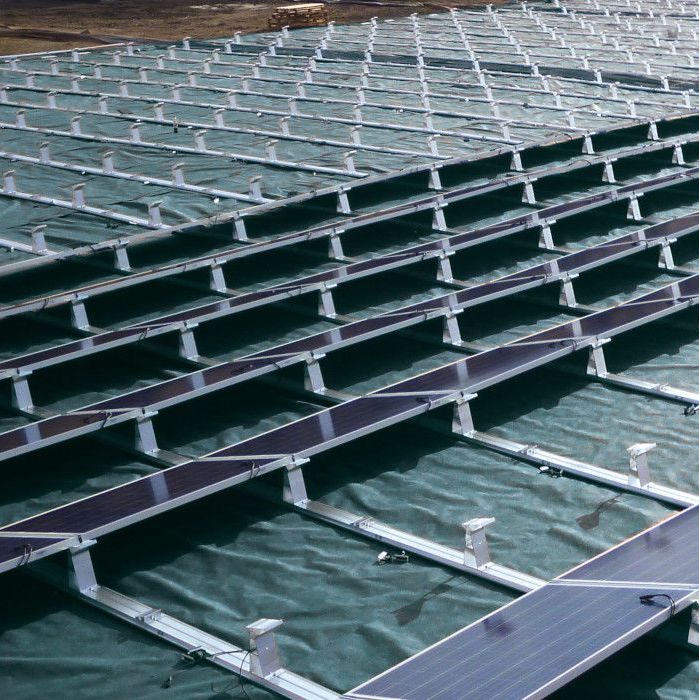
Plantex Solar is a solar farm weed membrane laid beneath and between panel rows, where its resistance to UV degradation matters because much of the ground sits in daylight between the arrays. It stops vegetation growing up to shade the solar collectors and keeps the ground clear around inverters, cable routes and other technical installations, so the site needs far less mowing and strimming over its working life.

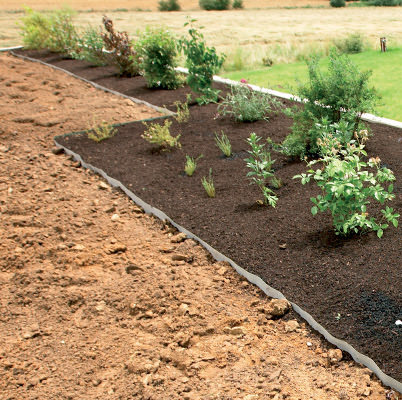
Vertical or horizontal root barrier
A vertical root barrier stops roots and rhizomes spreading sideways through the ground, and a horizontal one stops them growing up into a surface from below, so the direction the roots are travelling decides which to buy.
The Plantex root barrier membrane is the vertical option. It is a coated, impermeable membrane set upright in a trench between the plants and whatever needs protecting: bamboo spreading along a boundary, tree roots heading for drains, sewers, water pipes and cable runs, or roots lifting paved areas and growing in beside foundations.
Plantex Root Protector is the root protection membrane for paths and drives, laid horizontally under cycle tracks, footpaths, green roofs, roadways and drives. It is permeable to air and water, so rain drains through the build-up while roots are kept from lifting and cracking the surface above, and on a green roof it keeps roots off the layers beneath the planting. The impermeable root barrier laid flat under a path would hold water in the build-up and stop it draining, so the root protector is the product for every horizontal job.
Japanese knotweed, bamboo and other invasive plants
The range is made for plants that spread underground or seed aggressively and break through ordinary membranes, from Japanese knotweed and bamboo to marestail, reed and giant reed. On a treated area the weed membrane goes down over the ground and under the finished surface, so regrowth from rhizome left in the soil is held below it.
On construction sites and road schemes, invasive species are dealt with under a management plan that sets out treatment, excavation, the handling of soil that contains plant material, and monitoring. Under Regulation 49 of the European Communities (Birds and Natural Habitats) Regulations 2011 it is an offence to spread listed plants such as Japanese knotweed, and Transport Infrastructure Ireland (TII) publishes guidance on managing invasive plant species on national road schemes.
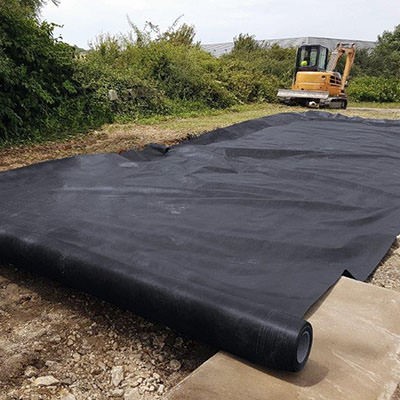
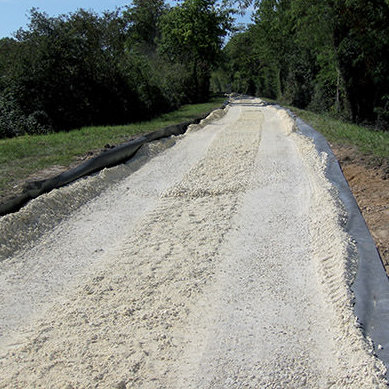
Root barrier depth, roll widths and coverage
Root barrier depth
Vertical root barrier comes in depths from 0.5 m to 2 m. Match the depth to the plant and to the service being protected: a shallow barrier suits shrub borders and the edge of paving, while bamboo, mature trees, deep drainage and foundations need a barrier that reaches below both the rooting zone and the service itself. Between two depths, the deeper one leaves less room for roots to pass underneath.
Roll width and joints
The horizontal root protector and the weed membranes come in wide rolls, the root protector up to 5.2 m. On a car park, a solar site or a long verge the wider rolls cover the area with fewer joints, and each joint saved is one less overlap to lay and check. Narrower rolls handle footpaths, cycle tracks and beds with less cutting and waste.
Working out how much you need
For a weed barrier or root protector, measure the area and add the overlap at every joint between runs, plus extra at the edges where the membrane turns up against kerbs, walls or edging. For a vertical root barrier, measure the run length along the trench, add the overlap at each joint, and allow for returns at corners or where the barrier wraps around a tree pit.
Root barrier installation and laying weed membrane
A vertical root barrier goes into a trench dug to its full depth, with a clean face on the side the roots will come from. The membrane stands in the trench with its top edge left proud of the finished ground so roots and rhizomes cannot grow over the top. Joints are overlapped and sealed, the membrane is kept upright and unfolded as the trench is backfilled, and the backfill is compacted in layers on both sides. Around services, the line of drains, pipes and cables is marked before digging so the barrier runs between the planting and the service.
Horizontal root protector and weed membrane go down on cleared, levelled ground. Existing growth, roots, sharp stones and debris come out first, and the surface is graded and compacted where a path, drive or sub-base will be built on top. The membrane is rolled out without stretching, each run overlaps the next, the edges and joints are fixed, and openings around posts, pillars and existing plants are cut as a cross so no bare soil is left exposed. The cover goes on as soon as the membrane is down, spread from one end so barrows and machines travel on the cover and never on the bare fabric.
Popular Categories

Geotextile Membranes
View Products >

Grass Pavers & Gravel Grids
View Products >

Geogrids
View Products >
Frequently Asked Questions
Covered with gravel, bark or soil, a weed barrier is shielded from sunlight and wear, and that cover is what gives it a long life in the ground. Fabric left uncovered is exposed to UV, which breaks down most landscape fabrics, so any membrane meant to stay open to daylight should be a UV resistant grade.
Under a shed on pillars or pads, lay the weed barrier across the whole footprint before the shed goes up, cut it neatly around each pillar, and dress it with gravel. That keeps the shaded space under the floor free of weeds and lets rainwater drain away. A shed on a full concrete slab needs no weed barrier under the slab, although a strip around the outside edge stops growth against the walls.
Yes. On a drive the weed membrane goes on top of the compacted sub-base and under the decorative gravel, so growth from below is held back and seeds that land in the stone have no soil to root into. Keep the gravel at an even depth over the whole area, because tyres that scuff through a thin layer wear the fabric where cars turn.
Pegs or pins hold the edges and overlaps in place while the cover goes on, and on flat ground under a good depth of gravel or bark the cover then holds the fabric down. On slopes, exposed sites and areas left open to the weather, pegs stay as the permanent fixing and are set closer together along joints and edges.
Root barriers are made as flexible sheet in rolls or as rigid panels, in materials that include HDPE and other plastics, metal and coated fabrics. The Plantex root barrier is a coated, non-woven impermeable membrane supplied in rolls, so it follows curves and changes in level along a trench and goes in as a continuous length.