







Ramps
HERMEQ ramps cover loading ramps, kerb ramps and access ramps for sites, yards, events and buildings, in aluminium, steel and plastic with slip-resistant surfaces and stated load ratings. For loading there are van and truck loading ramps, among them a folding van ramp and a rest-on truck loading ramp, together with container ramps and mobile forklift yard ramps. For commercial and industrial premises the range includes wheelchair, kerb and threshold ramps and gangway ramps, with site bridges and stairs for access to height. Temporary site ramps for construction and roadworks complete it, with ratings up to 44 tonne vehicles.
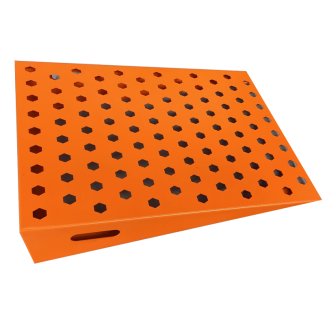
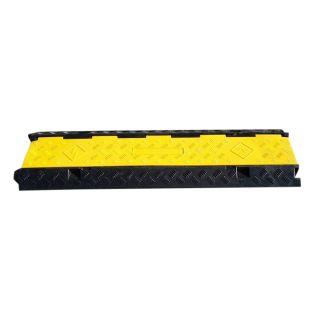
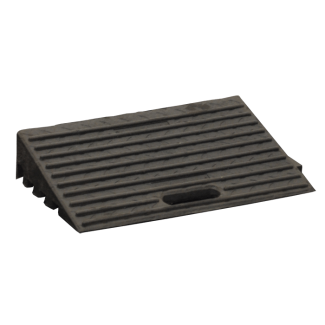
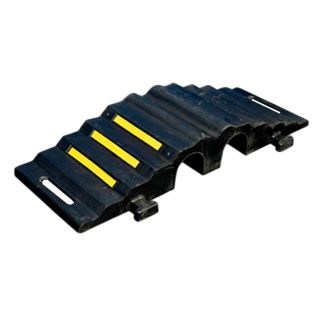

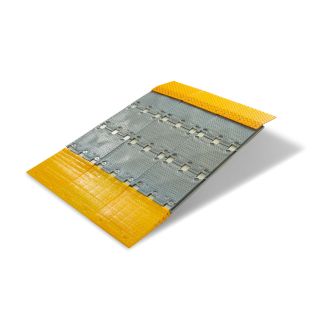
Loading ramps, kerb ramps and access ramps
The range sorts by what crosses the ramp: loading ramps take goods into vans, trucks, containers and trailers, kerb and step ramps carry people, wheelchairs, barrows and pallet trucks up a single level change, and site ramps carry plant and HGVs over steps and exposed services.
Van loading ramps
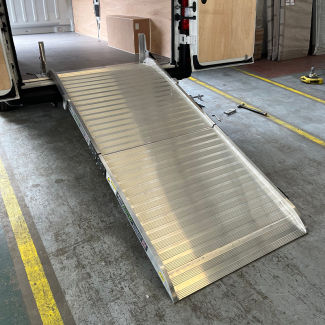
A folding van ramp tapers straight down to the ground from the load floor, so a sack truck or trolley goes into the van on a short, even incline. It folds for carrying in the van between jobs, which suits removals crews and trades who load the same vehicle by hand every day.
Truck loading ramps
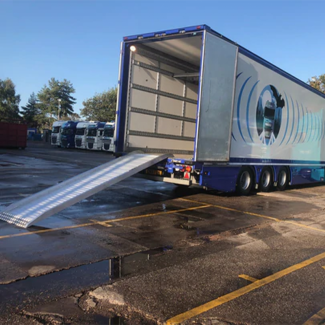
A truck loading ramp is a single-stage rest-on ramp that sits on the truck bed with no fitting or bolting, so it goes up and comes down at every stop. Events and production crews use it to wheel sound and lighting equipment on and off.
Container ramps for pallet trucks and forklifts
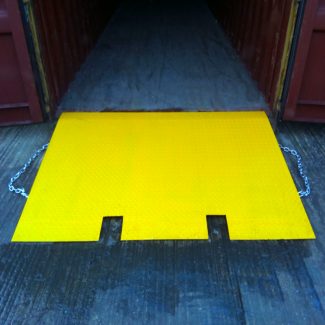
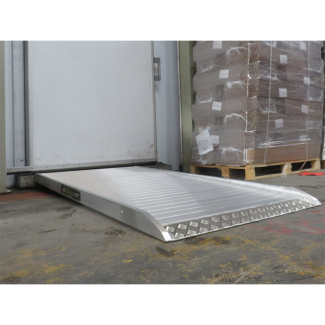
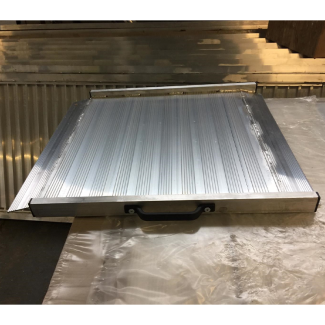
Two ramps load shipping containers, and the machine going inside decides between them. The aluminium container ramp for pallet trucks has a flat top that lies on the container floor and a taper at its foot, for hand pallet trucks and wheeled goods pushed in from ground level. A forklift needs a ramp built for forklift traffic, and the shipping container ramp for forklifts is the one to choose when the truck drives in to place and lift pallets.
Mobile forklift yard ramps
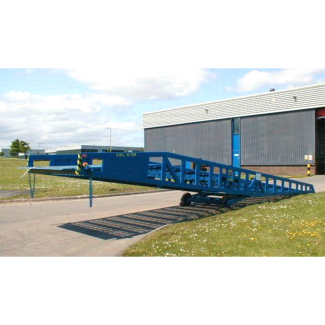
Where there is no loading bay at all, mobile forklift yard ramps let a forklift drive up a steel ramp and load a trailer or container at deck level. They are the choice for yards, depots and temporary distribution sites that load trailers regularly without a fixed dock.
Kerb ramps and wheelchair ramps
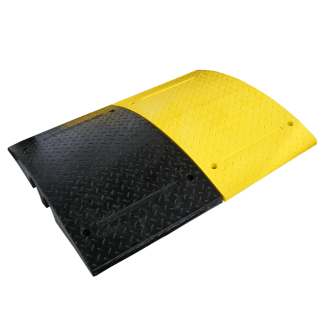
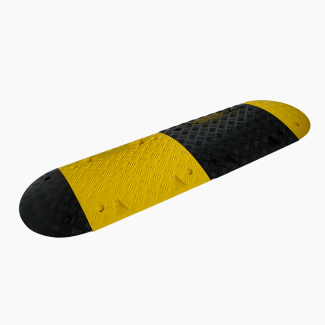
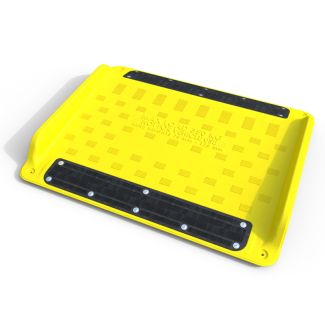
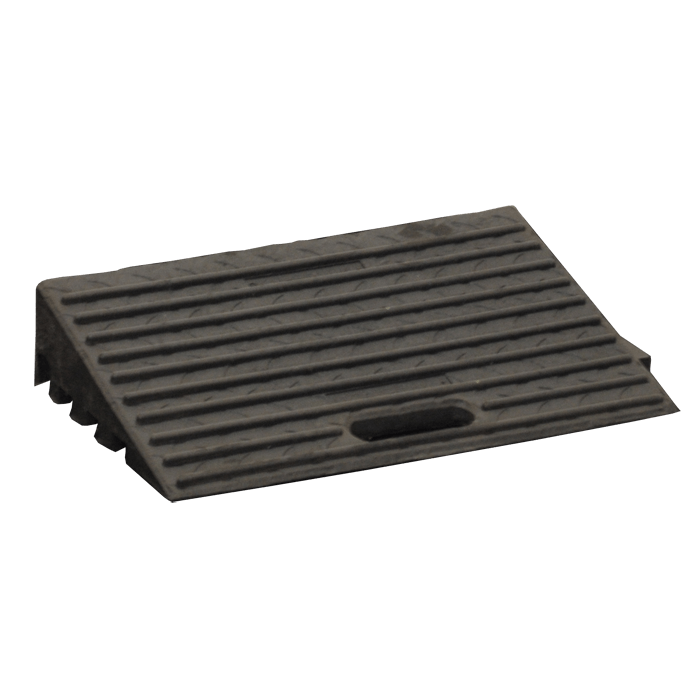
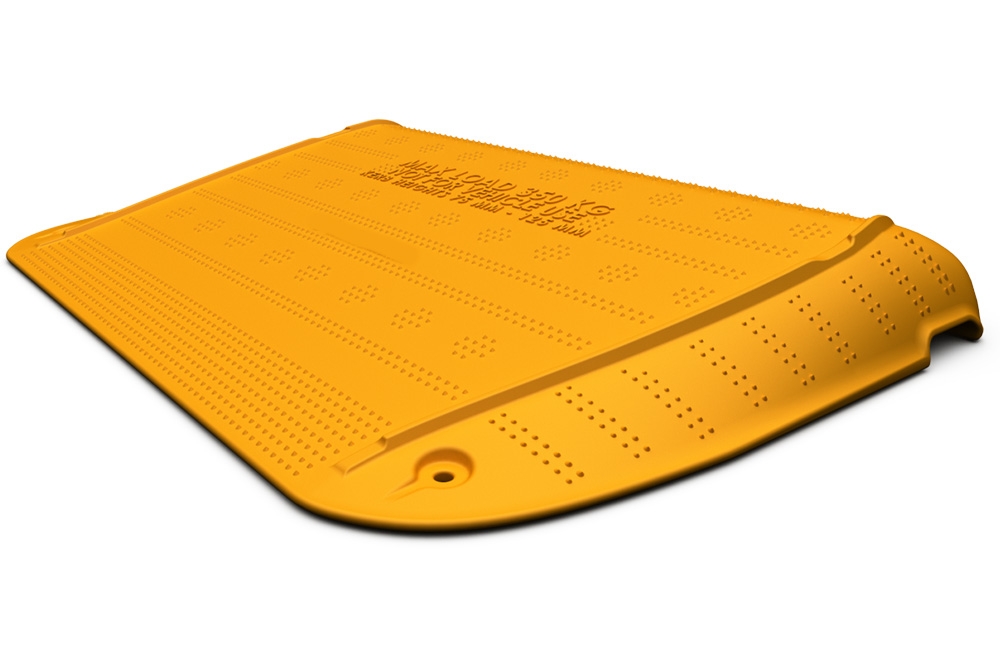
Low kerb ramps take wheelbarrows, motorcycles, caravans, cars and wheelchairs up a single kerb from the road, with a chevron tread for grip. For wheelchair users and people with limited mobility, the wheelchair kerb ramp is wider and stable underfoot, with an even slope that can be approached from several angles. The portable wheelchair ramp is a weighted plastic footway ramp made for roadworks, where it gives pedestrians and wheelchair users a step-free way on and off the kerb past the works.
Threshold ramps
An adjustable threshold ramp covers the step at a doorway or a low ledge, and its metal frame adjusts to set the slope for the height it meets. Because one ramp covers a band of heights, it suits facilities teams who need step-free access at doors with different rises.
Building and modular site ramps
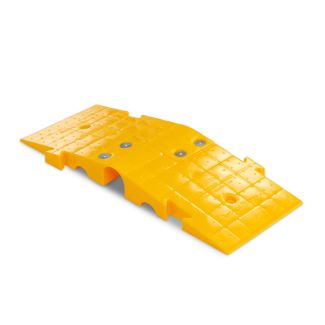
For a single step, a kerb or a ledge on construction, roadworks and landscaping jobs, the aluminium building access ramp is a light, treaded alloy ramp for barrows and foot traffic. Pallet trucks, MEWPs and small machinery go on the modular ramp, which is rated for construction equipment, fitted by one person and moved as levels change.
Temporary ramps over pipes and cables
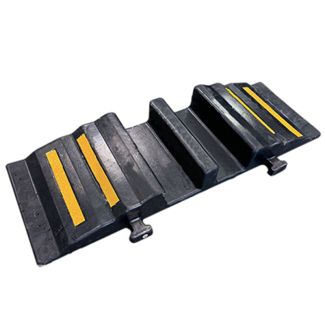
The temporary ramp for HGVs over pipes lets lorries and plant cross exposed pipework or cables on a live site, in place of a cold-patch asphalt ramp that would have to be laid and then dug out. One person can reposition it when the crossing moves. Where cables or hoses run across a private road or walkway, cable guard ramps carry the traffic over them in covered channels. An open trench is a different job: vehicles cross it on road plates, and pedestrians on foot ramps and trench covers.
Gangway ramps
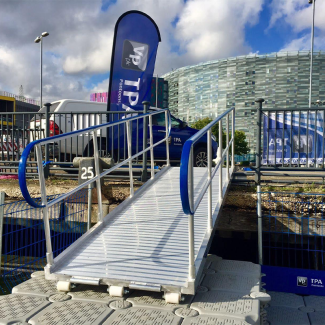
Aluminium gangway ramps bridge the gap between dry land and a dock, in marine-grade aluminium with an anti-slip, all-weather deck. Each is built to suit the dock it serves, for marinas, harbours and waterside premises.

Temporary ramps on site and at events
Construction sites and groundworks
Levels change as the job progresses, so ramps one person can lift and reposition save a groundworks gang from building and breaking up timber ramps each time. Where the ground between crossings is soft, ground protection mats carry vehicles on the approach.
Roadworks and footpaths
When works close a footpath and pedestrians are diverted onto the road, the portable wheelchair ramp sits within the pedestrian route in the traffic management plan, which for roadworks is laid out under Chapter 8 of the Department of Transport's Traffic Signs Manual, and it moves with the works as the closure advances.
Events and production loading
Loading at an event runs to a tight schedule, with flight cases, staging and lighting going into trucks at the get-out, often in the dark and the wet. On greenfield sites the foot of the ramp needs a firm, level base, so trucks are parked on trackway or mats before loading starts.
Ramp load ratings, heights and materials
Load rating and what crosses the ramp
Rate the ramp to the heaviest wheeled load that will cross it, which is the machine or trolley plus its operator and the goods it carries. A forklift on a container ramp carries its own weight plus the pallet on its forks.
Rise, length and gradient
Measure the rise from the ground to the edge the ramp climbs to, whether that is a kerb, a step, a container floor or a truck bed. For a given rise, a longer ramp gives a gentler slope. Powered plant can climb a steeper ramp, while wheelchair users, people pushing trolleys by hand and low pallet trucks, which can ground at the top transition, need a gentler one.
How the ramp sits at the top edge
The way a ramp meets the edge it climbs to decides which job it can do. Truck ramps have a rest-on lip that sits on the truck bed, and the pallet truck container ramp has a welded flat top that lies on the container floor. The folding van ramp tapers to the ground at its foot, the pipe crossing ramp is held by anchor points on flat, firm ground, and the modular ramp butts against the face of the step, with bolts added where the site's risk assessment calls for them. A ramp made to rest on a truck bed will not locate on a container floor, so match the fitting to the edge you are loading onto.
Aluminium, steel and plastic ramps
Aluminium ramps are light enough to carry and place by hand, which is why the van ramp, the pallet truck container ramp and the building ramp are alloy. Steel goes into the mobile yard ramps, where forklift loads matter more than weight. Plastic is used for the portable wheelchair ramp, the modular ramp and the pipe crossing ramp, which are moved around site, stay out in all weathers and do not rust.
Popular Categories

Vehicle Access Mats & Track Mats
View Products >

Road Plates
View Products >

Timber Mats
View Products >
Frequently Asked Questions
A kerb ramp runs from the road up to the top of a kerb and is laid against the kerb face for one fixed rise. A threshold ramp covers the step at a doorway or a low ledge inside or outside a building.
Yes. The aluminium ramps in the range, including the folding van ramp and the lightweight building ramp, can be made to order when a standard size does not suit the rise or the length available. Give the rise, the space for the ramp and the heaviest load that will cross it when you ask.
Only when the whole vehicle is on the ramp at once. When a car mounts a kerb on a pair of kerb ramps, each ramp carries the wheel that is on it. A pallet truck or forklift on a container ramp has all its wheels, its operator and its load on the ramp together, so a full-width ramp is rated to the whole loaded machine.
For short-term use, a kerb ramp is placed against the kerb and lifted away when the work is done, and weighted portable ramps hold their position by their own weight. A ramp left in one place, or crossed by vehicles that turn or brake on it, is fixed down where it has fixing points so it cannot creep. On site, the risk assessment for the access route decides whether fixing is needed.
A portable wheelchair ramp is for temporary access, such as keeping a footpath route open during works or covering a step for a short period. Permanent ramped access to a building is designed under Part M of the Building Regulations, with Technical Guidance Document M setting out how ramps are laid out.
Look over the deck for cracks, bent sections and worn tread, and clear mud, ice and debris from the surface. Check that the top edge is located on the kerb, step or load floor and that the foot sits on firm, level ground. On site, the check forms part of the daily inspection, and a damaged ramp is taken out of use until it is replaced.