







Tipping Skips
HERMEQ tipping skips, also called tipper skips, collect, carry and empty rubble, muck, packaging and general waste on construction sites, in yards and on factory floors. Each skip loads from an open top and empties by tipping or through its base, in sizes from small swarf bins to large crane lifted boat skips. The range includes forklift self-tipping skips and heavy duty tipping skips, also known as roll forward skips, along with a telehandler tipping skip that locks onto the forks so the operator tips the load without leaving the cab. Depending on the model, the skips are handled by forklift, telehandler or crane.
-

-

-

-
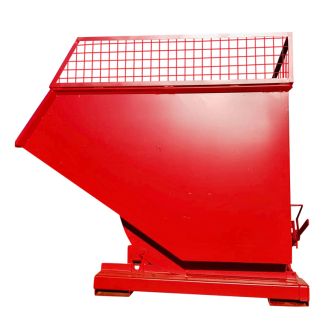 Advanced Forklift Self-Tipping Skips - Mesh ExtensionAs low as €1,037.80 €1,276.49
Quick 5 Day Delivery
-
-
-
-
-
-

-

-

-

-

-

-
-
-
-
-
Forklift and telehandler tipping skips
Every skip in this group rides on the forks, so the first choice is the machine: skips with fork pockets are made for forklifts, and the auto lock skips are made for telehandlers, where the boom lifts and tilts the load.
Forklift self-tipping skips
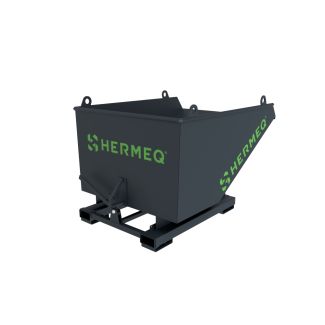
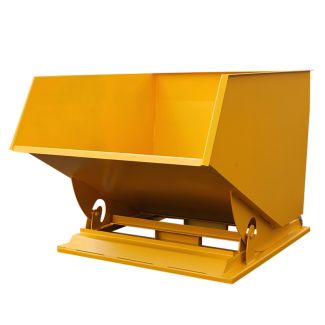
For general waste in yards, on building sites and in factories, the usual choice is one of the forklift self-tipping skips. The skip slides onto the forks by its pockets, tips forward when released over a skip or bin, and rights itself once empty, ready for the next load. Sizes run up to 2,000 litres.
Self-tipping skips with a lid or mesh extension
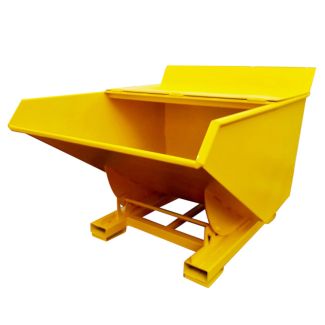
Two versions of the forklift skip hold their contents in place. The self-tipping skips with a lid keep waste inside until the moment of tipping, and the self-tipping skips with a mesh extension carry a mesh surround above the body that keeps loose debris in the skip during transit, where drivers and pedestrians work close by.
Heavy duty roll forward tipping skips
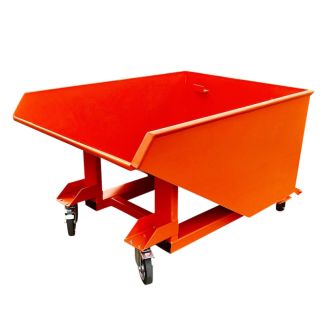
For the heaviest industrial and building site waste, the heavy duty roll forward tipping skips are made from thick steel plate. The trade also calls them tippers. Each skip is mechanically released and rolls forward to empty, and the range can be fitted with wheels for moving between lifts.
Mini tipper skips and swarf bins
Machine shops and fabrication bays use the mini tipper skips and swarf bins beside lathes, mills and saws, where they collect swarf, filings and offcuts.
Low height tipping skips
At the end of a conveyor, a dross chute or a production line, the low height tipping skips sit underneath the discharge point to catch material that falls below waist level. The low body fits where a standard skip would not, and the skip tips automatically once lifted to the receiving bin.
Telehandler tipping skips
On sites where the telehandler does the lifting, the telehandler tipping skips are the auto lock skips for construction waste. The telehandler skips on castors are made to order and can be pushed by hand once off the forks, and the tipping skip with a Manitou attachment fits Manitou machines and other telescopic handlers.
Drop bottom and bottom empty skips
Where the load has to leave through the base, the drop bottom skips and bottom empty skips are held over a larger skip or bin and open underneath, so the skip itself never tips. The automatic bottom empty skips release from the cab, which keeps the driver in the seat for the whole cycle.
Rotating skip bins and dumping hoppers
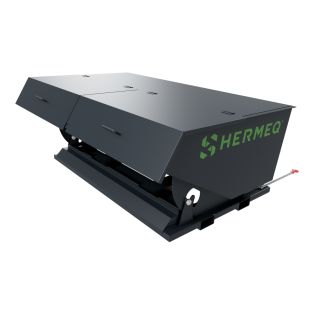
The rotating skip bins have integrated fork pockets and empty by turning over on a forklift fitted with a rotator, one of the forklift attachments that turn the carriage and its load. The double door dumping hopper is also forklift handled and divides its load between two compartments, which keeps two waste streams apart from collection to tipping.

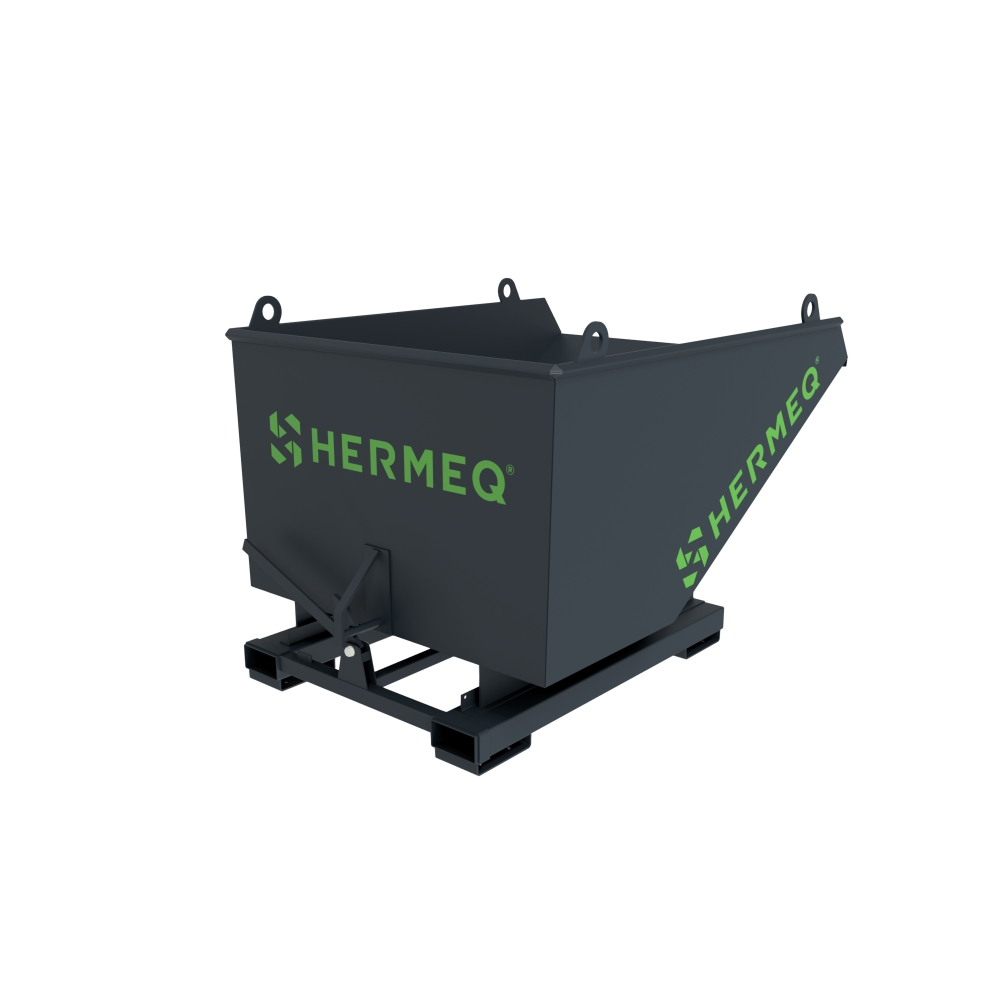
Crane skips, boat skips and rubble skips
When the waste sits where a forklift or telehandler cannot reach, such as up the floors of a building, behind hoarding, down in a basement or across ground the plant cannot cross, the skip goes in and comes out on a crane.
Crane tipping skips
Fitted with lifting lugs for overhead cranes, the crane tipping skips carry waste across a factory floor, workshop or yard bay to the tipping point. They suit bays served by an overhead crane, where a forklift cannot work.
Circular tipping skips
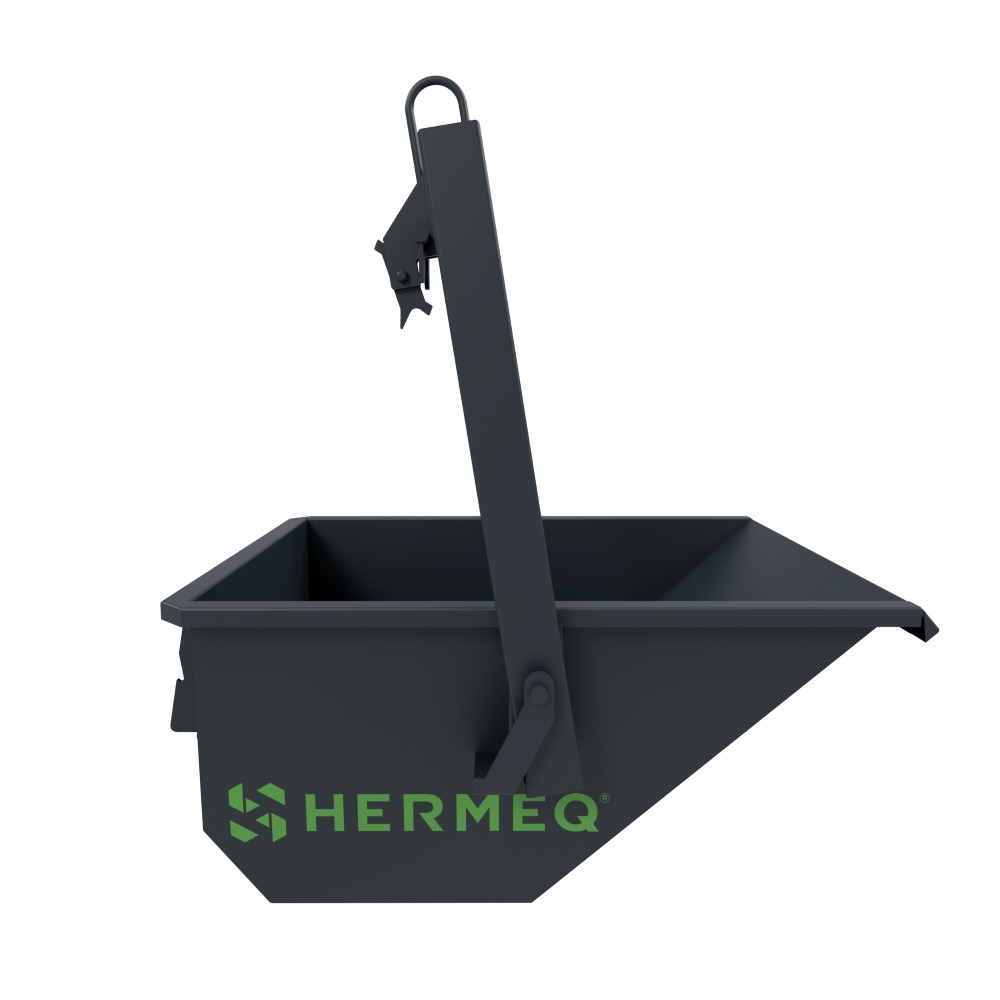
A fold-down hanger and a safety lock opened by hand set the circular tipping skips apart from the rest of the range. They are muck skips, lifted on the hanger and carried to the tipping point, where the lock is released and the skip tips and empties under its own centre of gravity.
Boat skips
For heavy muck and waste, the boat skips are crane or chain lifted and are the largest skips in the range by volume, at up to 4,000 litres. The self-dumping boat skips empty once released, and the crane lifted boat skips move heavy waste out of excavations and off site works.
Safe rubble skip
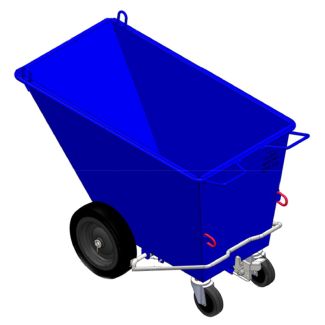
Known on site as a rubble truck or box truck, the rubble skip runs on wheels to the work face and is held in place by a parking brake on uneven ground. Welded lifting eyes let a crane lift it away once full, and its lifting hooks are used to tip it into a larger skip.
Self tipping, roll forward or drop bottom skips
The right method of emptying depends on who triggers the tip, how much height there is above the receiving container and how wide its opening is.
Self tipping and self-righting skips, also called auto tipping skips, suit repeated tipping through the day into a builder's skip, a bin or a waste bay, because the driver lifts, tips and returns the skip from the seat with nobody on the ground.
Roll forward skips, released mechanically by the operator, leave the moment of tip to the operator. That control matters where the load has to land in one exact spot, such as a scrap bay or one compartment of a larger skip, and where a skip must stay level until someone chooses to empty it.
Drop bottom and bottom empty skips are the answer where headroom is short, where the receiving skip or bin has a narrow opening, or where the load has to fall straight down without spilling over the sides.
Matching a tipping skip to the machine and the load
Forks, auto lock and the telehandler
The skip and its load together have to sit within the forklift's rated capacity at its load centre, and a long skip moves that centre further from the mast, so check the truck's capacity plate against the weight of a full skip. A forklift skip slid onto telehandler forks is held by its pockets alone and can slide off as the boom rises or the carriage tilts, so boom work calls for an auto lock telehandler skip. A crane skip needs slings, chains and shackles rated for the skip and its full load, which sit in the range of lifting chains and accessories.
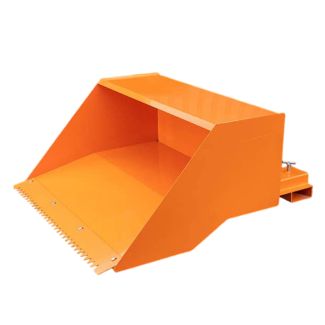
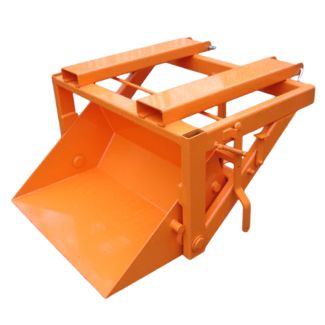
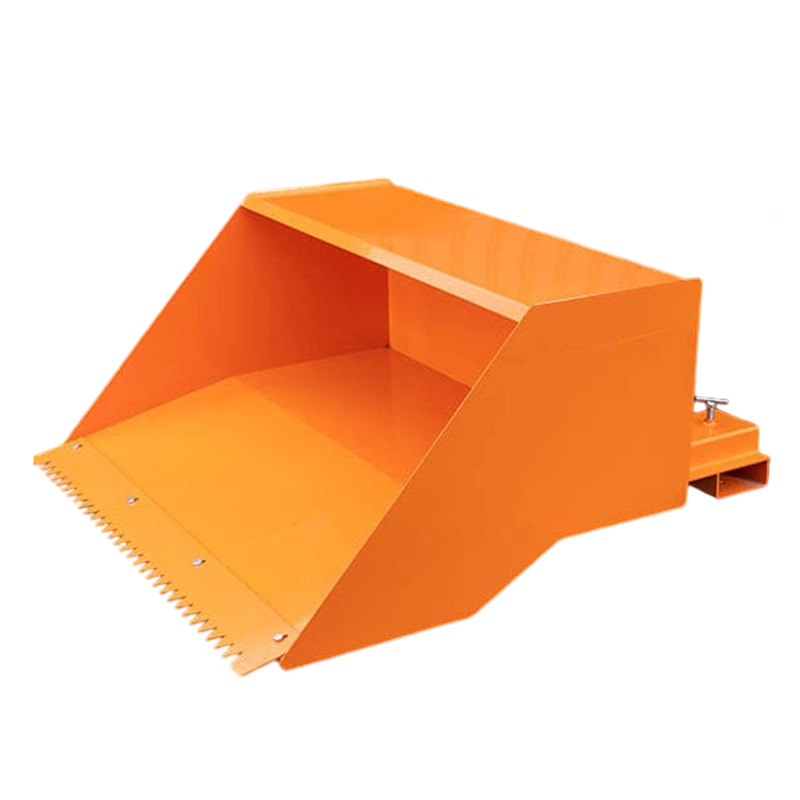
Loose sand, gravel and topsoil that must be scooped from a heap move better in a forklift scoop bucket or an underslung scoop bucket.
Plate thickness and heavy duty use
The choice between the standard forklift skips and the heavy duty range comes down to the steel: the forklift self-tipping skips are 3 mm mild steel, and the larger heavy duty skips step up to 5 mm plate. Thicker plate suits demolition rubble, scrap metal and daily site use, where an excavator bucket or grab drops material in from height, and standard gauge steel suits packaging, timber offcuts and general factory waste.
Lids, mesh extensions and waste segregation
Light waste such as film, cardboard and insulation offcuts lifts out of an open skip in wind, which points to a lidded skip. Bulky debris stacked to the rim and carried past people and other plant points to a mesh extension. To keep waste streams apart, the double door dumping hopper carries two in one lift, and skips in different colours can mark each stream at the waste station.
Castors and wheels
A skip on wheels suits work where it stands at the work face and is pushed along between loads, with plant called only to empty it, as with the telehandler skip on castors, the heavy duty range with wheels fitted and the rubble skip.
Popular Categories

Forklift Attachments
View Products >

Lifting Equipment
View Products >

Telehandler Attachments
View Products >
Frequently Asked Questions
No. A builder's skip is the large container a lorry delivers and collects, and a tipping skip stays on site, where a forklift, telehandler or crane carries it to the builder's skip or a bin and empties it there.
Each skip has a safe working load, given on its product page, and across the range the ratings run up to 5,000 kg on the largest boat skip. Dense loads such as muck, rubble and wet concrete reach that limit long before the skip is full, so choose by the weight of a full load of the material you handle first and by volume second.
Most skips in the range come in blue, green, red or yellow. A site can use the colours as its own code for separate waste streams, such as metal, timber and general waste, and repeat the code on the signs at each waste station so that operatives and drivers know which skip takes what.
Yes. Before each lift, check the lugs, lifting eyes or hanger for cracks, distortion and wear, confirm that any safety lock is closed and sound, and make sure the slings or chains suit the load. The Safety, Health and Welfare at Work (General Application) Regulations 2007 set the rules for examining lifting equipment, so keep each crane skip's examination records with those for the site's other lifting equipment and accessories.
The forklift self-tipping skips, the lidded premium skips and the heavy duty roll forward skips are documented as designed to EN ISO 12100. EN ISO 12100 is the European standard for the general principles of safe machinery design and risk reduction, published by the NSAI as I.S. EN ISO 12100.
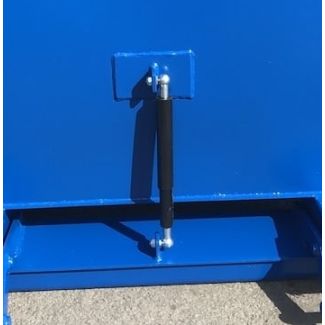
Choose a telehandler tipping skip for a telehandler. The auto lock telehandler skips lock onto the forks with a gas strut assisted catch and tip without the driver leaving the cab.