







V Mesh Fencing
HERMEQ supplies V mesh security fencing, the weld mesh panel fence used on commercial, industrial and residential boundaries, as complete perimeter systems and as separate panels, posts and gates. The range runs from Safe Mesh 454 economy panels and the light to medium duty Safe Mesh 100 system, through 656 and 868 twin wire mesh, to 358 prison mesh for sites that need semi-high security. The single and twin wire systems are powder coated in green or black, and an on-ground version stands on concrete blocks where posts cannot be dug in.
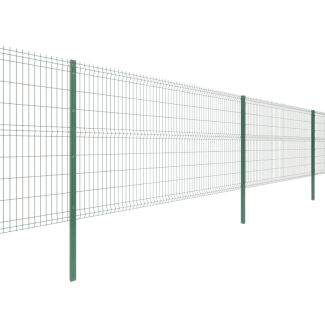
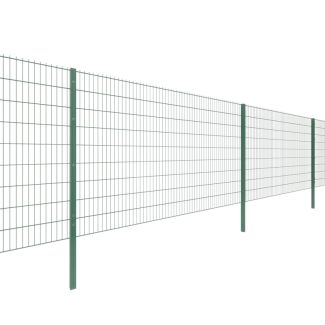
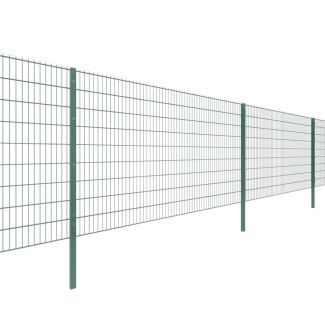


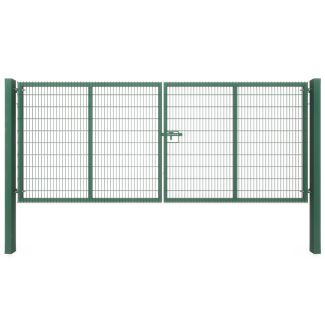
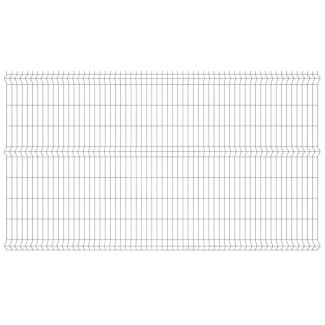
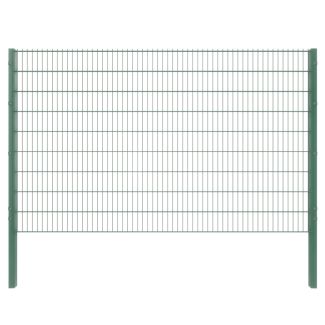
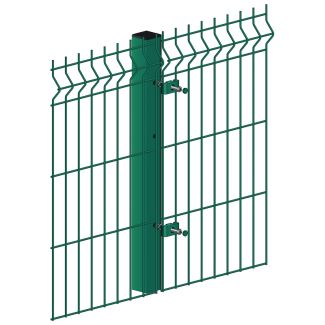

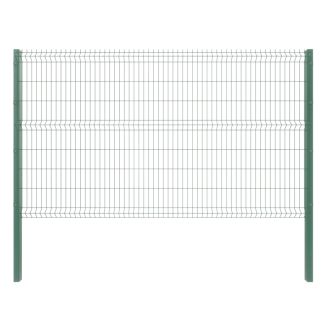
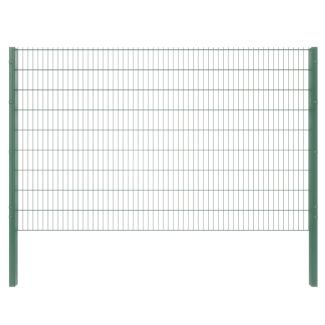

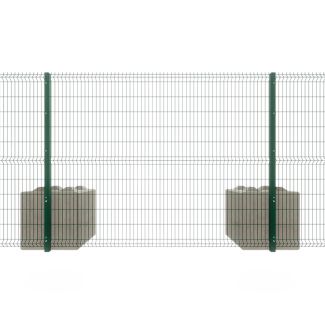

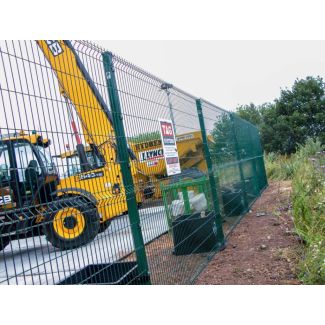

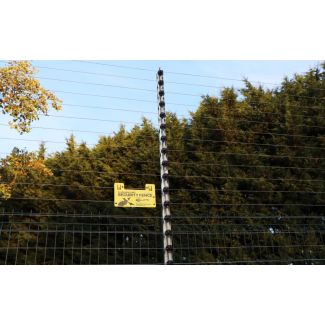

V mesh security fencing, twin wire and 358 prison mesh
The range climbs in steel and security from economy single wire panels, through Safe Mesh 100 and the 656 and 868 twin wire systems, to 358 prison mesh, and the numbers in most of the names give the wire sizes in millimetres.
Safe Mesh 454 single wire panels
The 454 is the economy panel, made from a 4 mm vertical wire welded to a 5 mm horizontal wire and lighter than Safe Mesh 100. The 454 single wire mesh panels are for boundaries around businesses, factories and homes where the fence marks the line and keeps out casual access.
Safe Mesh 100 V mesh fencing
Safe Mesh 100 V mesh fencing is the light to medium duty system, with formed V bars that stiffen each panel. It covers most commercial, industrial and residential perimeters, from business parks and office car parks to housing developments.
656 twin wire mesh fencing
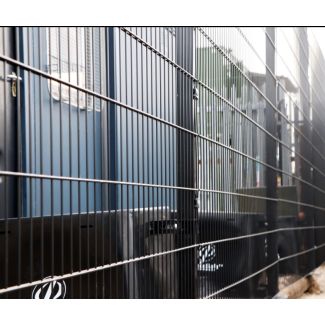
In 656 twin wire mesh fencing, each 5 mm vertical wire is welded between a pair of 6 mm horizontal wires to make a flat panel that is stronger than any single wire system. It is the step up for industrial yards, depots and commercial sites where the boundary needs more strength than V mesh without moving to the heaviest panel.
868 twin wire mesh fencing
868 twin wire mesh fencing pairs 8 mm horizontal wires around a 6 mm vertical, the heaviest twin wire panel in the range. It is specified to keep climbers out of commercial, industrial and recreational sites, and it is the common choice for schools, parks and sports grounds that the public pass every day.
358 prison mesh fencing
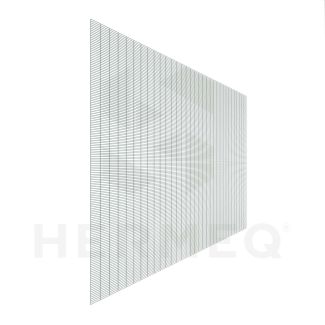
358 prison mesh fencing is the semi-high security system, for sites that need stringent protection such as utility compounds, plant and materials stores and high-value yards. Its code describes a very close mesh pattern, and it is the only system in the range that goes up to 3.0 m high.
On-ground V mesh fencing
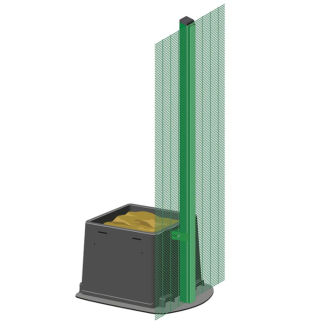
On-ground V mesh fencing on concrete blocks bolts Safe Mesh 100 panels to concrete bases for ground where posts cannot be dug in. It suits hardstanding over buried services, finished car parks and land where the owner will not allow excavation, and the on-ground fencing category holds the wider choice of block-based systems.

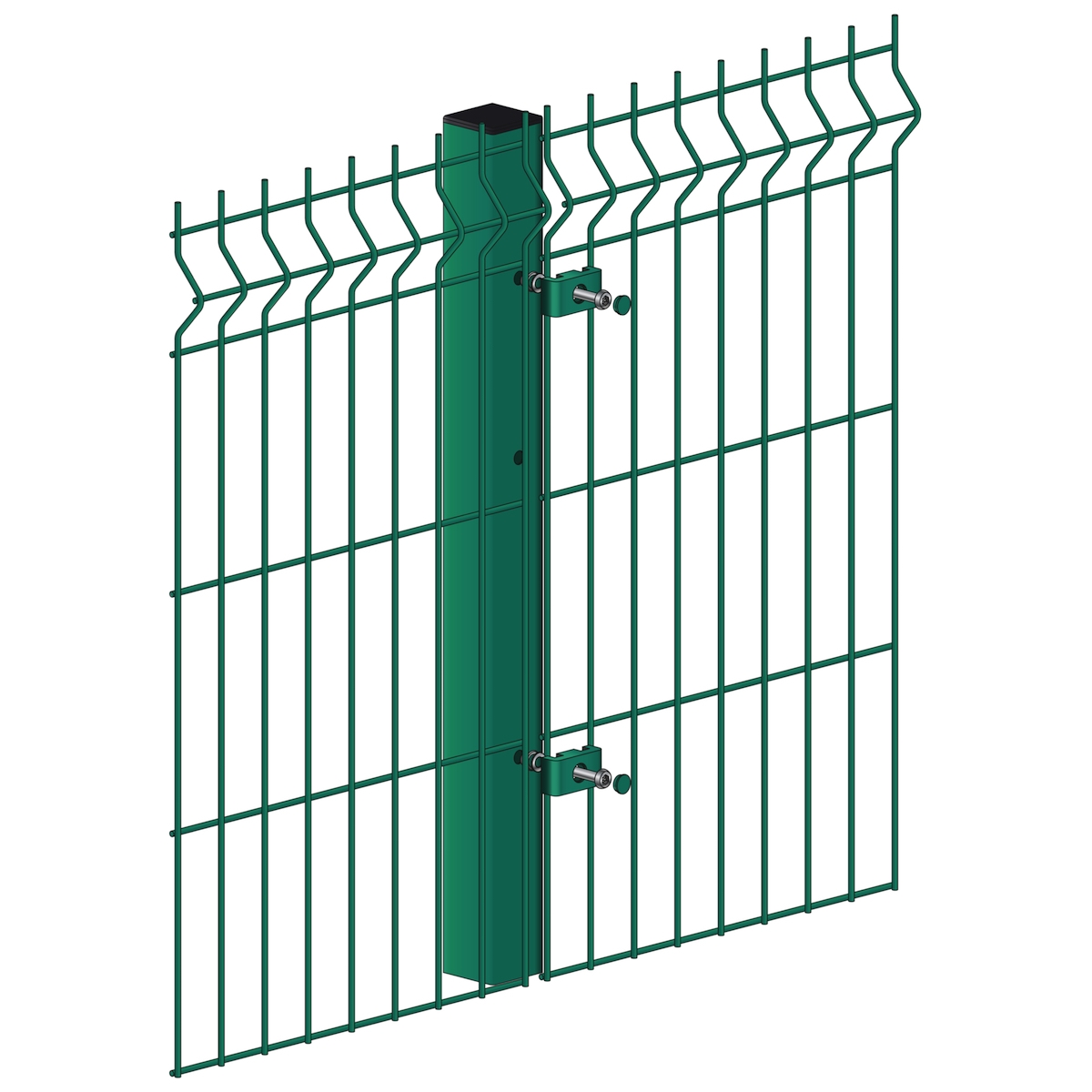
V mesh or twin wire mesh fence panels
Single wire V mesh is right for general boundaries and budget runs, and twin wire is right where the fence must be stronger and harder to climb. A single wire panel takes its stiffness from the V bars pressed into it, so it uses less steel per metre, is lighter to handle and clips to its posts quickly. A twin wire panel is flat, with two horizontal wires at every crossing, so the mesh is denser and more rigid and gives less to grip or flex against. Twin wire is therefore the specification for schools, sports grounds and industrial premises, and for any boundary that people will try to get over or through.
Mesh fence panels, posts and fixings
Fence height for the site
The single and twin wire systems come in heights from 1.8 m to 2.4 m, and the height follows the risk. The lowest fence marks a boundary and stops casual access around offices, housing and public open space, while the taller heights suit commercial and industrial yards that stand unattended at night or hold plant and stock. Sites that need a taller line than that move up to 358 mesh.
Green or black mesh fencing
Single and twin wire panels, posts and most gates are powder coated in green (RAL 6005) or black (RAL 9005). Green sits back against grass, hedging and trees and is the usual choice for parks, schools, sports grounds and rural sites, while black reads cleanly against brick, glass and cladding on commercial frontages and new developments. Posts and gates are ordered in the same colour as the panels so the line reads as one fence.
Full system or panels only
The system calculators, such as the Safe Mesh 100 fencing system, build a complete run of panels and posts for a new boundary. Panel-only listings replace damaged panels or extend a line that is already standing, and Safe Mesh 100 panels match existing single wire runs. For twin wire, the 656 mesh fence panels go into 656 lines and the 868 mesh fence panels into 868 lines, so the code on the existing fence decides the order. V mesh panels are 3 m wide and twin wire panels 2.5 m wide, so the same length of fence takes more posts in twin wire. A straight run always needs one more post than it has panels, and every dug-in post needs its own postcrete.
Dig-in posts, fence feet and hard ground
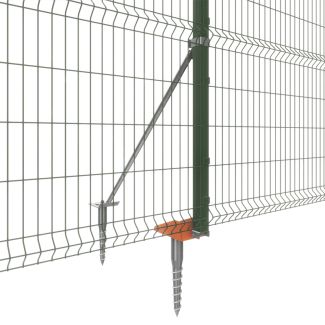
On open ground, V mesh fencing posts are dug in and set with no-mix postcrete, the standard method for a permanent line. Where digging is not allowed or the fence will move later, the V mesh fence feet locking system holds each post with a bracket and stabiliser brace on a soil, concrete or tarmac fixing, and it can be lifted and reused.
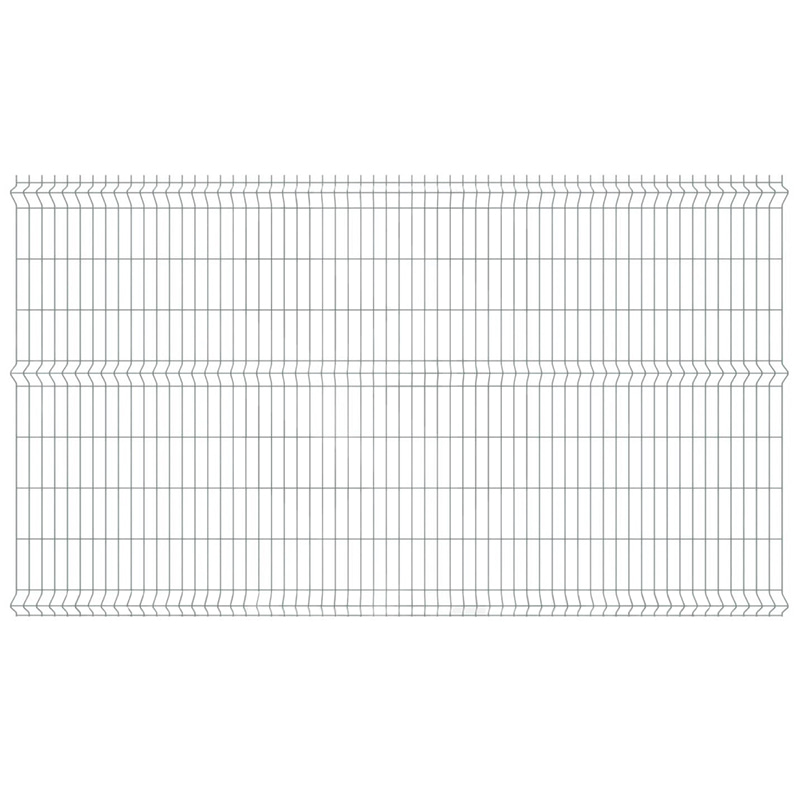
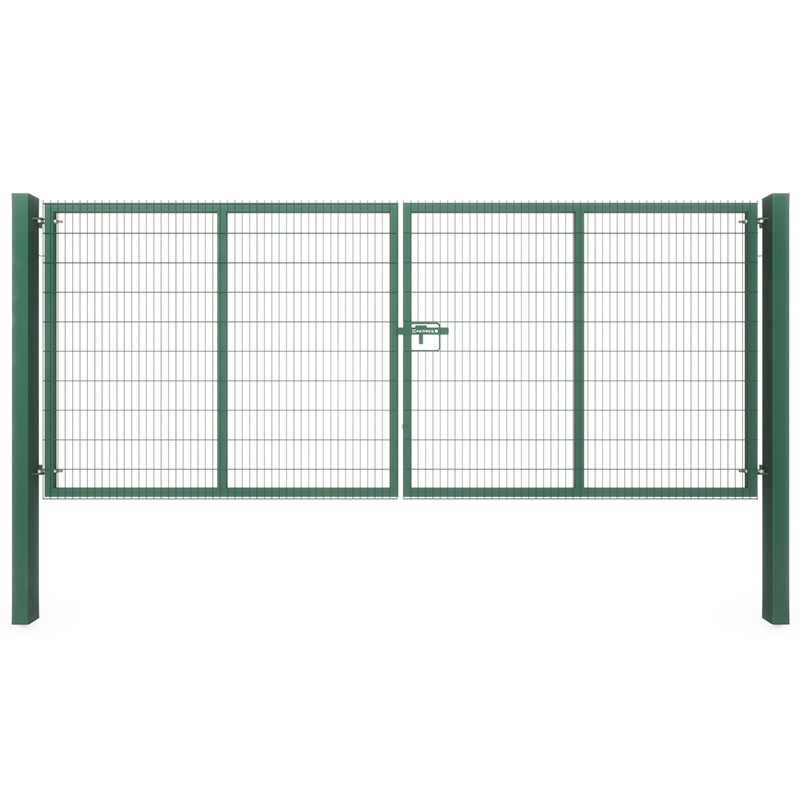
V mesh fencing gates
A gate is ordered in the same mesh as the fence it sits in, so a 656 line takes a 656 gate and an 868 line takes an 868 gate.
Vehicle gates in 656 and 868 mesh
Double leaf vehicle gates close the entrances to yards, car parks and depots in both twin wire patterns. The 656 mesh vehicle gates come with dig-in or bolt-down posts and a slide latch or Locinox lock. Fabricated double leaf 656 mesh gates are a second design for the same fence, and the 868 mesh vehicle gates match the heavier panel. Gates in other designs are in vehicle access gates.
Pedestrian gates
Pedestrian gates put a lockable entrance into the line for footpaths, staff doors and building entrances, and for schools and parks where people need a controlled way in. The 656 mesh pedestrian gate comes with a lock and dig-in posts, and the 868 mesh pedestrian gate comes in heights to match each 868 fence.
Site Guard gates for construction entrances
Site Guard gates are double leaf gates on dig-in posts for construction site entrances, where the fence is temporary or semi-permanent and the gate locks overnight. Clad Site Guard gates have a profiled V mesh infill that continues the mesh across the opening. Unclad Site Guard gates are the frame alone, chosen where the entrance needs a lockable barrier to vehicles.
Popular Categories

Palisade Fencing
View Products >

Estate Fencing & Railings
View Products >

Wire & Chain Link Fencing
View Products >
Frequently Asked Questions
The cost per metre is the price of the panels, posts and fixings for a run divided by its length. It rises with the weight of mesh, from single wire through twin wire to 358, and with the height of the fence. The system calculators total the panels and posts for a given run, and each product page carries its current price in euro.
The line is set out first, with post positions marked at panel-width centres from a fixed point such as a gate or a corner. Each post is stood plumb in its hole and set in postcrete, and the panels are fixed to the posts with the fittings supplied once the postcrete has gone off.
V mesh fencing is stepped on a slope. Each rectangular panel is fixed level and set a little higher or lower than its neighbour at the shared post, so the fence follows the ground in steps. The steps are planned before the posts are set, because the height of each post in the ground fixes the height of the panels on it.
V mesh security fencing marks the boundary and stops casual access to commercial, industrial and residential sites. Where the fence must keep climbers out, choose 868 twin wire, which is built to stop climbers getting into premises, or 358 prison mesh, made for semi-high security sites, whose close mesh leaves no finger or toe hold.
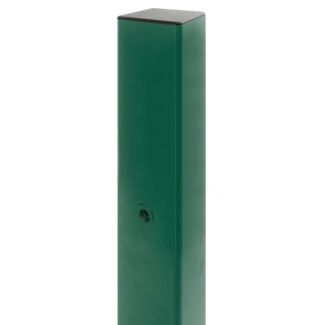
Safe Mesh posts are supplied with their caps and fittings, so a run needs only the panels, the posts and whatever holds the posts in place. Postcrete and the fence feet locking system are ordered separately.