







Palisade Fencing
Palisade fencing from HERMEQ is a high-security permanent boundary for commercial, industrial and domestic properties. W section pales with pointed tops are bolted to horizontal rails between dug-in posts, and the pointed heads and lack of footholds make the line a clear deterrent to intruders.
The steel systems come galvanised or powder coated. Galvanising protects the steel from corrosion, and powder coating adds a colour finish for frontages and public-facing sites. Once installed, a palisade fence needs little maintenance, which keeps its long-term cost low. The range covers several heights and colours, a GRP system for sites that need a non-conductive fence, and matching palisade vehicle and pedestrian gates.
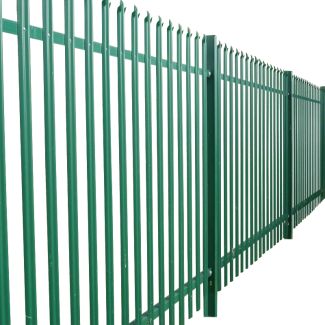
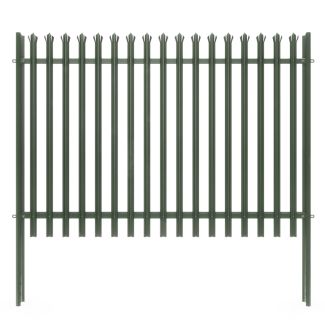
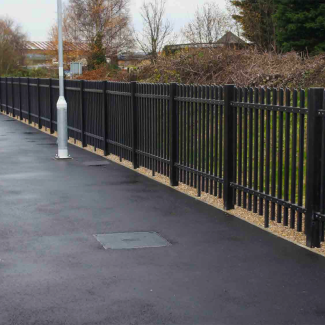
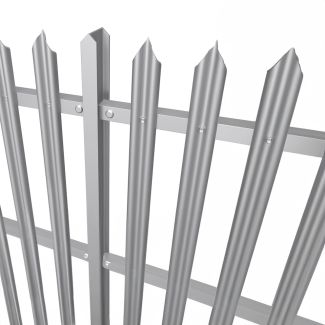
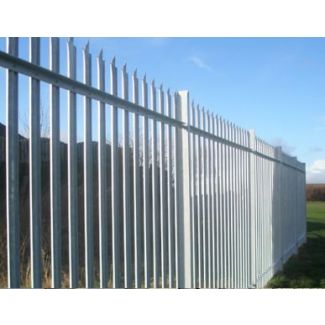
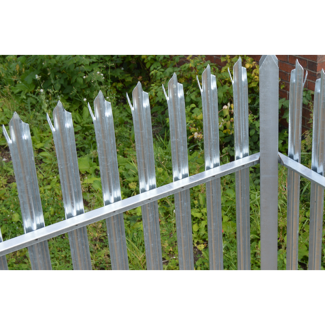
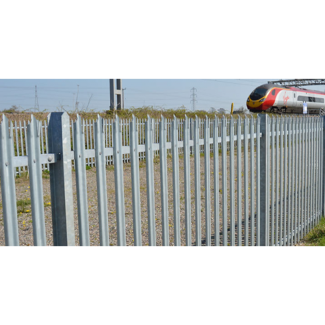


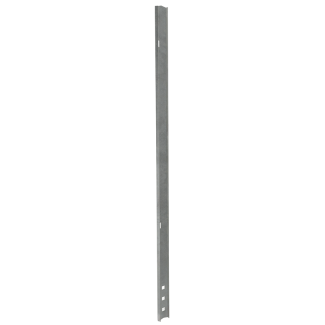
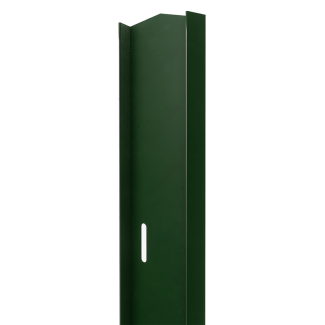
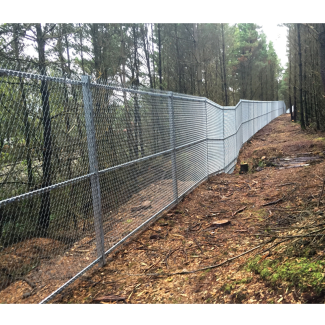
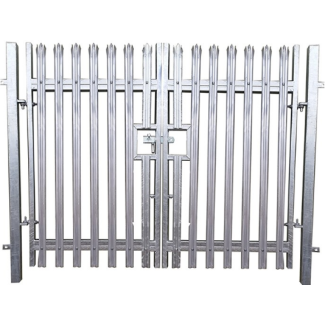

Steel and GRP palisade fencing systems
The range has three steel systems built from separate posts, rails and pales for security perimeters, and one GRP system for boundaries where a steel fence would conduct electricity or corrode.
Palisade Standard
Palisade Standard is the general-purpose steel system for industrial, commercial and domestic perimeters, and it comes galvanised or in four powder coat colours. Its palisade pales are W section, with three points splayed outward at the head of each pale. Choose it for most new security lines, and for extending or repairing an existing Standard run.
Palisade Ultra
Palisade Ultra uses the same W section pale and triple pointed splayed top as Standard, carried on cold roll formed posts. These Palisade Ultra posts are lighter than conventional sections with no loss of strength. Ultra suits long runs, where every post is carried along the line and set by hand.
Single pointed pale palisade
Palisade Network Rail Spec is a steel system built with single pointed W section pales, a corrugated profile with one point at the head of each pale in place of the splayed triple top. Its rails come in two sections, with the heavier section matched to the tallest fences. Choose it when a project specification calls for single pointed pales.
GRP palisade
GRP palisade fencing is made from glass reinforced plastic, which does not conduct electricity and does not corrode. It is the palisade to choose for rail, power, water and industrial environments where a steel fence would carry current or rust, and the three steel systems cover general security perimeters.
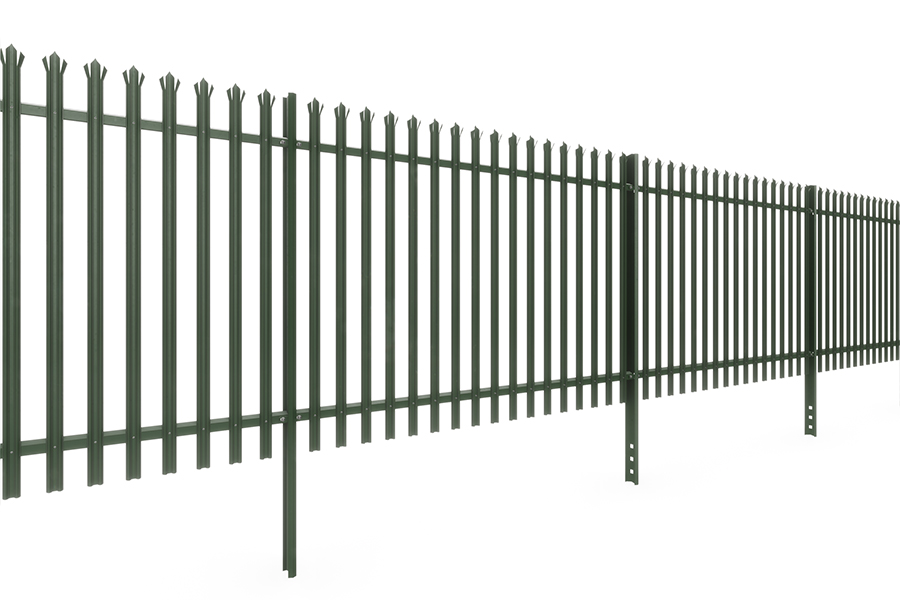
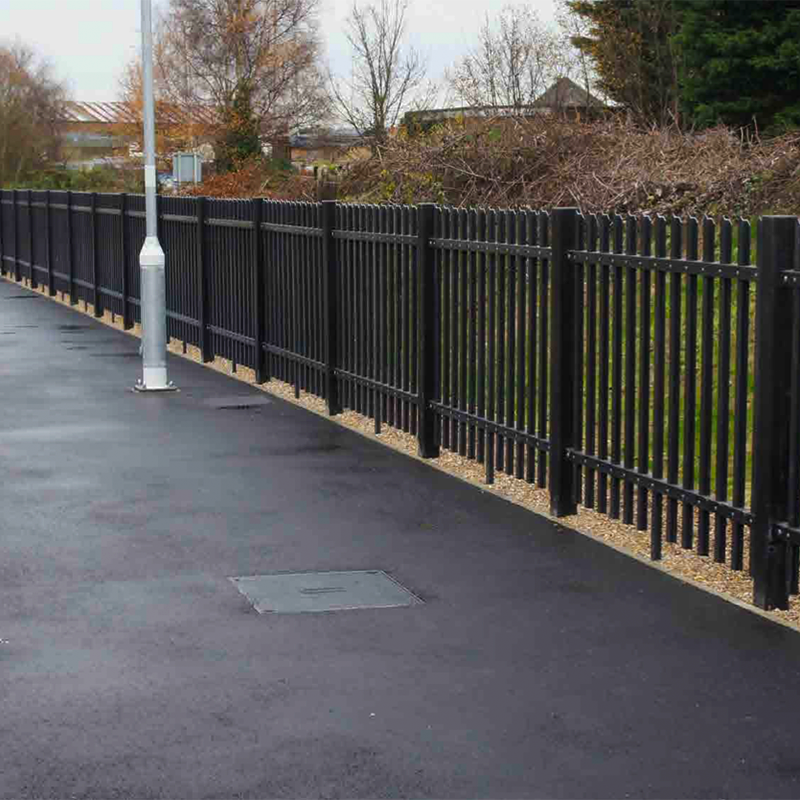
Galvanised and green powder coated palisade
Galvanised palisade fencing is the working finish for industrial units, utility compounds and yard perimeters where the colour of the fence does not matter, and its zinc coating protects the steel from corrosion. Powder coated palisade is the choice where the fence faces the public, sits on a commercial frontage or has to match gates and railings already on site. Palisade Standard and Palisade Network Rail Spec come in green, black, blue and red powder coats as well as galvanised, while Palisade Ultra comes galvanised or powder coated in green or black. Posts, rails and pales are sold in every finish of their system, and the gates are galvanised or powder coated to match.
Palisade security fencing for industrial, utility and rail sites
Industrial units, yards and depots
Yards, depots and plant compounds are usually fenced at 2.0m or 2.4m in galvanised Palisade Standard or Palisade Ultra. The gate position shapes the layout as much as the line itself, so plan a double leaf vehicle gate wide enough for a lorry to turn in from the road.
Rail, power and water sites
Fences beside rail lines, electrical installations and water treatment plant often run through compounds that maintenance crews enter regularly, so plan pedestrian gates at each access point along with the fence line. GRP palisade is the material for stretches beside electrical equipment or in corrosive conditions, and Palisade Network Rail Spec covers steel sections where the specification names single pointed pales.
Commercial and domestic boundaries
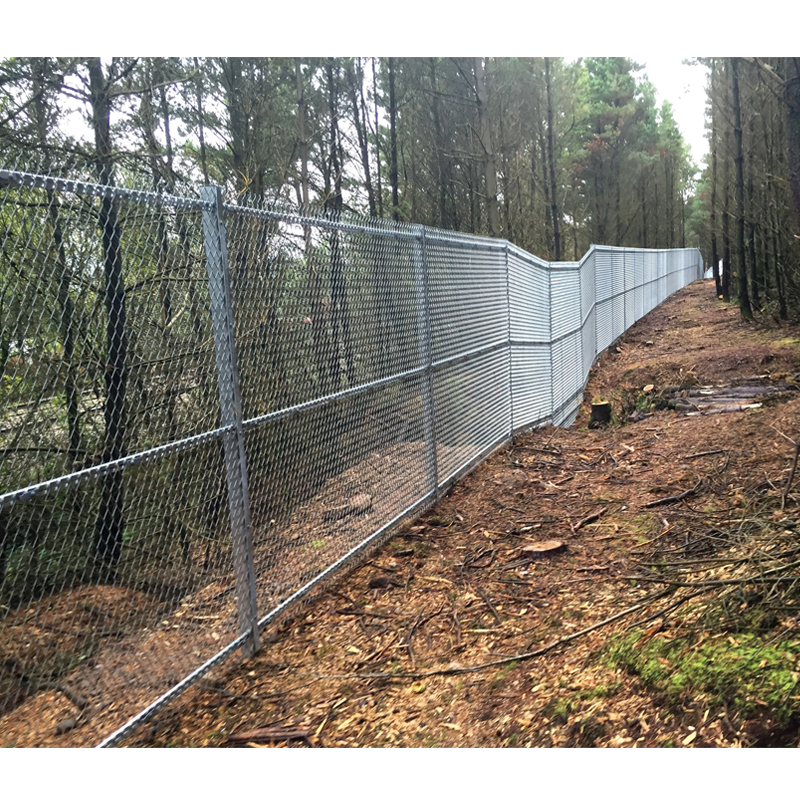
Commercial premises and homes that need a secure boundary are usually fenced at 1.8m or 2.0m in powder coated Palisade Standard, in a colour chosen to match the building or existing railings. Around a house, a metal palisade fence is not exempted development, so it needs planning permission from the local authority before it goes up. A pedestrian gate in the same finish keeps the front entrance in line with the fence, and where a frontage must stay open to view or to CCTV, the anti-climb fencing system or V mesh perimeter fencing gives a see-through boundary.
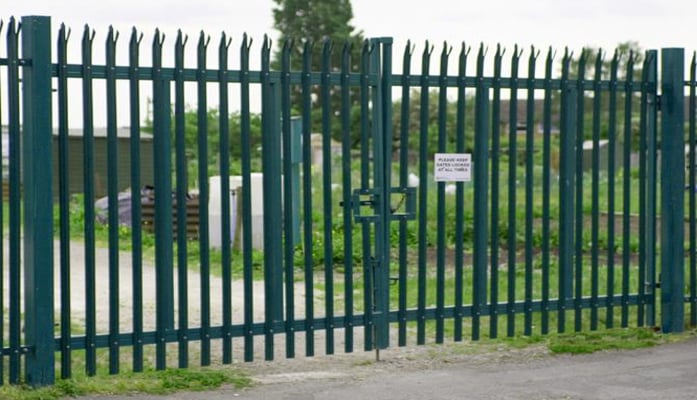
Palisade gates for vehicles and pedestrians
Vehicle gates are double leaf for lorry and car entrances and pedestrian gates are single leaf for foot traffic, and both are clad in W section pales and hung on dig-in posts concreted into the ground so that they sit in line with the fence.
Palisade vehicle gates
Made to order palisade vehicle gates come in a choice of heights and widths, galvanised or powder coated to match the line. Where the entrance is a standard width and a galvanised finish suits the site, galvanised stock palisade gates are the ready-made option.
Palisade pedestrian gates
Single leaf palisade pedestrian gates give staff, visitors and maintenance crews a way through the fence, in heights to suit each fence and in galvanised or powder coated finishes. Gate styles other than palisade for vehicle entrances are in vehicle access gates, part of the wider permanent fencing range.
Palisade fencing prices and how a run is counted
A palisade run is priced from the components it needs, so the height comes first, then the count, then the calculator.
Fence height and post length
The steel systems come in heights from 1.8m to 2.4m. Every post is longer than the height of the fence it carries, because the extra length is dug into the ground and concreted, and each post listing gives the full length for its height. Posts can be set with no-mix Postcrete, which needs no mixer on site.
Posts, rails and pales per bay
A run is counted in bays. Each bay on Palisade Standard and Palisade Network Rail Spec takes one inter post and 17 pales, and a Standard bay is bolted together with two palisade rails. Add one more post to close the end of the run, and fit palisade corner posts at every change of direction. Inter posts are sold singly as palisade fence posts in each height and finish.
Price calculators for a full run
The cost per metre of palisade fencing depends on the system, the height, the finish, the length of the run, the number of corners and any gates in the line, so a single price per metre is only a starting point. The Palisade Standard price calculator costs a complete Standard run from its length, height and finish. The Palisade Ultra price calculator does the same for Ultra, and the Palisade Network Rail Spec calculator covers that system.
Popular Categories

V Mesh Fencing
View Products >

Estate Fencing & Railings
View Products >

Wire & Chain Link Fencing
View Products >
Frequently Asked Questions
The line is set out first, with corners, gate openings and post positions at the bay width marked on the ground. Posts are set in dug holes and concreted, and each one is checked for line and plumb before the concrete sets. Bolting the rails to the previous post as each new post goes in keeps the bay width true. The pales are then bolted to the rails along the run.
Yes. On a slope the bays are stepped: each bay is set level and the line steps down from post to post as the ground falls. The step height and the gap left under each bay are worked out at set-out, before any post is concreted.
W section pales are folded into a corrugated W profile, while D section pales have a rounded, D shaped profile. The steel systems in the HERMEQ range use W section pales throughout, including on the gates. A new line, a later repair and its gates therefore all share one profile.
Yes. Palisade Standard and Network Rail Spec posts, rails and pales are sold individually, so a bent pale or a damaged bay can be replaced without taking down the line. Match the system, height and finish of the existing fence, which the shape of the pale top and the colour usually identify. The same components extend an existing line in a matching finish.
Where the boundary has to stay open to view, for CCTV or to keep a frontage visible, a mesh fence is the alternative. The anti-climb mesh fencing system is a close mesh panel fence for high-security sites, and V mesh perimeter fencing is a welded mesh panel system for general boundaries. Both are part of the permanent fencing range.
No. Timber palisade is a wooden picket style fence for gardens, while the palisade on this page is steel or GRP security fencing. Wooden fencing for gardens and domestic boundaries is in the garden fencing range.