







Steel Wall Hoarding
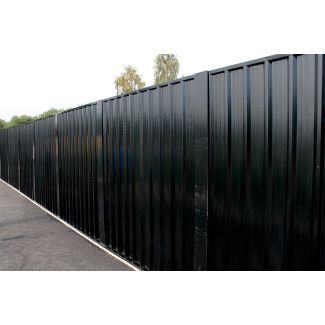
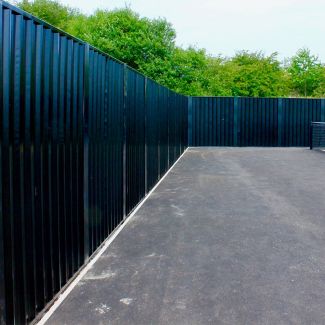
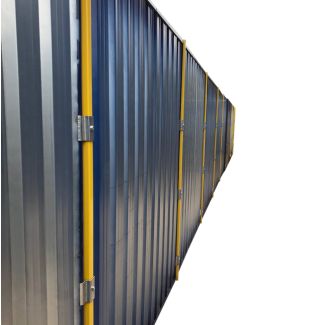
Steel Wall hoarding is an in-ground steel hoarding system for construction site perimeters, built from solid profiled steel panels on posts set in concrete, so the line forms a continuous, solid screen for the length of a programme.
The intermediate posts are most commonly concreted into the ground, and the panels are fixed to them with top hat brackets and M10 bolts. Heavy duty vehicle gates hang in the same line on their own dig-in posts, and together they form permanent steel wall fencing that secures the site, its plant and its materials.





Steel hoarding panels, posts and doors
In-ground hoarding panels
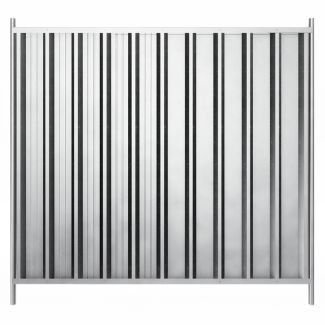
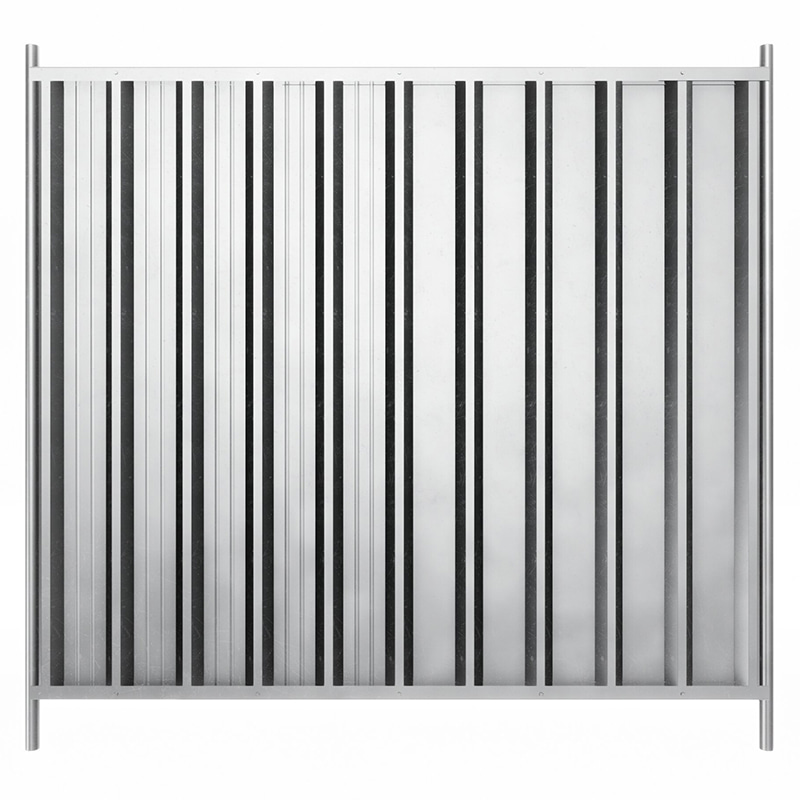
The in-ground hoarding panels make up the length of the run, each 2.1 m wide, with profiled steel cladding in a steel frame forming a solid face between posts, and they stand only once they are fixed to posts.
Intermediate in-ground posts
Every joint between two panels sits on an intermediate post, set 600 mm into the ground in concrete, which takes the panel ends on either side. These steel hoarding posts also close each free end of the line, so a straight run needs one more post than it has panels.
In-ground corner posts
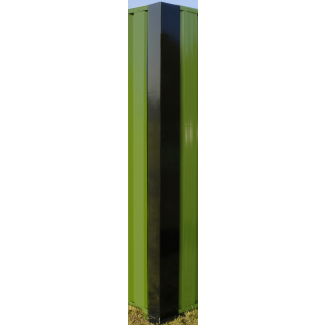
Wherever the line turns through 90 degrees, one of the hoarding corner posts replaces the intermediate post. Its plate is formed to the angle, so the two runs meet as one closed face with no gap to see or reach through.
Pedestrian door panels
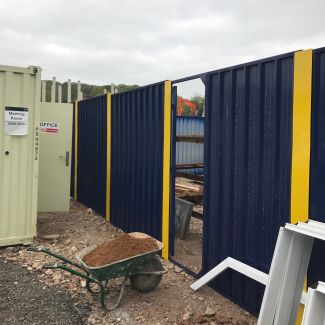
A steel hoarding pedestrian door fixes between two posts in place of a panel, in line with the hoarding, so the face stays continuous when the door is shut. Place it where operatives and visitors arrive on foot, away from the vehicle gate, to keep people out of the path of lorries and plant entering the site.

In-ground or freestanding steel hoarding
Concreted Steel Wall posts are the right choice when hoarding has to stand for the length of a build programme, on a public frontage along a road or footpath, or on an open, exposed site.
The portable steel hoarding panels are freestanding, or on-ground, hoarding. They stand on feet weighted with ballast and need no digging, which suits short jobs, phased works where the boundary moves as the build progresses, and hard standing such as a car park or an existing slab that cannot be broken out. The full steel site hoarding range carries these panels and the accessories for freestanding runs.
Solid steel takes the full force of the wind across its face, where mesh fencing lets most of it pass through. A freestanding run therefore needs its feet, bracing and ballast assessed for the site and its exposure before it goes up, and a long frontage on an exposed site is usually better served by an in-ground line.
Steel hoarding gates
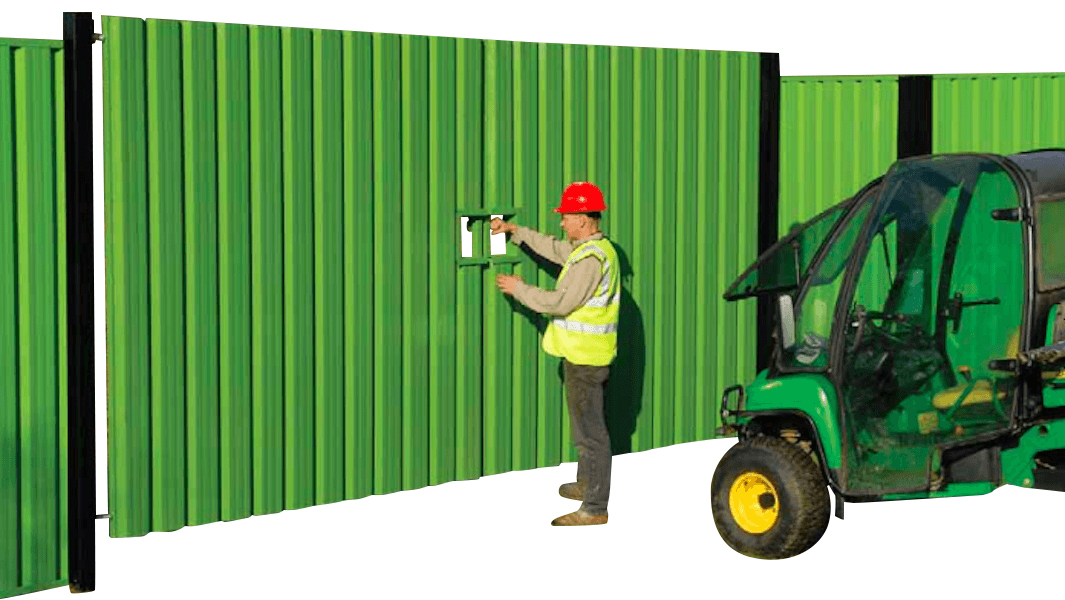
The heavy duty vehicle gates hang on their own in-ground posts, separate from the hoarding posts, in widths up to 6 m, so the choice between them comes down to the infill. Size the opening to the largest lorry or item of plant expected, with room to swing in from the road.
Solid steel vehicle gates
A solid steel vehicle gate is fully clad, so it carries the hoarding's solid line straight across the entrance. Choose it for public frontages and for sites where nothing inside should be visible from the street when the gate is closed.
Hybrid half mesh vehicle gates
The hybrid vehicle gate is clad on its lower half and meshed above. The cladding keeps the screening at ground level, and the mesh gives the driver of a lorry leaving site a view out to the footpath and the road before pulling out.
Mesh vehicle gates
A mesh vehicle gate is the choice where visibility through the entrance and a lower wind load on the leaves come first.

Hoarding fixings, Postcrete and lights
Postcrete for setting hoarding posts
Rapid-setting Postcrete needs no mixing. It goes into the hole around the post with water, so a gang can set a run of posts with no mixer on site.
Top hat brackets and M10 bolts
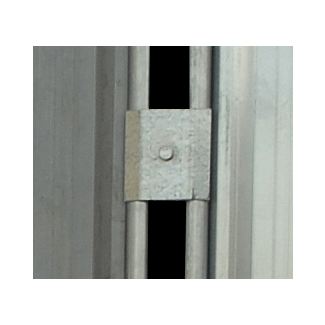
Panels and door panels fix to the posts with top hat brackets and M10 bolts. They are sold separately from the posts, so order three for each intermediate post and six for each corner post, on the same order as the posts and panels.
Hoarding lights
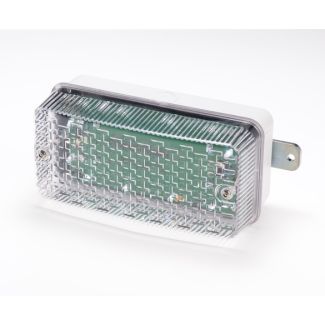
Battery lights clip onto hoarding panels and need no power supply along the line. Bulkhead lights light walkways beside the hoarding, and battery powered hoarding lights, in red or white, mark hazards such as corners, gate openings and the ends of a run.
Hoarding wall construction: height, finish and layout
Measuring the run and pricing per metre
Walk the line and mark every corner, door and gate opening on the plan, then measure each straight run between them. The in-ground hoarding calculator prices the system per metre from those lengths.
2.0 m or 2.4 m hoarding
Panels, posts, doors and gates all come in the same two heights. The lower height suits most site perimeters, while the taller one screens taller plant and stored materials and puts more height between the footpath and the works. At either height, every post is longer than the hoarding it carries by the length set in the ground, so each hole is dug to take that length with concrete around it.
Galvanised, painted or powder coated
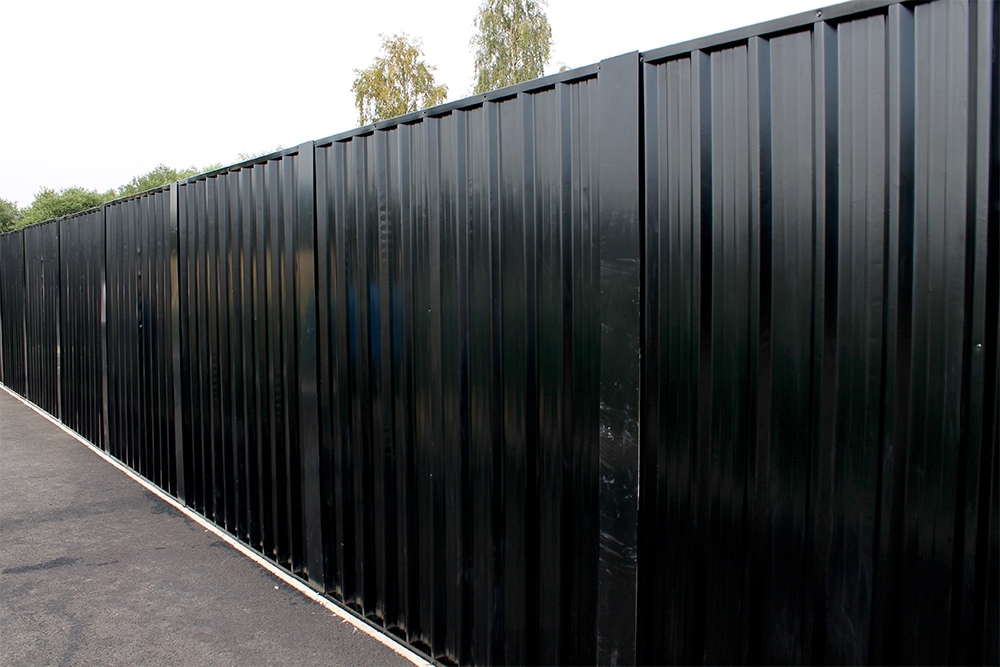
Carry one finish across posts, panels, doors and gates so the line reads as a single wall. Posts, panels and door panels all come powder coated in red, white, black, blue or green, and the panels can also be powder coated to a bespoke RAL for a contractor's or client's colours.
Ground and services along the post line
Check the drawings and the ESB Networks, Gas Networks Ireland and Uisce Éireann records, then scan the post line with a cable locator before any hole is dug, because a hoarding line along a road or footpath often crosses cables, water mains and gas pipes. Hand dig where a service runs close to a post position, and break out or core the post positions in advance where the line crosses rock or an old slab.
Popular Categories

V Mesh Fencing
View Products >

Palisade Fencing
View Products >

Estate Fencing & Railings
View Products >
Frequently Asked Questions
A hoarding wall is a continuous solid barrier built around a construction site to keep the public out and screen the works from view. Steel hoarding is made from profiled steel sheet in framed panels, either fixed to posts concreted into the ground or stood on weighted feet.
The panels, door panels and gates unbolt from their posts at the end of a job and can go up again on the next site. Posts concreted into the ground have to be broken out of their footings to be recovered, so most of the reuse comes from the panels, doors and gates.
Yes. With its posts concreted in, Steel Wall hoarding can stand for the life of a long programme and remain as a permanent steel wall fence around a compound, yard or depot. Where the finished boundary after handover does not need to be solid, palisade fencing and V mesh perimeter fencing are the permanent fencing types made for that job.
Hoarding placed on a public road or footpath needs a hoarding licence from the local authority for the area. Councils set conditions in the licence, which commonly cover the line of the hoarding, a safe route for pedestrians, lighting and how long the hoarding may stay up. The approved line can change the length of hoarding needed, so the licence is best settled before the order is placed.
On a project under the Safety, Health and Welfare at Work (Construction) Regulations 2013, the Project Supervisor Construction Stage (PSCS) coordinates safety on site during the works. The site boundary, its gates and pedestrian access are normally set out in the construction stage safety and health plan. The Project Supervisor Design Process (PSDP) covers the design stage, where the interface with the public road is often first identified.