







Scaffold Ladders & Stairways
HERMEQ supplies scaffold ladders and temporary stairs for getting people on and off scaffolds, slabs, roofs and embankments. The range covers steel scaffold ladders, professional and industrial aluminium extension ladders, combination ladders and roof ladders. For routes that carry more foot traffic, it adds modular steel and lightweight aluminium temporary stairs and spiral stair towers. Ladder beams, access gates, ladder guards and stair treads go with them, so the access to a scaffold, from the ground to the top lift, comes from one range.


Scaffold ladders and access ladders
The ladders in the range divide between fixed-length ladders that stay tied to one scaffold for the life of a job and extending ladders that move between tasks and sites.
Steel scaffold ladders
Steel scaffold ladders are the standard ladder for access between lifts on tube and fitting or system scaffolding, and they are tested to EN 131. They suit a ladder that is tied in at one lift and left there, where resistance to knocks, weather and site wear counts for more than weight. For industrial sites where flammable materials are present, the heavy duty steel single section ladder has a galvanised, non-sparking finish and is also made for use with scaffolding.
Aluminium extension ladders
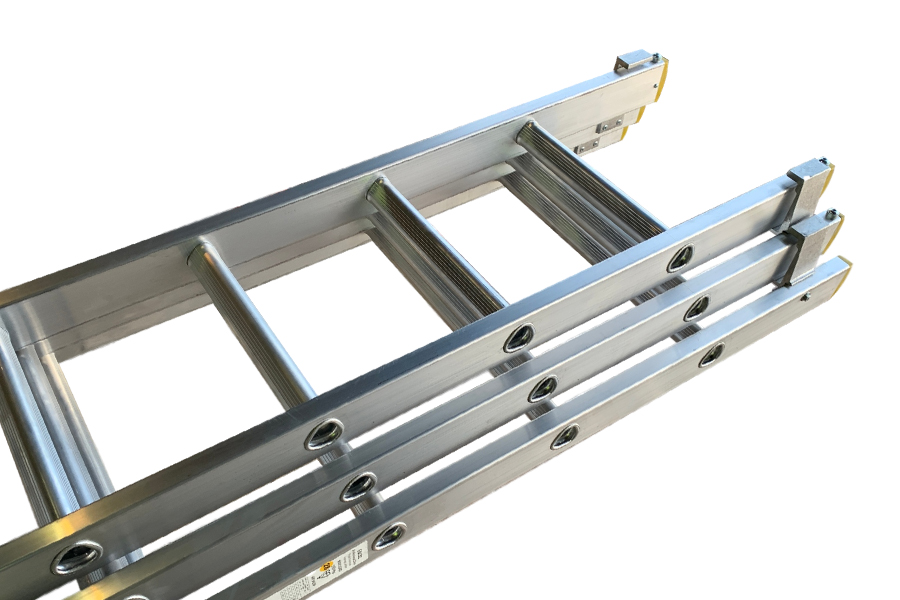
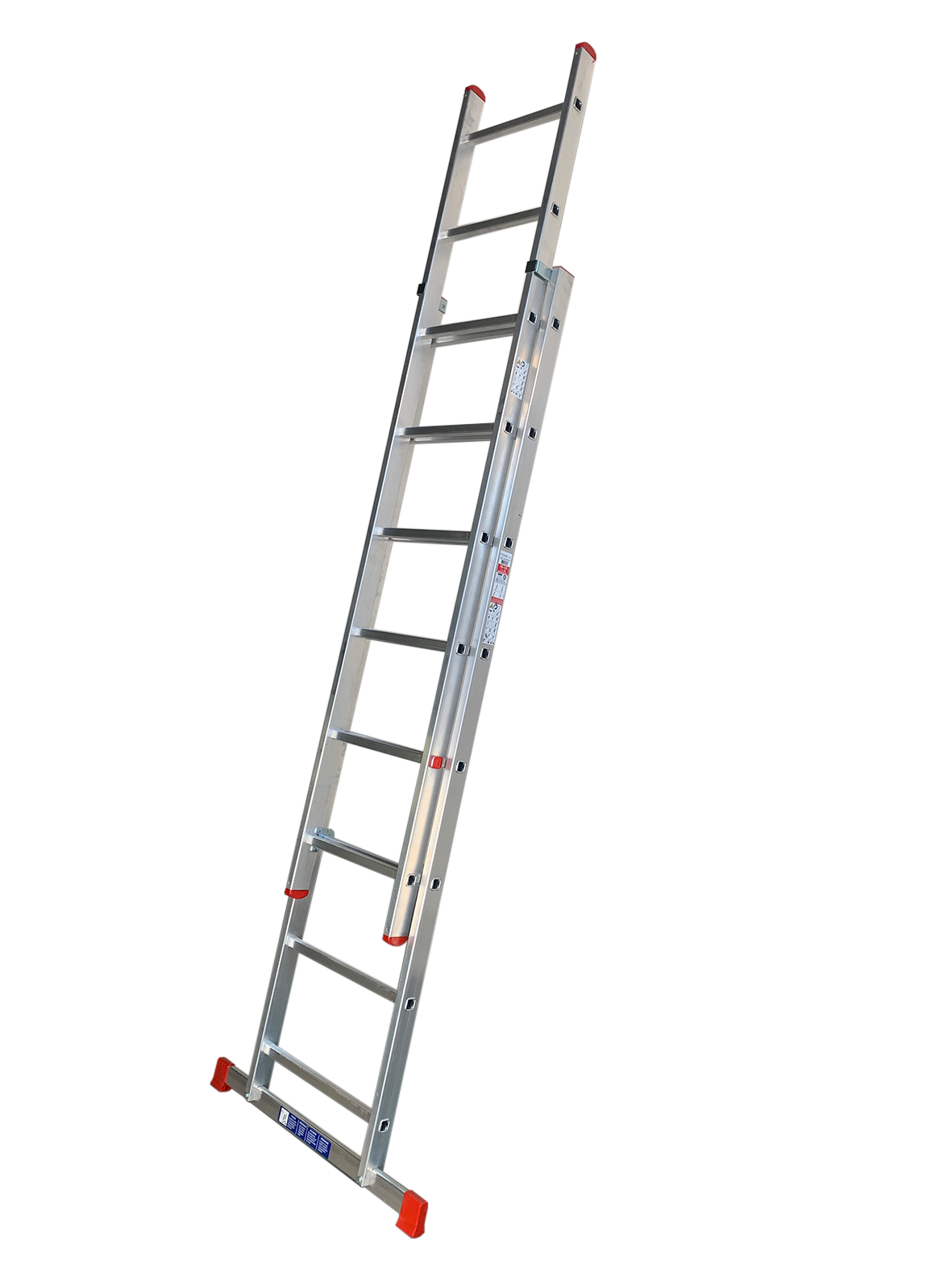
Extension ladders in two or three sections reach a range of heights from one ladder, which suits maintenance, facilities and commercial work that moves around a building or between sites. The professional aluminium extension ladders are for industrial and commercial use, inside and out. The industrial extension ladders are the heavier duty line for daily trade use.
Combination ladders
A combination ladder sets up either as a free-standing stepladder or as a leaning ladder, so one ladder covers jobs that would otherwise need two. The professional combination ladders are triple-section ladders for trade use, and the 3-in-1 combination ladder is the lighter model, with three ways of setting it up. For work from a free-standing step, aluminium builders steps and platform steps cover general site work, and fibreglass builders steps are insulated for work near electrical equipment.
Roof ladders
For roof access on a pitched roof, roof ladders give footing for work on tiles, slates, roof lights and chimneys that a leaning ladder cannot reach. Fit edge protection at the eaves first, and use height safety PPE for roof work where edge protection cannot be fitted.
Ladder beams for spanning openings
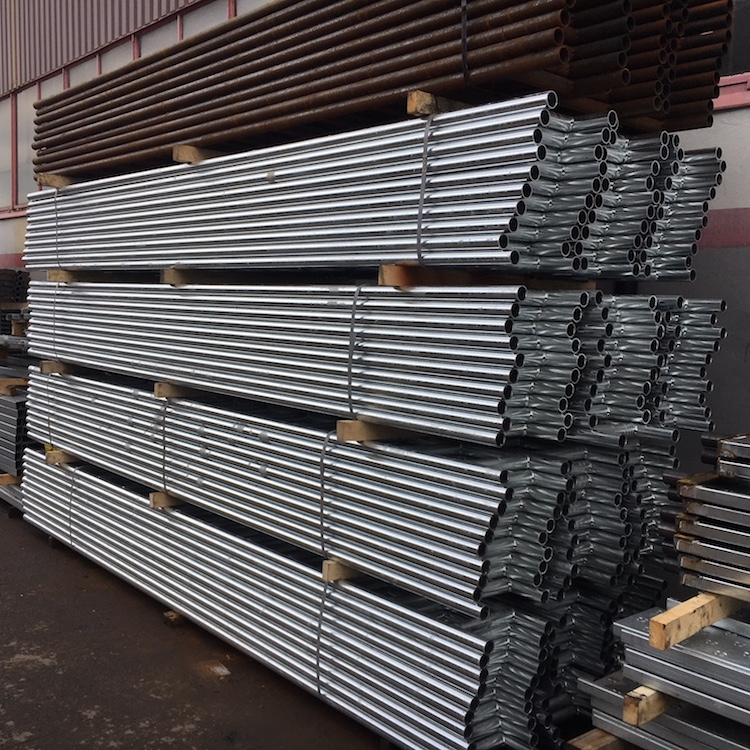
Ladder beams bridge gaps in a scaffold, such as over a doorway, an entrance or a light well, and carry boards across a span where standards cannot be placed. Galvanised steel ladder beams are the heavier and stiffer option, while aluminium scaffold beams are much lighter to lift into place and reach spans up to 8.1 m. The tubes in an aluminium beam are less stiff than steel, so an aluminium beam is chosen on the load it must carry across the span as well as on its length.
Temporary stairs and scaffold stairs
Each stair format in the range is built for a different change of level, so the choice starts with where the stair lands and how often it has to move.
Modular steel stairways
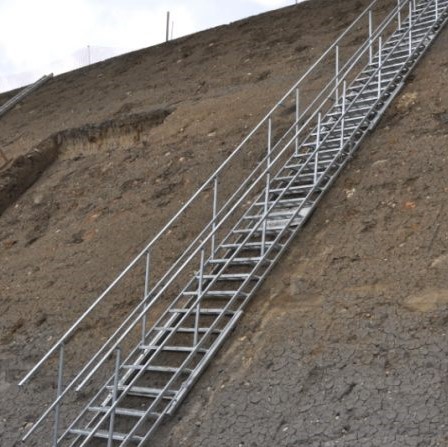
A modular steel stairway is built from connecting units, so one system covers changes of level from half a metre up to 7.7 m, between floors, onto a scaffold or up an embankment slope. It suits phased construction, groundworks and civils, utilities, and public realm and landscaping jobs where the stair stays in place for a phase of work and is lengthened or shortened as levels change.
Aluminium temporary stairs
Aluminium temporary stairs are light enough to carry by hand and go up in minutes. They are the format to choose where it is difficult to move equipment around the work zone, and where the stair follows the work from one spot to the next.
Folding steel stairs and trench crossings
The folding temporary stairway is a steel stair with non-slip steps that folds flat for transport and can be lifted into position by crane. From the six-step size up it also works as a gangway laid across a trench, and the longer sizes are used this way with a truss. For wider gaps, the temporary pedestrian bridge spans up to 8.4 m over trenches and openings on construction sites and event areas. The up and over bridge takes pedestrians over pipelines and other technical obstacles that cannot be stepped across, with an adjustable height to suit the ground.
Spiral stair towers
A spiral stair tower is a modular staircase built to EN 12811 that climbs within its own footprint beside a scaffold. Modules stack to heights of more than 18 m, and the tower replaces ladder access between lifts on tall, busy scaffolds where scaffolders and other trades are on and off the structure all day.
Scaffold stairs or ladder access
Stairs are the better access where people go up and down many times a shift, carry tools and materials by hand, share the route between several trades, or use it over a programme that runs for months. On a stair, people walk up facing forward with one hand on the rail and a load in the other, and the route takes a steady flow of people in both directions without anyone waiting at the top for the ladder to clear.
A ladder is the better fit where access is occasional, the space at the base is too tight for a stair, or the work is on a roof. It also suits a scaffold of one or two lifts used by a single gang, where a stair would take more ground and more time to erect than the job justifies.
Steel or aluminium scaffold ladders
After the type, the choice of ladder turns on its material and the rating it is built to.
Galvanised steel and aluminium
Steel takes the knocks of a ladder that is tied to a scaffold, climbed in muddy boots and left out in all weathers for the length of a job, and the heavy duty steel single section ladder is galvanised against corrosion. Aluminium is the lighter material and suits ladders that are carried, loaded onto a van roof and moved between jobs through the week. For a ladder that stays on one scaffold, choose steel, and for a ladder that travels with the crew, choose aluminium.
Professional, industrial and household ratings
The professional and industrial ladders in the range are tested to EN 131 for trade, site and commercial work, and the industrial extension ladders have also been stress-tested at higher loads than EN 131 requires. The double extension ladder and the 3-in-1 combination ladder are lightweight household ladders, made for jobs around the home. For a scaffold or a construction site, choose a steel scaffold ladder or a professional or industrial ladder, which are made for daily trade use.
Ladder guards, access gates and stair treads
The accessories secure ladder openings and site ladders on a scaffold, and complete fixed steel stairs.
Ladder access gates
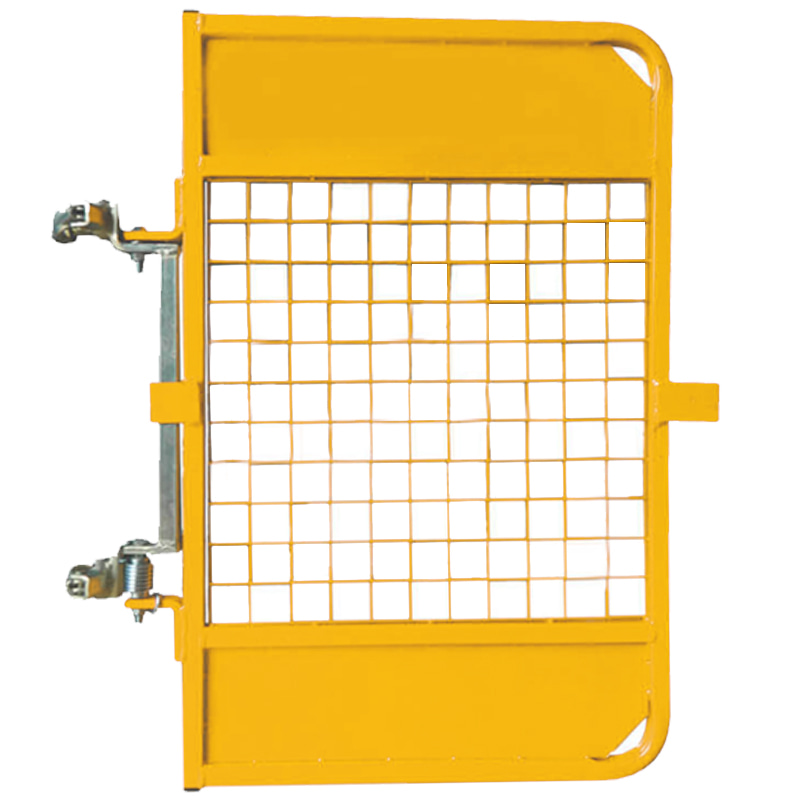
A ladder access gate closes the opening in the guardrail where a ladder lands on a scaffold platform. Its spring pulls it shut behind each person who comes through, and its toe board continues the line of the edge protection across the gap.
Ladder guards
Ladder guards lock over the bottom rungs of a site ladder with padlocks to stop anyone climbing it out of hours, without damaging the ladder.
Steel stair treads
Steel stair treads fit between stringers to build or repair a fixed steel stair. The anti-slip stair treads have a nosing bar welded to the front edge and drilled end plates for bolting to the stringers.
Popular Categories

Scaffolding Parts
View Products >

Scaffolding Stillages
View Products >

Scaffold Sheeting
View Products >
Frequently Asked Questions
Measure the height from the ground or lower platform to the platform the ladder serves, then allow for the lean of the ladder and for the length that must rise above the landing as a handhold. Steel scaffold ladders in the range run from 3 m to 6 m, and on taller scaffolds the usual practice is a separate ladder for each lift, each landing on its own platform.
The ladder stands on a firm, level base and is tied to the scaffold at the top by both stiles, so it cannot slip sideways or kick out at the foot. It lands on a boarded platform at the ladder opening and rises above the platform so there is a handhold when stepping on and off.
Portable ladders are tested to EN 131, the European standard for ladders, which the NSAI publishes as I.S. EN 131. Each ladder's product page states the standard it is tested to.
Yes. The modular steel stairway is available with a slab attachment for fixing to concrete as well as a scaffold attachment, and with or without a support under the flight. The same system can therefore serve between floors of a frame, at a slab edge or on an embankment where there is no scaffold to tie to.
The Safety, Health and Welfare at Work (General Application) Regulations 2007, made under the Safety, Health and Welfare at Work Act 2005, cover work at height, including the choice of ladders and other access equipment. On construction projects, the Safety, Health and Welfare at Work (Construction) Regulations 2013 also apply, and access routes onto scaffolds are planned and coordinated by the PSCS during the construction stage. The Health and Safety Authority (HSA) publishes guidance on work at height.
A roof ladder lies flat along the slope from the eaves towards the ridge and is held at the top by hooking over the ridge. Covered bearers along its length spread its weight across the tiles and protect them from damage. It is reached from a leaning ladder or a scaffold at the eaves.