







Acoustic Barriers
HERMEQ supplies acoustic barriers and acoustic quilts for temporary noise control on construction, industrial and entertainment sites. The range covers single acoustic fence panels and full-bay quilts for mesh fencing, scaffolding acoustic sheeting, mobile acoustic screens, and enclosures for cutting work and generators.
Each format fits by hand to existing fencing or scaffolding, or stands on its own frame. The Echo materials are UV and fire resistant and stand up to rain, frost and dust, so a run can stay in place for the full length of a programme.
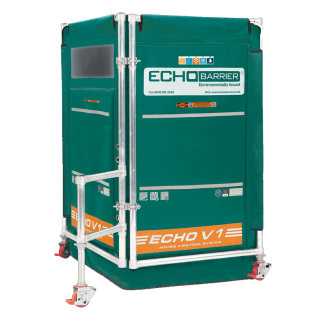
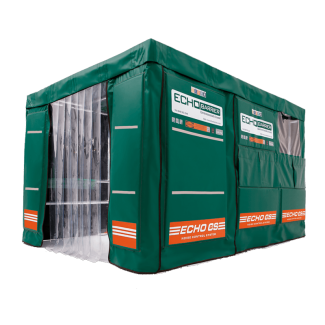
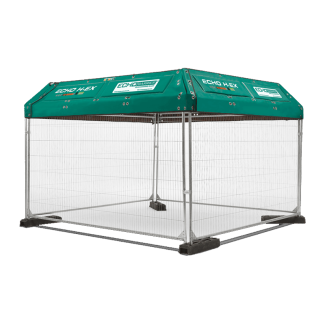
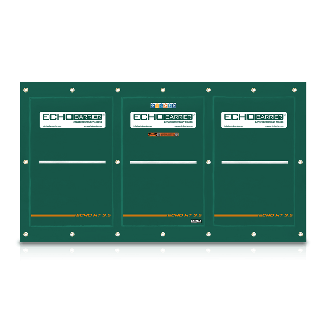

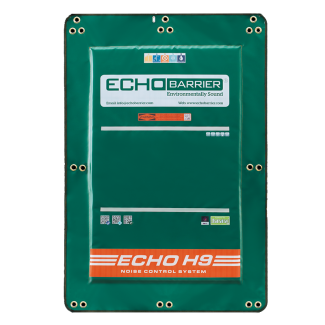
Acoustic fence panels, quilts, sheeting and enclosures
Acoustic barriers fall into two groups. The first is barriers that line a boundary, for noise that comes from across the whole site. The second is units set beside a single source such as a saw, breaker or generator, which contain the noise before it spreads. Rated noise reduction across both groups reaches up to 43 dB.
Single-panel acoustic blankets for fencing
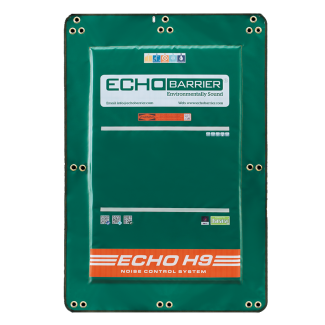
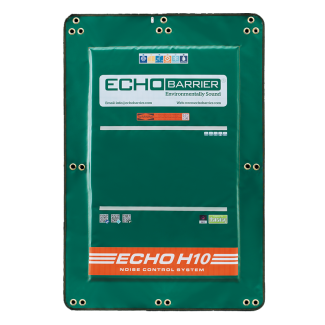
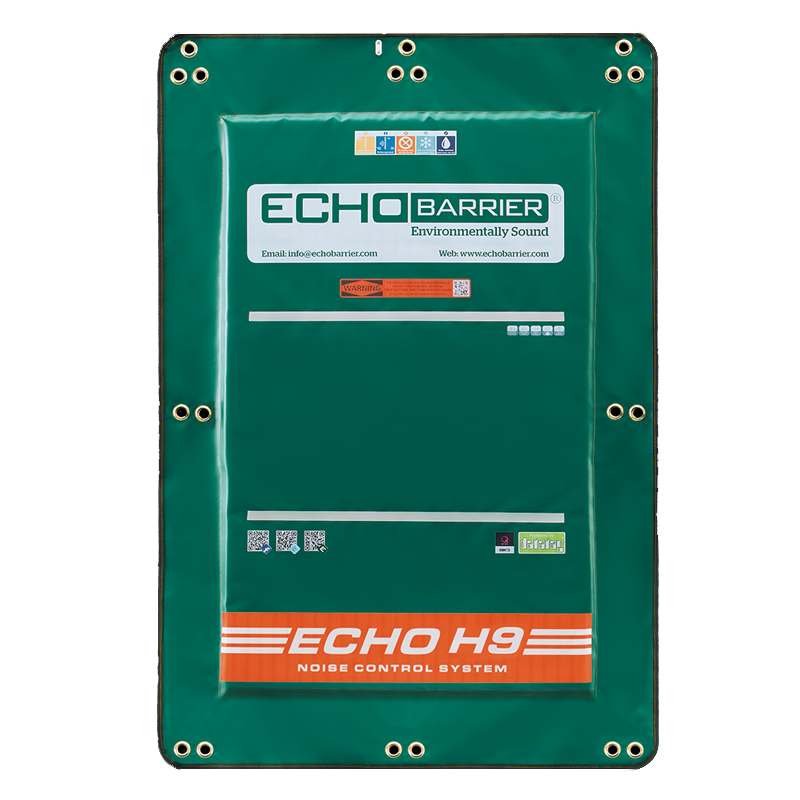
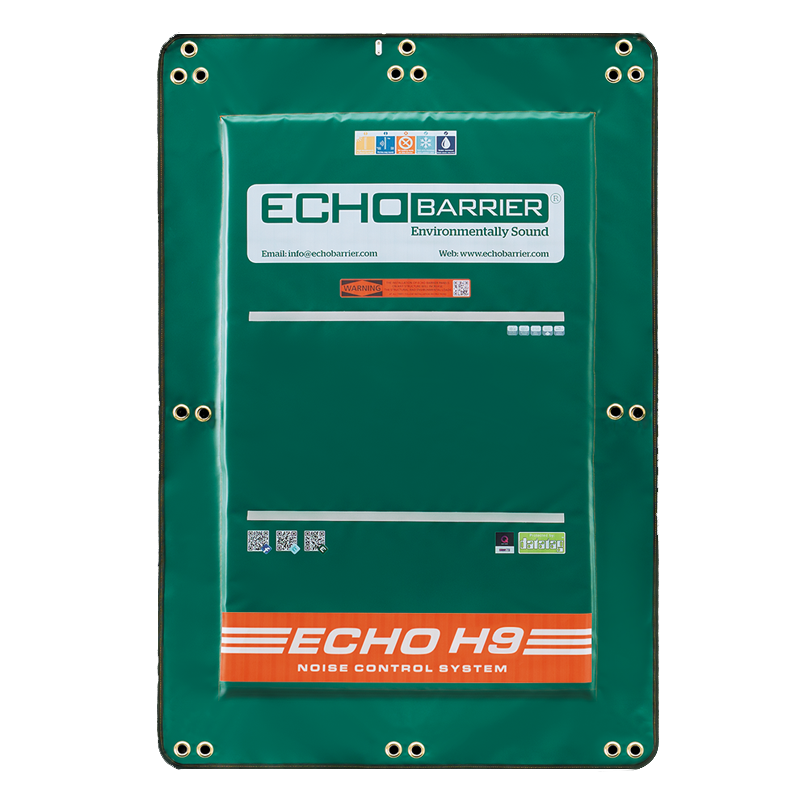
A single acoustic blanket hangs from the top rail of a mesh fence panel, a scaffold lift or another site boundary, and several blankets sit side by side to cover a run. The Echo Acoustic Barrier H9 is the general-purpose blanket for construction, utilities and maintenance work, and it is light enough for one person to handle and fit. The Echo Acoustic Barrier H10 adjusts easily along a fence line and suits jobs where the noise is heavier or the neighbours are closer.
Full-bay acoustic quilts
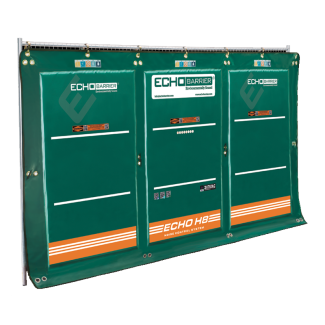
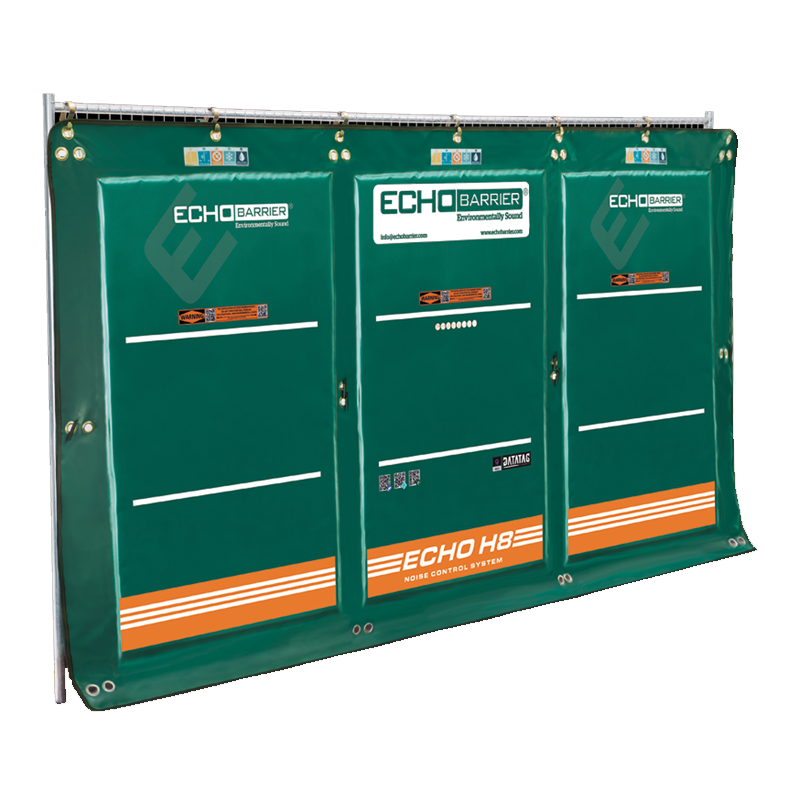
A full-bay quilt covers one standard 3.5m temporary fence panel in a single piece, so a long perimeter is screened bay by bay. The Echo Acoustic Quilt H8 gives large-area coverage on construction, utilities and infrastructure sites, and the Echo Acoustic Barrier HT 3.5 is a folding full-bay barrier for fencing that stays out in all weathers.
Scaffolding acoustic sheeting
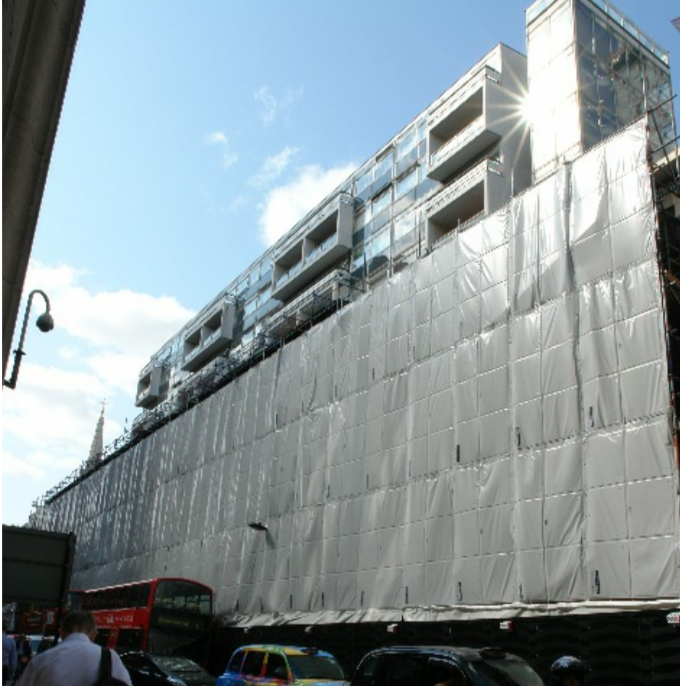
Scaffolding acoustic sheeting fixes to the face of a scaffold or temporary structure. This puts the noise control at the height where facade, roof and refurbishment work takes place. It comes in rolls that run along the lifts, with a choice of acoustic rating to match the project specification. Choose sheeting where the noisy work is at height and a fence-level barrier would leave the upper floors of neighbouring buildings in direct line of the source.
Portable acoustic screens
A portable acoustic screen stands on its own folding, wheeled frame, so it needs no fence and moves with the work. It suits short, noisy tasks that shift around a site during the day, such as breaking out a slab in sections, coring, or cutting kerbs along a footpath.
Acoustic enclosures for cutting and generators
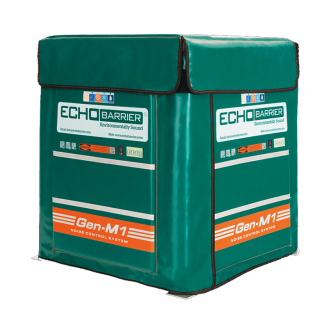
An enclosure surrounds the source on more than one side and contains the noise, dust and debris from a fixed workstation. The acoustic enclosure for cutting work moves on integrated wheels and comes in compact and large sizes, for saw benches and for maintenance work in confined areas. The generator acoustic enclosure is made for small generators and site power units, and it sets up as a screen, a partial enclosure or a full enclosure to suit the task. Where plant stands taller than the barrier around it, an acoustic fence extension raises the screen and covers it overhead, so sound does not escape over the top.

Single acoustic blankets or full-bay quilts
Choose single-panel blankets where the run is irregular or the noise is at its worst. Choose full-bay quilts where a long, straight perimeter has to be covered quickly. The H10 single blanket carries the highest rated noise reduction in the range, up to 43.4 dB. The narrower width of a single blanket also follows corners, gates, changes of level and the short lengths of a scaffold lift without leaving gaps or bunched fabric. A full-bay quilt hangs as one piece per 3.5m fence bay. On a run of several hundred metres, this means fewer joins to tie and seal and far fewer units to handle. A site often mixes the two. Full-bay quilts go along the straight boundary, single blankets go at the corners and gate posts, and H10 blankets line the stretch facing the nearest homes, where the extra rated reduction counts for most.
Acoustic barriers for demolition, building and road works
Demolition and building work next to occupied properties
Demolition, breaking out and piling beside homes, schools or offices produce the loudest and longest-running noise on most projects. The boundary closest to the occupied building is the stretch to line first, with fence-mounted blankets at full height. Where the boundary is steel site hoarding or timber hoarding, acoustic barriers can be fixed to its inner face. This turns the hoarding into acoustic hoarding, adding absorption and reduction to a boundary that already blocks the line of sight.
Road, footpath and utility works
Road openings, kerb and footpath work and utility trenches move along a street, so the noise control has to move too. Mobile screens, and single blankets on fence panels, relocate with the gang as each section is finished. The acoustic run sits inside the traffic management layout, which is planned to Chapter 8 of the Traffic Signs Manual.
How well acoustic fence panels work
Acoustic fence panels cut the noise that reaches neighbours, and on site the amount depends as much on where and how they are fitted as on their rating. Acoustic barriers are rated on two figures. Noise reduction is the drop in sound level on the far side of the barrier, measured in decibels. Sound absorption is the share of the sound striking the face that the barrier takes in, instead of reflecting it back into the site or onto the buildings opposite. For this reason, the absorbent face is fitted towards the source. The published figures are lab-tested maxima, and the reduction on site depends on the layout around the barrier. Three things decide the result on site:
- The closer the barrier stands to the source, the larger the area it shades.
- The barrier has to rise above the straight line from the source to the receiver, such as an upstairs window, or sound passes over the top. The fence extension adds height where this is needed.
- Every gap at a join or along the ground lets sound through, so a run with open joins performs below its rating.
Fitting acoustic barriers to Heras fencing and scaffolding
Lining a mesh fence or a scaffold with acoustic material changes how it behaves in wind, so the fixing plan comes before the first blanket goes up.
Wind loading and ballast on a covered fence
Open mesh lets wind pass through it, but a covered panel becomes a solid face. A long run of Heras or harris fencing lined with blankets or quilts therefore carries far more wind load than the same run left bare. Add extra feet and ballast at each panel, using concrete fencing blocks and ballast. Brace the run with stays and the fixings in temporary fencing accessories. Return the ends and corners where the layout allows, because a run that turns a corner is stiffer than a straight one. Walk the line after high winds.
Acoustic sheeting on scaffolding
Acoustic sheeting adds weight and a large wind load to a scaffold. It has to be allowed for in the scaffold design, with the tie pattern and bracing set for a sheeted structure. Agree it with the scaffold designer and the PSCS before ordering. Do not fix sheeting to a scaffold designed for netting or an open face.
Popular Categories

Site Hoarding
View Products >

Heras Fencing
View Products >

Site Gates
View Products >
Frequently Asked Questions
The Echo fence-mounted barriers and quilts are made to resist fire, water, UV light and cold, and they stay out on site through rain and frost. The Echo Acoustic Barrier HT 3.5 is fire tested to EN 13501-1. Fire resistant means the material resists ignition and flame spread, so the barriers still belong away from hot works and naked flames.
An acoustic barrier reduces the noise that reaches neighbours and people on the far side of it. It does not reduce the exposure of an operator standing next to the source. Noise at work is controlled under the Safety, Health and Welfare at Work (General Application) Regulations 2007, which require employers to assess exposure, reduce it at source where they can, and provide hearing protection where exposure stays high. The operator at a saw or breaker needs hearing protection as the assessment requires, even inside an enclosure.
The Echo barriers, quilts, screens and enclosures are made for repeated temporary use, and they come down as quickly as they go up. Before each one goes back out, check it for tears, worn fixing points and damaged edges, because damage at the edges opens gaps in the run.
One person fits an H9 blanket to a standing fence in around 30 seconds, and two people fit an HT 3.5 barrier in about 30 seconds with its installation kit, so setting out and ballasting the fencing takes longer than fitting the acoustic material. Mobile screens and enclosures fold or wheel into position.
No. A permanent road or boundary noise barrier is a built wall of timber, concrete, metal or acrylic panels on its own foundations, designed as part of a road or development scheme to stand for decades. Temporary acoustic fencing hangs on site fencing or scaffolding, or stands on its own frame, for the length of a job.