







Temporary Fencing Accessories
HERMEQ temporary fencing accessories adapt a mesh fencing or steel hoarding system to the ground it stands on and the security the site needs. The range covers fence feet and bases, couplers and anti-tamper clips, stabilisers and ground pins, ballast blocks and wind resistance systems, ground locking systems, and the skirts, infills and mesh extensions that finish a hoarding line.
Stabilisers, ballast trays and water-filled bases increase the wind loading a fence line can withstand, and mesh extensions add height for security without adding much wind load to the panels.


Fence feet, clips, stabilisers and ballast
Fence feet and bases
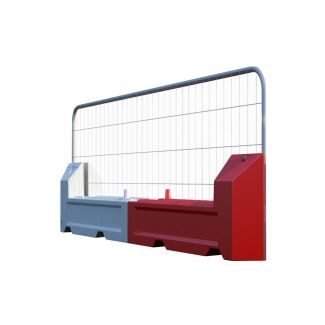
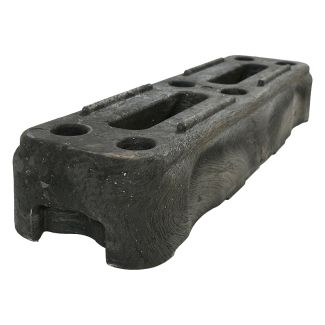
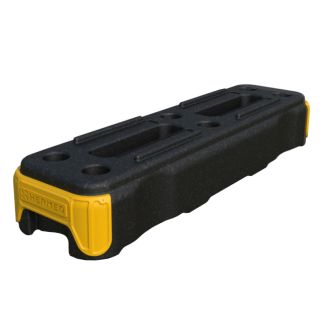
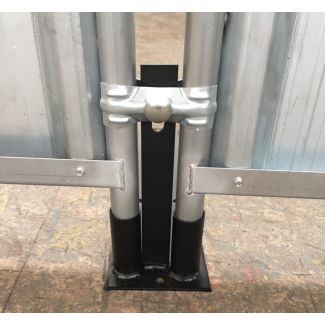
Every panel stands in a foot, and the choice of foot decides how the rest of the line is built. Rubber block fence feet are the everyday base for mesh panels, and hi-vis anti-trip fence feet do the same job in a colour that pedestrians notice. Steel Safe Base anti-trip feet suit hoarding lines and accept the Safe Base ballast trays when the line needs more wind resistance. The water-filled slot block fence base holds an anti-climb panel along its full length and is filled with water once it is in position.
Fence clips, couplers and clamps
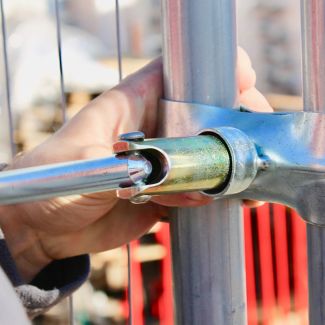
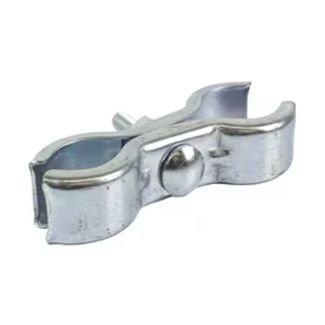
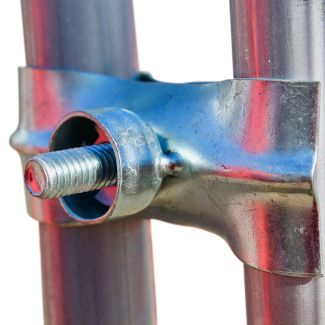
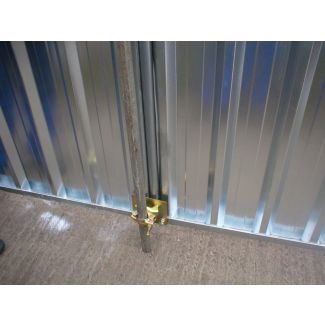
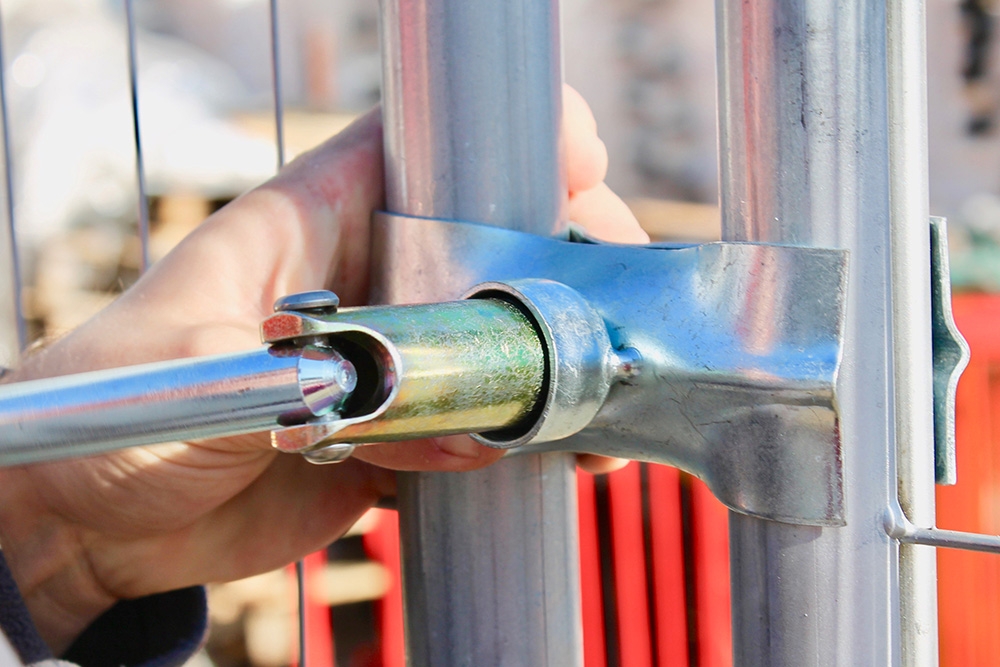
Fence couplers, also called fence clips or fence clamps, join neighbouring panels at their posts and are the standard fixing on any mesh run. Anti-tamper fence clips, sometimes sold as security couplers, replace them wherever panels must not be unclipped by anyone outside the site team. Hoarding clamps are steel scaffold-type clips that tie a fence or hoarding panel to scaffold tube for extra stability.
Anti-lift brackets and struts
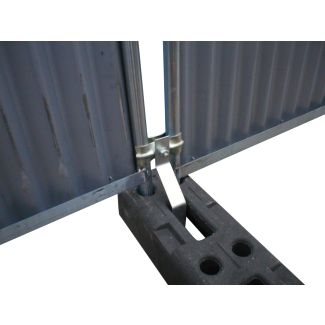
A panel that is clipped but not locked down can be lifted straight out of its feet. Anti-lift fence brackets lock the panel to its rubber foot, and the step block anti-lift strut holds panels down while working with the couplers to tie neighbouring panels together more firmly.
Fence stabilisers, block trays and ground pins
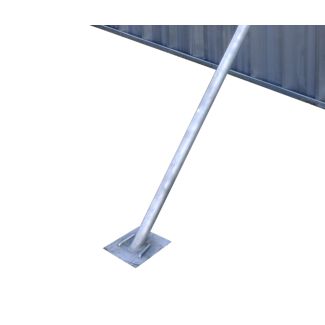
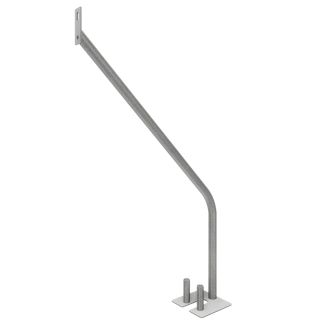
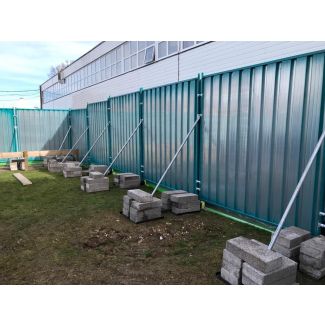
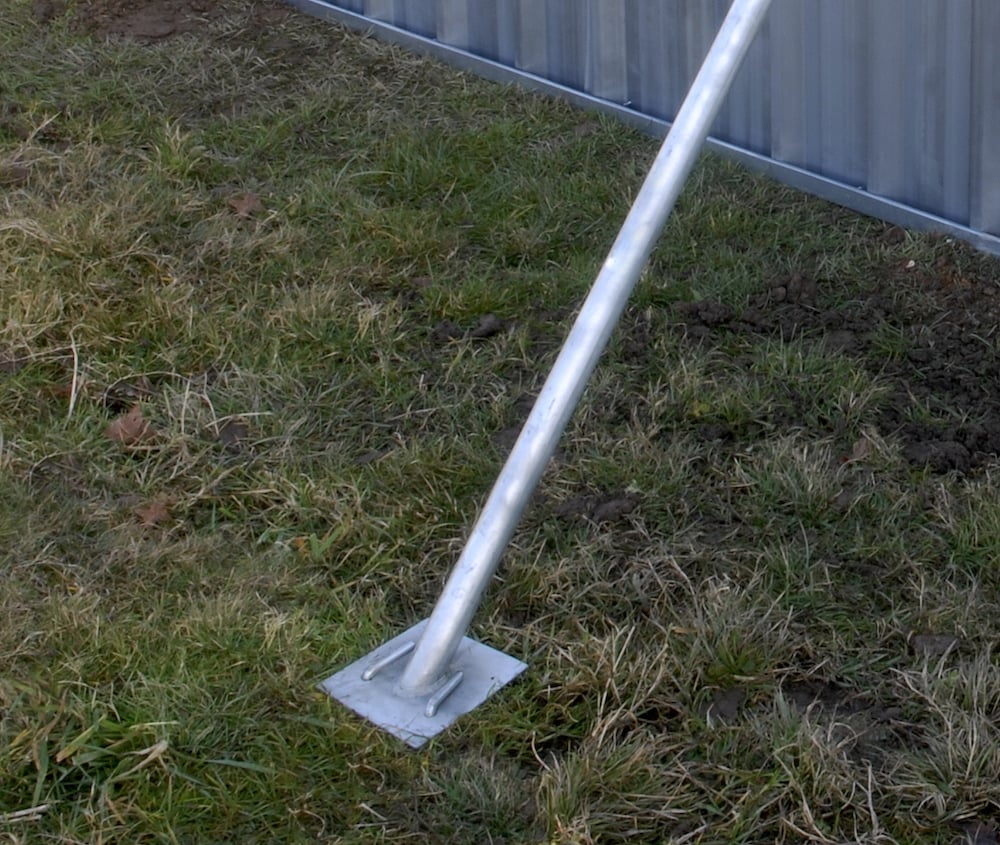
A stabiliser is an angled brace fixed at a panel joint, with its foot on the ground behind the line. Fence stabilisers with block trays arrive ready to load with ballast, while the stabiliser with swivel base plate is pinned down through the holes in its plate. Block trays can be added to stabilisers already on site, and stabiliser ground pins drive through the base plate to anchor it.
Ballast blocks and wind resistance systems
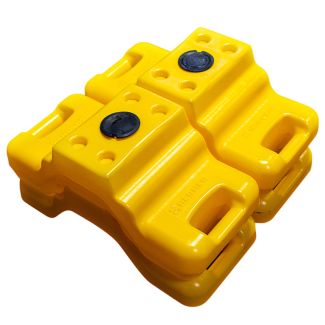
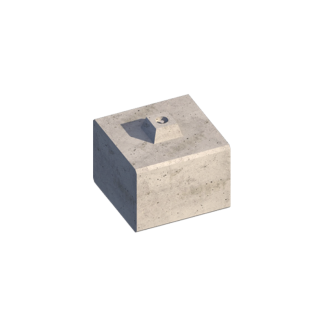
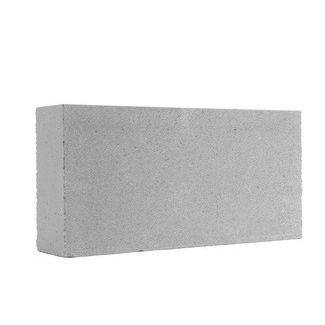
Ballast adds dead weight low on the line so that it resists wind without any fixing. Mesh ballast step blocks sit over the feet of mesh panels and stack for more weight, and anchor block fence ballast is a compact, stackable weight for the same job. Concrete ballast blocks for trays are the standard load for block trays and base plates, and the water-filled rota block holds down mesh or hoarding panels once filled.
For steel hoarding, the Safe Base wind resistance system adds single or double ballast trays to an anti-trip foot with a built-in anti-lift bracket. The Safe Hoarding ballast system uses one heavy duty tray, and the Wates ballast hoarding system is a double tray system that takes varying amounts of ballast. Long or exposed hoarding runs are held with counterweight concrete blocks or the 750kg hoarding ballast block, part of the full range of concrete hoarding ballast blocks.
Mesh fence feet locking systems
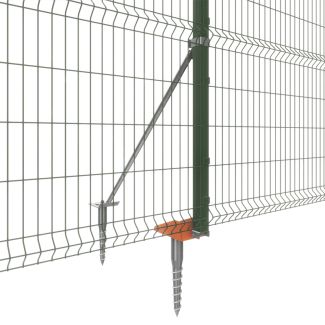
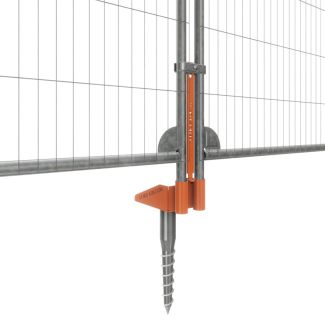
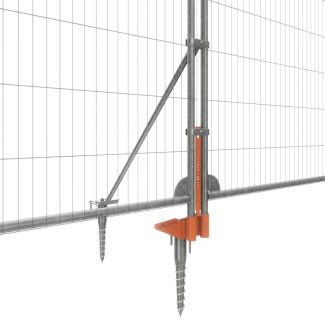
A locking system clamps the feet of the panels and fixes them down, with soil, concrete or asphalt fixings to choose from. The mesh fence feet locking system is compact and anti-trip, and the stabilised mesh fence locking system adds a stabiliser brace for exposed lines. The V mesh fence locking system is made for V mesh panel fencing. All three are removable and reusable.
Temporary fence pins and Postcrete
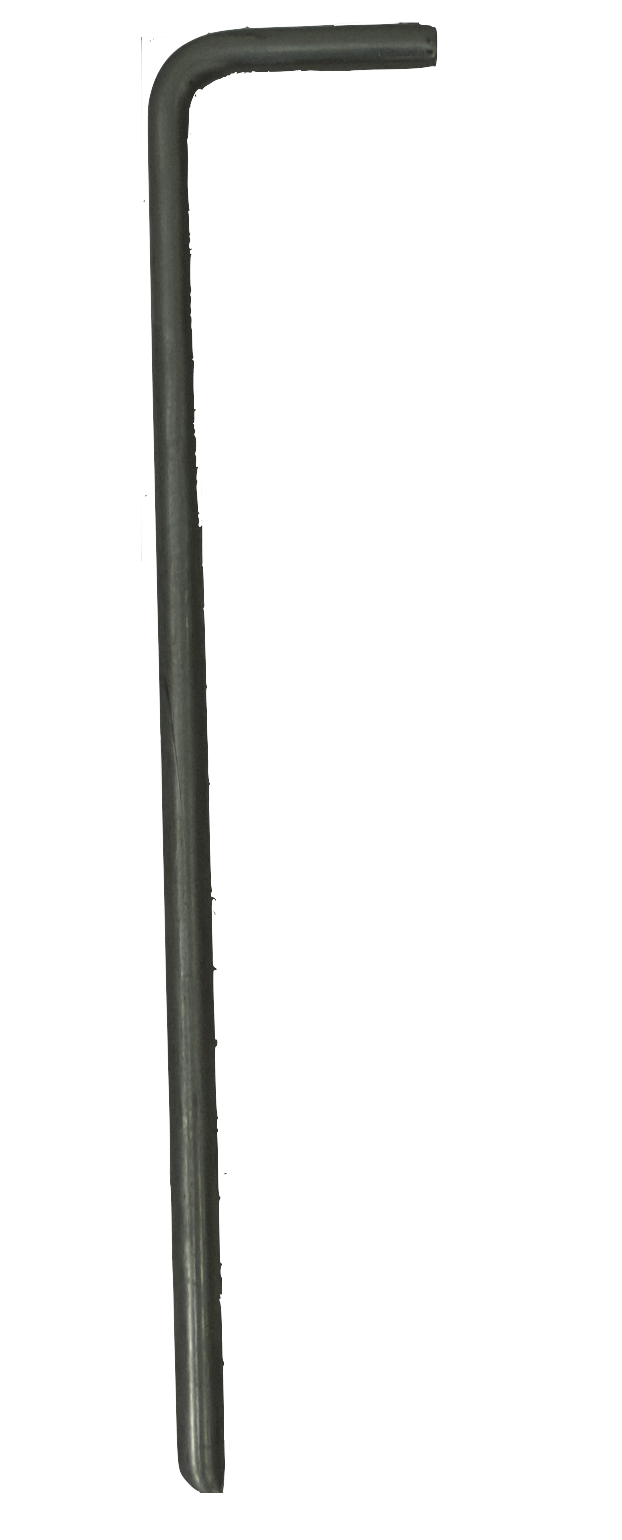
Fencing pins hook over the base of a fence line and drive into the ground to hold it in place. Ribbed fencing pins have a hook top and a pointed end, and forged steel fencing pins have a plain finish and a choice of diameters for lighter or heavier lines. Where a post is concreted in, no-mix Postcrete sets it without a mixer.
Hoarding ground skirts, infills and mesh extensions
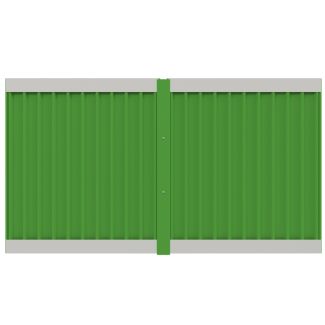
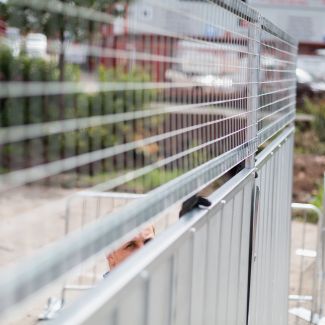
Steel hoarding leaves a gap under each panel and between neighbouring panels. Hoarding ground skirts close the gap at ground level, and hoarding panel infills close the gaps between panels, in finishes that match the hoarding. The mesh hoarding extension adds height above the panel in open mesh.

Ballast or ground fixings for wind loading
A fence line resists wind in one of two ways: it carries enough weight to stay where it is, or it is fixed to the ground beneath it. Weight is the right answer on surfaces that cannot be drilled or pinned, such as footpaths, car parks and finished paving, and on lines that stand for a short time or move as the job moves, because step blocks, anchor blocks, ballast trays and water-filled bases lift off and go again without leaving a mark.
Fixing is the right answer on soil, where ground pins or the soil fixings of a locking system go straight in, and on concrete or asphalt where the client allows drilling, using the concrete or asphalt fixings of the locking systems. A fixed line takes up less room behind the panels and cannot be dragged out of position.
Stabilisers with block trays combine both approaches. The brace takes the wind load at the panel joint, and its foot is either pinned into soft ground or loaded with concrete ballast blocks on a hard surface. The water-filled bases in the range are tested to winds of up to 100 km/h when full. On exposed runs, and on any line carrying netting, signs or printed banners, the weight and the bracing are increased together.
Accessories for mesh fencing and steel hoarding
Most accessories are made for one kind of temporary fencing, so check each against the panels on site before ordering.
Heras-style mesh panels
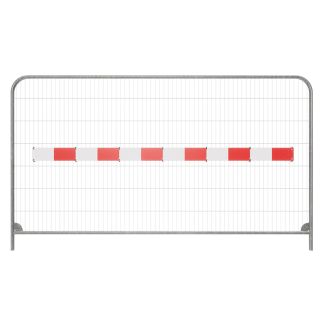
A line of harris fencing, the Heras-style mesh panels, is built on rubber or hi-vis feet, joined with couplers or anti-tamper clips, and held with stabilisers, step blocks, anchor blocks or the standard and stabilised mesh locking systems.
Steel site hoarding
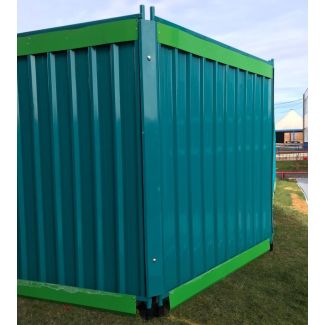
Steel site hoarding stands on rubber block feet or steel Safe Base feet and takes the Safe Base, Safe Hoarding and Wates ballast systems, with hoarding clamps, ground skirts, infills and the mesh extension to complete the line. These accessories are sized: the Safe Hoarding system and the infills are made for 2.0m and 2.4m hoarding panels, and stabilisers come in two lengths, so each is matched to the panels it is ordered for.
Anti-climb and V mesh panels
The water-filled slot block base is made for 3.5m wide anti-climb panels, with the panel sitting in a slot along the full length of the base. V mesh panel fencing takes its own locking system, built with a bracket and brace to suit the V mesh profile.
Temporary fencing accessories for sites, footpaths and events
Construction site perimeters
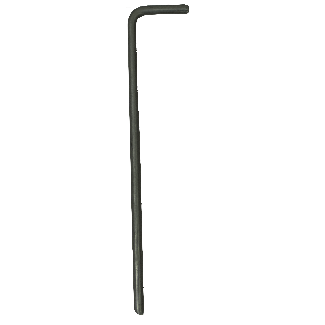
Anti-tamper clips stop panels being unclipped, with the anti-tamper clip spanner kept by the site team. Anti-lift brackets and the step block strut stop panels being lifted out of their feet, and ground skirts and infills stop anyone crawling under hoarding or seeing through the gaps. Openings in the line are closed with vehicle and pedestrian gates.
Footpaths, car parks and public routes
Where a fence line meets the public, the hazard is underfoot. Anti-trip feet and the compact mesh locking systems keep the base of the line low and tight to the panels, and stabilisers go on the site side so that their arms and trays stay out of the footpath. Where the line moves pedestrians onto the road at roadworks, the diversion is planned and laid out under the Department of Transport's Traffic Signs Manual, Chapter 8.
Events and crowd lines
Event lines go up and come down within hours, so they are built from accessories that need no fixing: rubber or hi-vis feet, couplers and stackable ballast. Hi-vis feet, fence lights and reflective strips mark crowd lines that stay up after dark.
Fence lights, debris netting and signs
Fence and hoarding lights
LED fence lights fit mesh fencing and flash to mark the line in poor light. Battery hoarding hazard lights attach to mesh fencing, hoarding panels and scaffold towers to mark hazards, in red or white. Battery bulkhead lights clip onto the same structures and are used to light walkways beside the line.
Hi-vis reflective strips
Hi-vis reflective fence strips fix to panels so that the line shows up in headlights and torchlight.
Debris netting
Debris netting is tied along temporary fencing to screen the line and stop debris passing through the perimeter.
Site safety signs
Site safety signs carry site rules and hazard warnings on the perimeter, in standard or bespoke wording. They are printed on Correx for short jobs, or on Foamex or Dibond where a sign has to last.
Stillages and touch-up paint
Panels, feet and blocks are stored and moved between jobs in fencing stillages. RAL touch-up spray paint restores chipped powder-coated or painted fencing, hoarding and barriers in standard RAL colours.
Popular Categories

Site Hoarding
View Products >

Heras Fencing
View Products >

Site Gates
View Products >
Frequently Asked Questions
Two couplers per joint, known as a double clip, is the recommended fixing for temporary mesh panels, although some installers fit only one. Fitting one high and one low holds the posts together along more of their height.
One stabiliser with a block tray on every other panel is the recommended spacing for mesh security fencing and portable steel hoarding. Corners, gate openings and lines carrying netting or signs take more wind and are often braced at every joint.
Yes. Anti-tamper fence clips can only be tightened and undone with the dedicated anti-tamper spanner, which is a separate item. Order at least one spanner with the clips and keep it with the person responsible for the fence line, so that panels can still be moved for deliveries or changes to the layout.
A concrete-filled step block weighs twice as much as a water-filled one, so concrete suits exposed lines and runs that stay in one place for a long time. Water-filled blocks are light to deliver and handle empty, are filled once in position and are drained when the line comes down.
Yes. Rubber block fence feet stack on top of each other and have two slots for forklift tines, so a stack can be lifted and moved as one load. Each foot also has a handle at either side for a one-person lift when the line is being set out.