







Car Park Barriers
HERMEQ supplies car park barriers and access gates for car parks, commercial premises, construction sites, yards and depots. The range covers manual and automatic raise arm barriers, rectangular car park barriers and swing arm access gates, together with automatic access gates in bi-folding and 180 degree swing designs and a mobile vehicle gate for temporary site entrances.
The barriers and gates are built in steel, from galvanised frames to powder coated box section, for use outdoors in all weathers.





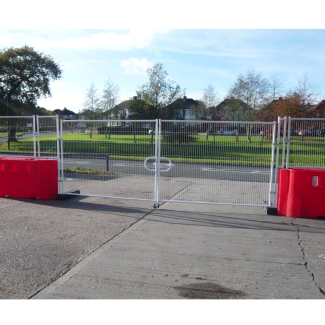
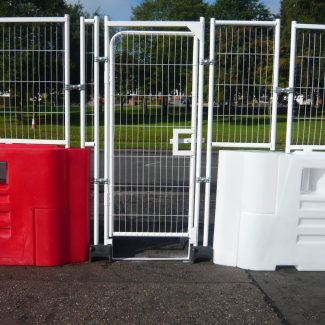

Raise arm barriers, swing barriers and vehicle gates
The range splits into arm barriers, which control vehicles at an entrance that otherwise stays open, and gates, which close the entrance itself.
Manual raise arm barriers
A manual raise arm barrier, also sold as a rise arm or rising arm barrier, is a pivoting arm that an attendant lifts by hand to let each vehicle through and lowers again behind it. The standard manual raise arm barriers suit car park and commercial entrances, and the heavy duty manual arm barrier carries a longer arm for the wider openings of yards, depots and industrial estates.
Automatic raise arm barriers and boom gates
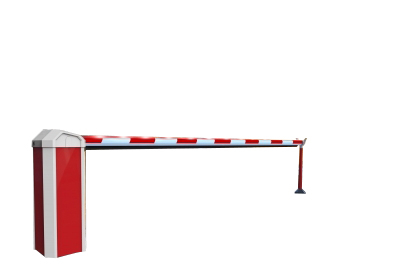
An automatic raise arm barrier is the motorised version, known in the trade as a boom gate or barrier arm, which lifts on a signal so that drivers pass without waiting for an attendant. It is the usual choice for the entry and exit lanes of staff, visitor and permit car parks, and for checkpoints at the entrance to restricted areas.
Swing arm access gates
A swing arm access gate, also called a swing barrier gate, is a single steel arm hung on a post that swings sideways across the road instead of lifting. Because it opens at ground level, it suits covered entrances and multi-storey car parks with little headroom, and entrances that stand open by day and are closed and locked at night.
Rectangular car park barriers
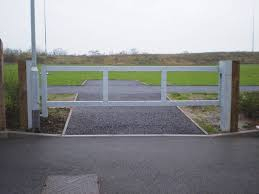
A rectangular car park barrier closes the opening with a steel frame in place of a single arm, which gives drivers a larger and more visible stop. It suits car park entrances and exits that are closed for long spells, such as overnight, at weekends or between events.
Bi-folding speed gates
Bi-folding gates are hinged between their panels, so each leaf folds in on itself as it opens and clears the entrance faster than a conventional swing gate of the same width. The trackless bi-folding speed gates are built for high security entrances with frequent vehicle movements, and the automatic bi-folding gates come in single and double leaf versions to fit openings of different widths.
Automatic 180 degree swing gates
The automatic swing gates open through a full 180 degrees, so the leaf turns back along the boundary and leaves the whole width of the entrance clear for lorries, plant and deliveries.
Mobile vehicle gates for site entrances
The mobile vehicle gate is a 5 metre steel gate on rubber feet and nylon castors, closed with a sliding latch, that keeps both vehicles and pedestrians out of a site. It is the gate for temporary entrances on construction sites and compounds, where a fixed barrier cannot be installed or would have to come out again within months.

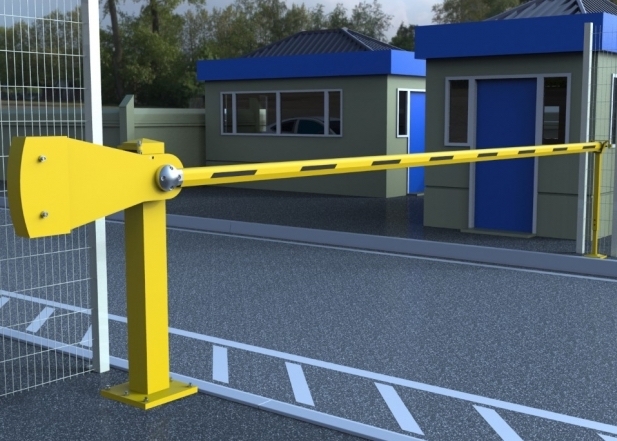
Manual or automatic car park barrier systems
Manual barriers are the right choice at entrances with light traffic, a gatehouse or an attendant on duty, and at sites with no power supply at the gate line. They are opened by hand, need no cabling or electrical work to install and keep working through a power cut, which also makes them practical for entrances that are only in use for part of the year.
Automatic barriers and electric gates are the right choice where vehicles come and go often, where no one is on duty at the entrance, and where only authorised vehicles may enter. The automatic swing gates and automatic bi-folding gates in the range comply with EN 12453, the European standard for the safety in use of power operated gates.
Entrance width, swing space and security
Matching arm or gate length to the entrance
Choose a barrier or gate that spans the full clear width between kerbs or fence posts in one piece, since a gap at the end of an arm is wide enough for a car or motorcycle to pass. Manual arm barriers in the range span up to 9 metres and double leaf automatic gates up to 10 metres, so the widest depot and yard entrances suit a heavy duty manual arm or a double leaf gate, and single lane car park entrances suit a standard arm, a swing arm gate or a single leaf gate. Where a wide entrance has a central island, a barrier on each lane is easier to operate than one long arm and lets entry and exit be controlled separately.
Space to open in front of and behind the gate
A swing gate or swing arm gate needs clear, level ground across the whole arc of its leaf on the side it opens to, and a 180 degree gate also needs room for the leaf to lie back along the boundary. Where a kerb, footpath, parking bay, slope or the public road sits close to the gate line, choose a bi-folding gate, because its leaves fold into themselves and sweep a much smaller area in front of and behind the opening. A raise arm barrier lifts vertically and needs no ground space to open at all.
Vehicles only, or pedestrians too
An arm barrier stops vehicles but leaves the entrance open to people on foot, who can step around or under the arm. Where the entrance must be closed outright out of hours, or pedestrians kept off the site, the right product is a gate: the automatic swing and bi-folding gates close the opening at full height, and the mobile vehicle gate keeps both vehicles and pedestrians out of a temporary entrance.
Staff car parks, site entrances and depots
Office, retail and hospital car parks
Staff, visitor and permit car parks need controlled entry and exit, with access for authorised vehicles and a clear route for emergency vehicles when the barrier is down. Leave enough queuing space inside the property line so that cars waiting at the barrier do not back out onto the road, and place any switch or reader where a driver can reach it without leaving the car. Where a covered or multi-storey car park has limited headroom, height restriction barriers at the entrance stop tall vans before they reach the low structure.
Construction site entrances
A site entrance often moves as the job does, so the mobile vehicle gate on castors suits phased works, and a manual arm barrier suits an entrance that will stay in one place for the length of the job.
Industrial estates, yards and depots
Yards and depots take lorries, trailers and plant through wide entrances, often outside normal hours, and need the whole entrance closed when the site shuts. A raise arm barrier can control daytime traffic inside a gate that closes the yard at night, and the barrier should sit far enough back from the road for an articulated lorry to stop clear of the carriageway while it waits to enter.
Parking posts, rising bollards and barrier controls
Retractable, removable and Stealth parking posts
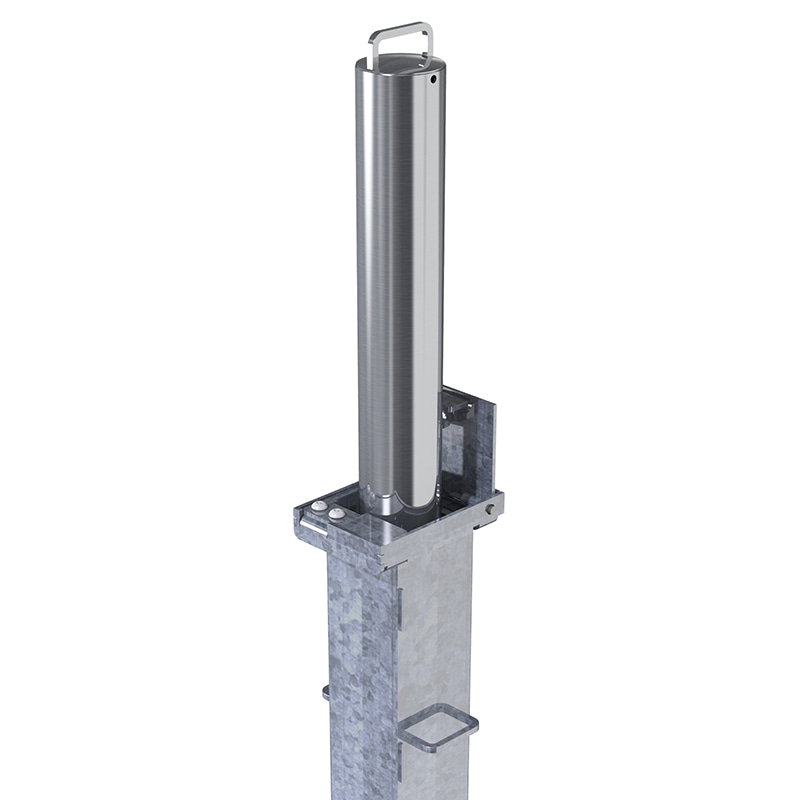
Parking posts protect a single bay, a forecourt or a driveway where a full entrance barrier would be more than the job needs. The padlockable retractable parking posts lower into the ground and are secured with the user's own padlock. Retractable parking posts with an integral lock have the lock built into the post, and removable parking posts lift out of their ground socket altogether. Stealth parking posts come identically keyed, so one key opens every bay, or randomly keyed, so each bay has its own key.
Automatic rising bollards
Automatic rising bollards close an entrance to vehicles and sit flush with the surface when lowered, leaving no arm or gate in view and letting pedestrians and cyclists pass.
Control panels, key switches and power supplies
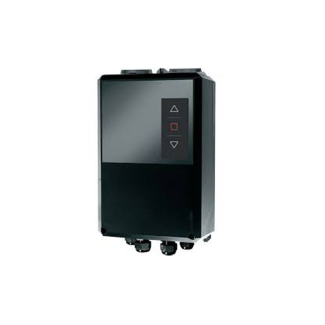
An automatic gate or barrier works as a system: it needs a control panel, a power supply, a local isolator and a means of operation, and the check to make before buying is which of these the entrance already has. The Feig control panel takes signals from fobs and other devices and drives the gate motors. A 24V power supply powers many automatic gates, and a rotary isolator lets the power be switched off at the gate for servicing. A three position key switch limits operation to key holders, and the connection to the mains is work for a registered electrical contractor.
Popular Categories

Road Barriers
View Products >

Water Filled Barriers
View Products >

Traffic Cones and Road Cones
View Products >
Frequently Asked Questions
Raise arm barriers and rectangular car park barriers sit at about waist height across the opening, low enough to stop a car and high enough for a driver to see clearly. The automatic swing and bi-folding gates in the range are taller, up to 2.4 metres, and close the opening from the ground up.
A signal from a key switch, a fob, a keypad or a vehicle detector reaches the control panel, which drives the motor to raise the arm or open the gate. Once the vehicle has passed, the barrier closes again, either on a timer or when a detector registers that the lane is clear.
Under the Safety, Health and Welfare at Work Act 2005, employers must provide and maintain workplace equipment, including vehicle barriers and gates, so that it is safe for employees and for others on the site. Power operated gates are built and installed to EN 12453, the European standard for their safety in use, which covers protection against crushing and impact, and the automatic swing and bi-folding gates in the range comply with it. Installation, commissioning and regular servicing are work for a competent person, with a record kept of each inspection.
Car park barriers and gates in the range are steel, finished by galvanising or powder coating. Galvanising is the harder-wearing protection for bare steel that stays out in all weathers, and powder coating adds a coloured surface that keeps a gate or arm visible to drivers.
Raise arm barriers in the range come in red and white or yellow and black, and both read clearly to drivers. What matters is that a site chooses its own convention and uses it consistently, for example red and white at public car park entrances and yellow and black at service and plant entrances, so that drivers learn what each means on that site.