







Roadworks Signs
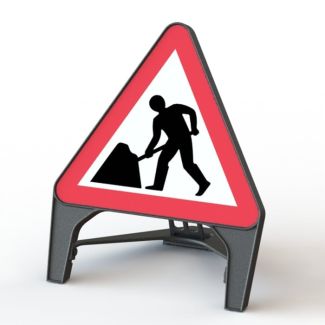
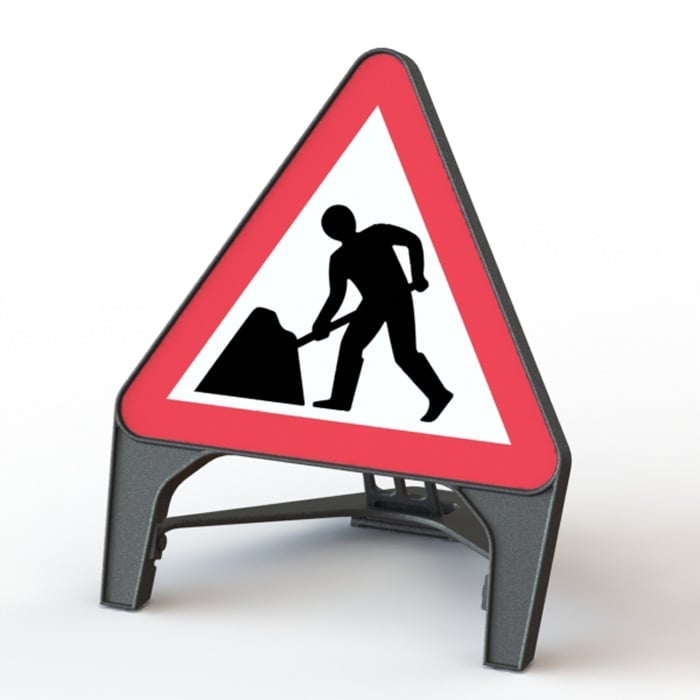
HERMEQ supplies roadworks signs for temporary traffic management on public roads and private sites, from the first warning on the approach to the closure itself. The plastic Q-Signs are made of recycled polypropylene with no metal parts, and the metal signs have zintec faces with reflective sheeting, so both stand up to repeated use and stay clear to road users and pedestrians. The men at work sign warns drivers and pedestrians of work on the road ahead. Keep left and keep right signs, road narrows signs, stop/go boards and road closed and lane closed signs guide traffic through and past the works.



Roadworks warning, direction and closure signs
Each sign in a works layout has one job, and the range is set out here in the order drivers meet them: advance warning, hazard, direction, manual control, pedestrian diversion and closure.
Men at work signs
The men at work sign is a 750mm triangular Q-Sign that tells drivers and pedestrians that work is under way on the road ahead and that they should slow down and watch for hazards. On a public road, the traffic management plan sets the signs and their faces, so check the plan before ordering.
Road narrows signs
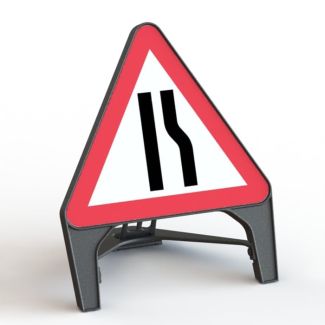
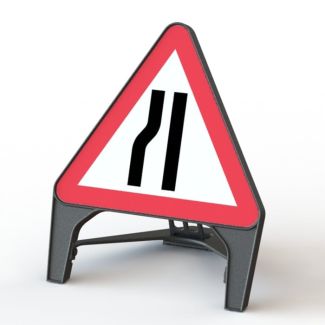
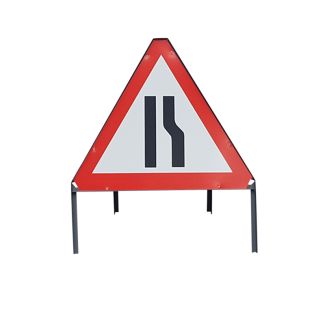
A road narrows sign tells drivers which side of the carriageway the works take up, so they can move over in good time before they reach the cones. Order the road narrows left sign or the road narrows right sign to match the obstructed side, and carry one of each when crews work on both sides of the road. A metal road narrows sign is also in the range for layouts that stay in place for longer.
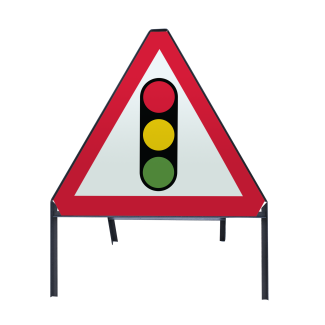
Traffic signals ahead signs
Where portable traffic lights control a single-lane section, the traffic signals ahead sign warns drivers that they may have to stop. It goes on the approach after the advance warning sign, far enough back that the end of a queue at the signals is still in view of drivers coming up behind it.
Keep left and keep right signs
These circular direction signs tell drivers which side of an obstruction to pass. Place the keep left sign or the keep right sign at the beginning and at the end of the lead-in taper of traffic cones, so drivers have the instruction as they enter the narrowed lane and again as they pass the works.
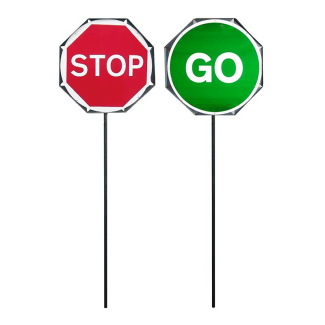
Stop/Go boards
A stop/go board is a two-sided sign on a pole that an operative turns to hold or release traffic through a single-lane section. It suits short jobs where setting up portable signals would take longer than the work itself, and it gives the crew a fallback when signals fail. Longer sections need a board and an operative at each end, with clear sight or radio contact between them.
Pedestrian diversion signs
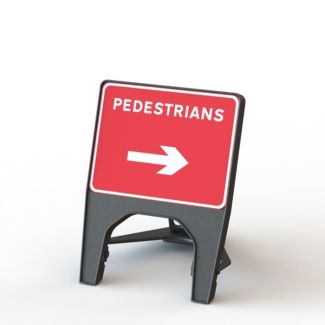
When works close part of a footpath, the reversible pedestrian sign directs people on foot to the temporary route around the excavation or across the road. Its arrow can face either way, so one sign covers a diversion to the left or to the right as a crew moves along a street.
Road closed signs
Road closed signs warn drivers that the road ahead is shut, so they can follow the diversion before they reach the closure point. The range has plastic quick fit faces in two sizes, which mount on a quick fit frame at the closure and on the approach to it.
Lane closed wicket signs
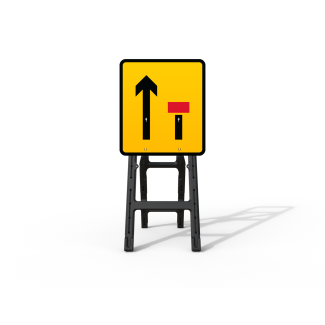
On dual carriageways and other multi-lane roads, lane closed wicket signs show drivers which lanes are shut and which stay open. They cover two, three and four lane layouts and come pre-drilled for quick fit frames, so they go up quickly at the start of a lane closure.

Plastic and metal road signs
The choice between temporary plastic road signs and temporary metal road signs comes down to how often the signs move and how long a layout stays in place. The plastic Q-Signs are freestanding, with the sign and its base in one piece and no frame to assemble. They are made of recycled polypropylene with no metal parts, they are light to carry, and their angled face is shaped to resist wind. They are the natural choice for short-duty and mobile works, where a crew sets out a layout, works for a few hours and loads the signs back onto the lorry for the next job.
The metal signs have zintec steel faces with RA1 reflective sheeting, clipped into angle iron frames or fixed to standard leg frames. The reflective face returns headlight to drivers after dark, and the steel frame holds the sign rigid in layouts that stand for days or weeks, such as signal-controlled single-lane sections and longer lane closures. Plastic quick fit faces sit between the two: a light plastic sign face on a separate frame, used for the road closed and lane closed signs in the range.
Signs for roadworks, site entrances and footpaths
Roadworks on public roads
On a public road, the layout, the sign faces and the distances between them are set by the traffic management plan for the job, prepared under Chapter 8 of the Department of Transport's Traffic Signs Manual. Match each sign you order to the face the plan specifies. Signs are one part of the layout: cones and cone lamps mark the taper and the edge of the working space, and road barriers or water filled barriers go in where the working space needs protection from traffic.
Utility and footpath works
Utility connections, cabling and footpath repairs often last a single day, so the signing has to be quick to set out and quick to clear. A men at work sign on the road approach and a pedestrian sign at each end of the closed footpath are the usual starting point, and footpath ramps and trench covers carry pedestrians and wheelchair users over the excavation itself.
Construction site entrances and haul roads
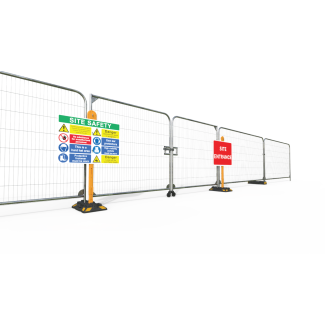
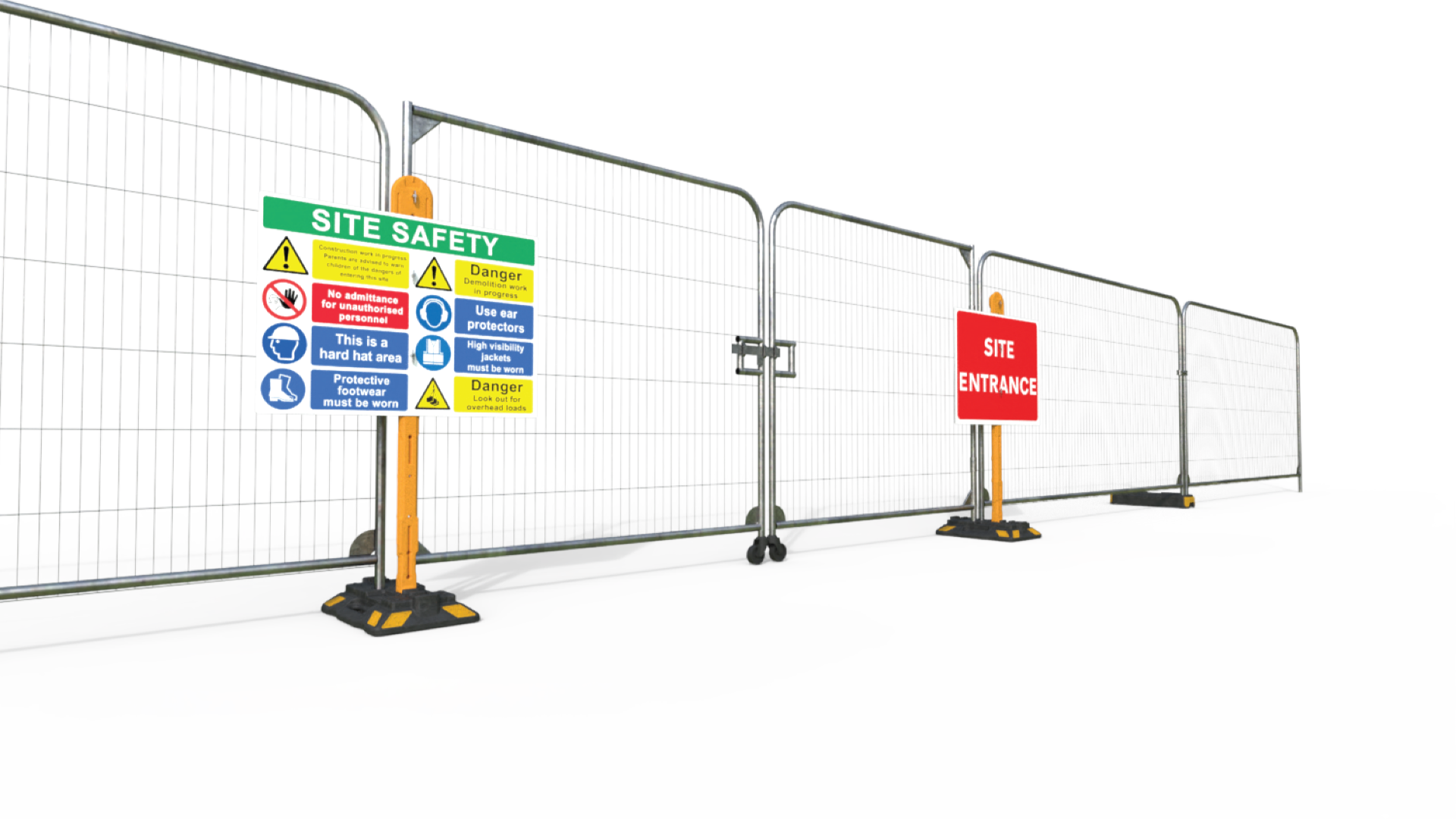
At a site gate, signs carry site rules, PPE requirements and directions for deliveries, and they have to stand where lorries turn. The site entry sign system holds signs at the entrance or at any point along a fence line without adding wind load to the temporary fencing, because the fencing panels or gates fit directly into its sign base. It goes where a rubber fence block would normally sit, works with on-ground hoarding, and can also stand alone on a haul road with no fence beside it.
Car parks, estates and events
On private roads, in car parks and on event sites, the owner decides the signing, and most of the signs there give direction to drivers. Keep left and keep right signs guide traffic around temporary obstructions and one-way routes, and traffic safety bollards mark islands, entrances and junctions with single or double sided faces for direction arrows, no entry and cycle routes.
Sign sizes, frames and fixing centres
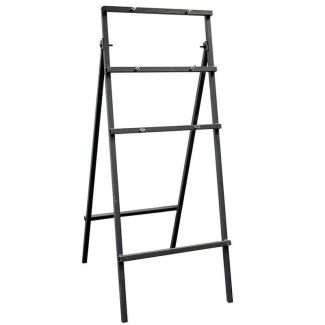
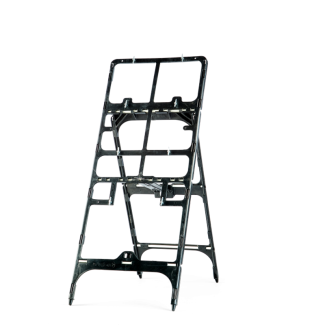
How a sign stands depends on its type: the Q-Signs are freestanding and need no frame, while quick fit sign faces mount on a separate frame.
Matching sign faces to frame centres
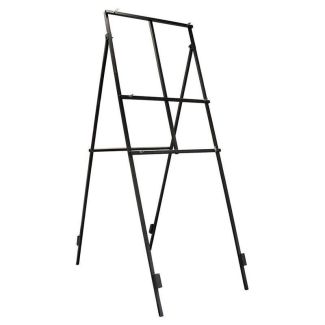
Quick fit faces and frames are made to fixing centres, the spacing between the frame's two uprights, and a face fits only a frame with the same centres. Centres across the range run from 300mm to 750mm, and the lane closed wicket signs come drilled at a choice of two centres, so check the centres of the frames already on the van or in the yard before ordering new faces. Smaller centres suit footpaths and low-speed private roads, and the larger centres carry the faces drivers need to read from further away. Frames in every size are in quick fit frames and signs.
Posts, bases and frame weights
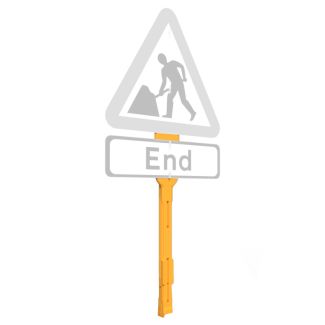
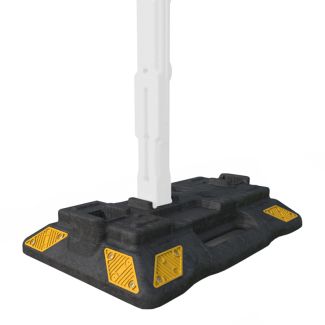
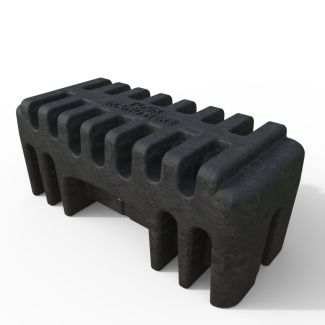
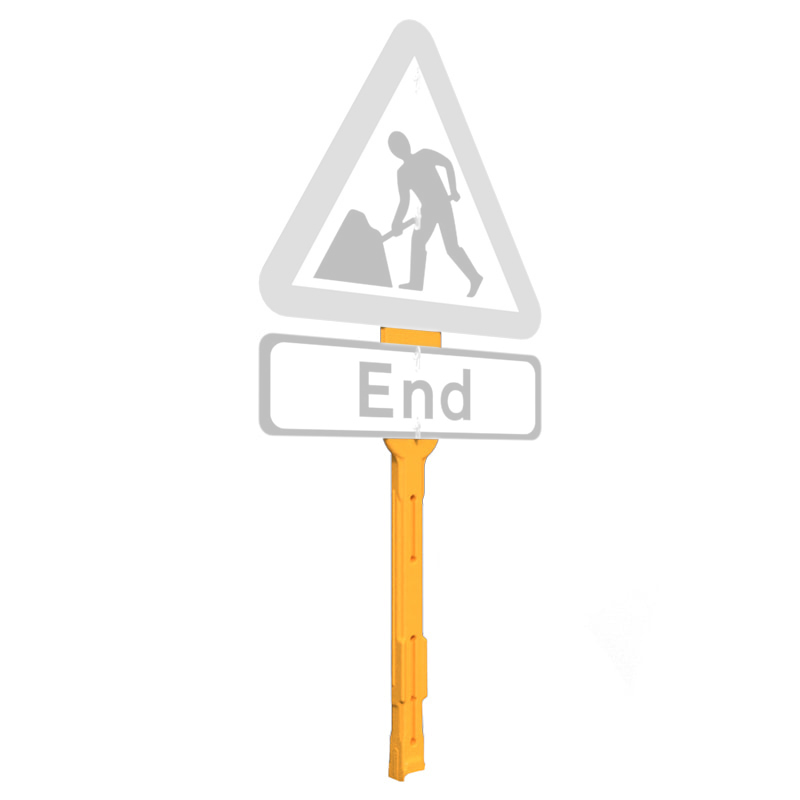
The Urban Sign System post is a lighter alternative to a steel mini quick fit frame: the sign face fixes directly to the post, and the post stands in the Urban Sign System base. The base is a heavy footplate with high-visibility plates to reduce trip hazards, and bases stack for extra stability in exposed positions. On quick fit frames, sign frame weights fit common frames and lock in place, with the same weight wet or dry, and they replace sandbags that split, spill or get moved.
Popular Categories

Road Barriers
View Products >

Water Filled Barriers
View Products >

Traffic Cones and Road Cones
View Products >
Frequently Asked Questions
Works on a public road need the permission of the road authority, which is usually the local council, before any signs go up. The signing then follows a traffic management plan drawn up under Chapter 8 of the Department of Transport's Traffic Signs Manual. On private land, such as a construction site, car park or estate, the owner or the person in control of the site decides the signing.
The distance depends on the speed of the road: the faster the traffic, the further back the first sign goes and the wider the spacing between the signs after it. Chapter 8 sets out the distances, and the traffic management plan applies them to the road in question. Bends, crests and junctions that limit how far drivers can see can move the first sign further back.
Signs and cones left out after dark have to be lit or reflective so drivers can pick them out in their headlights. Reflective sign faces show up in headlights, and cone lamps on the cones of the taper mark the edge of the works. The traffic management plan sets the lighting the layout needs at night.
Under the Safety, Health and Welfare at Work (Construction) Regulations 2013, the client appoints a Project Supervisor for the Design Process (PSDP) and a Project Supervisor for the Construction Stage (PSCS). The PSDP takes traffic and access into account in the design and the safety and health plan. The PSCS organises traffic management on site and at its entrances during construction, and contractors on the site work to those arrangements.
Yes. The Site Entry Sign System is supplied without sign faces, and HERMEQ can manufacture faces to suit a site's safety information and branding. The finished faces fix to the Urban Sign System post at the site entrance or along the fence line.
Each direction of traffic approaching the works is signed separately, so even a short job on a two-way road needs signs on both approaches. The total then depends on the speed of the road, the hazards in the layout and the side roads and junctions within it. The traffic management plan lists every sign and its position, and that list is the order.