







Water Filled Barriers
HERMEQ supplies water filled barriers for roadworks, site perimeters, car parks and events, from lightweight plastic separators that mark a walkway to 2 metre heavy duty and crash tested water barriers that close off a work zone. Units are light enough to place empty and take their weight from water, or sand on the Evo family, added on site.
For footpaths, walkways and event lines, choose the Buddha Barrier or the water fill traffic separator; for roadside lines, the interlocking Evo family; for site perimeters and road closures, the 2 metre GB2, RB2000 and Bison barriers; and where moving traffic passes close to the works, the crash tested RB22, Defender50 or City Wall.


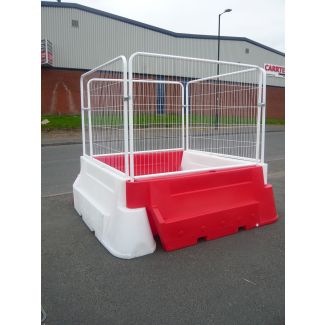
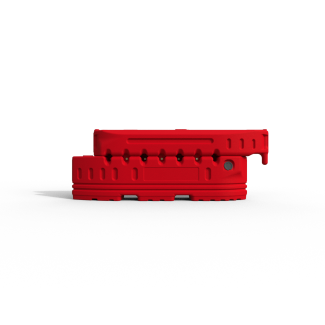
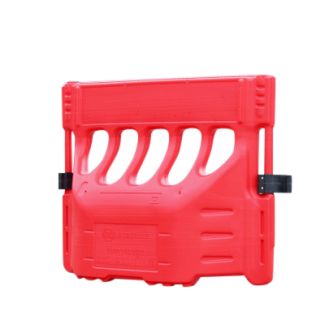
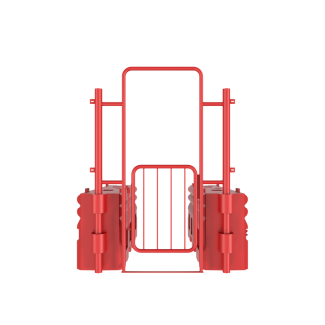
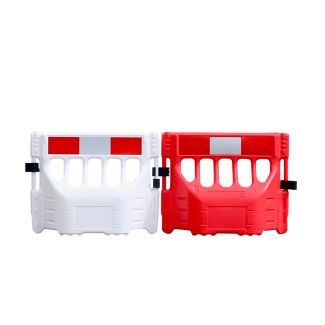
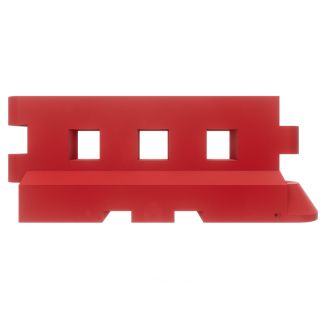
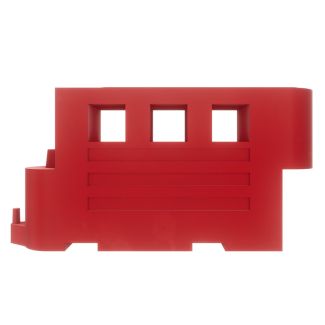
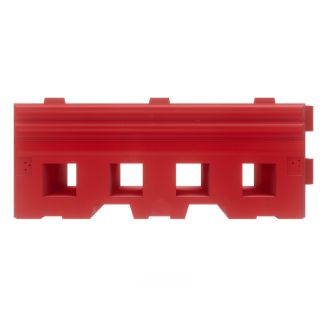
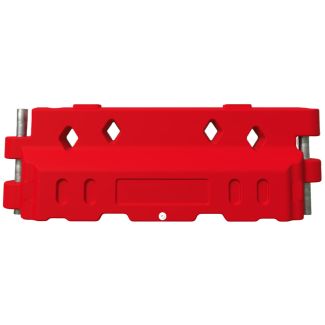
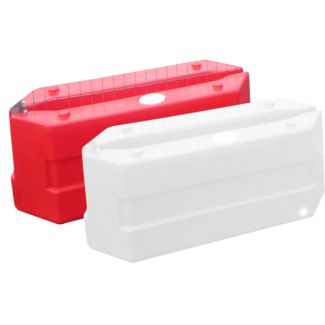
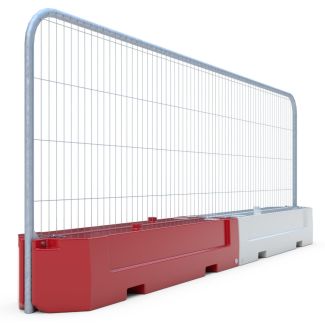
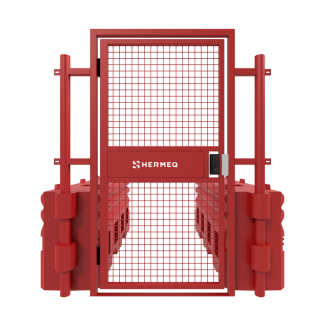
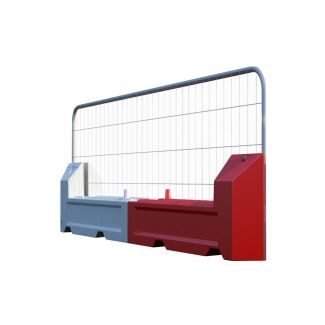
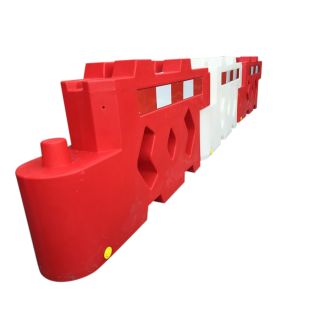
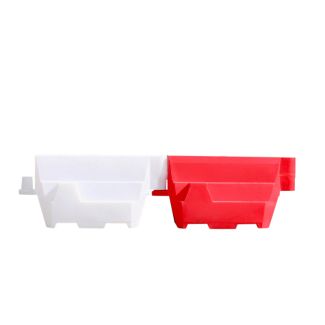
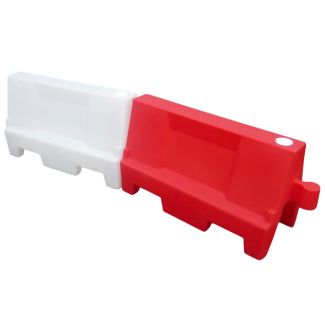
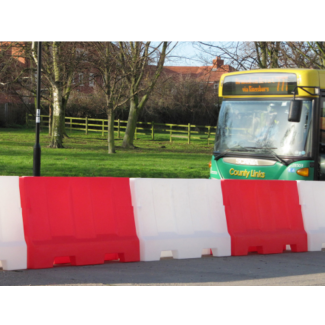

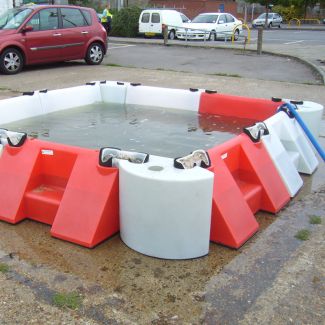
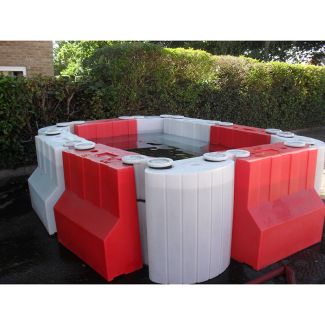
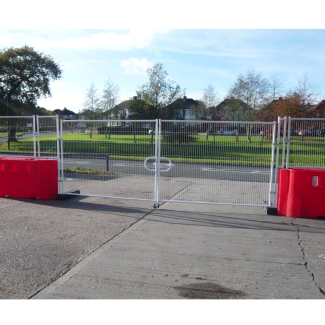
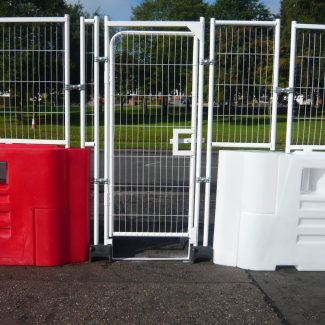
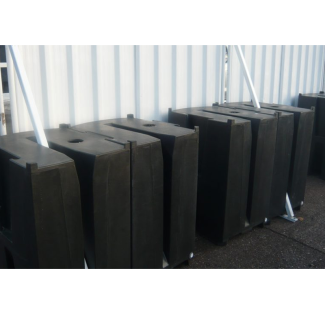
Lightweight and heavy duty water filled barriers
The right barrier depends on the job the line does and the weight it needs, and filled weights across the range run from under 30 kg for a pedestrian separator to 600 kg for a crash tested road barrier.
Water filled pedestrian barriers and anti-trip separators
Units around a metre long are the choice for footpath closures, site walkways and queue lines, where the barrier guides people on foot and is moved often. The Buddha Barrier anti-trip separator has a profile with no protruding base for feet to catch on, which matters on a busy footpath, and it links to plastic road barriers with an S-clip. The 800mm water filled barrier is the same anti-trip design without the reflective strip. The water fill traffic separator and the pyramid water filled road barrier are lower and broader and hold more water, which gives a steadier line between pedestrians and slow site traffic.
Evo interlocking road barriers
The Evo family interlocks into a continuous wall with no gaps, and its sizes connect to one another, so one system can run from a footpath closure into a roadside line. The Evo 1 barrier gives vehicles on busy roads a safe edge and takes the Evo 1 mini mesh on top. The Evo 1.5 barrier protects the sides of roads from impact damage on busy roads and construction sites, and the Evo 80 barrier segregates a carriageway during construction work. The 2m Euro Barrier is a taller, wider and more heavily ballasted alternative to the Evo for crowd control and perimeter lines.
Heavy duty 2m water barriers
Two metre heavy duty barriers are the standard choice for site perimeters, road closures and works that keep a line in place for weeks or months. The GB2 water filled barrier suits construction, traffic management, demolition, event and security work, and the RB2000 water barrier is the taller, heavier alternative for the same perimeters. The Bison heavy duty water barrier is the taller of the two Bison models, and the 800mm Bison barrier is the lower, wind-tested version for demarcation lines that need high visibility. The 2 metre water filled traffic barrier is built for road and construction site delineation, and takes interlocking anti-climb mesh panels on top. Three heavy duty systems are crash tested: the RB22 crash tested barrier, the Defender50 crash barrier and the City Wall barrier.

Crash tested water barriers or delineation barriers
Most water filled barriers are delineation barriers, which mark a route, separate pedestrians from traffic and keep people out of a work area without being tested to contain a vehicle that strikes them. That group covers the lightweight separators, the Evo family and the heavy duty GB2, RB2000, Bison and 2 metre barriers, and it is the right choice for footpath closures, site perimeters, car parks and event lines where vehicles move slowly or are kept clear of the barrier.
A crash tested barrier is the choice where moving traffic passes close to workers or pedestrians. The RB22 and the Defender50 are both tested at 80 km/h, the Defender50 to EN 1317 N1, and the City Wall is tested at 40 km/h, which suits urban works on slower streets. The barrier's test speed should match the traffic it will face on that job.
On public roads, roadworks are planned under the Department of Transport's Traffic Signs Manual, Chapter 8, and the barrier is one part of a layout that also sets the signs, cones, lighting and safety zones around the works.
Water filled barriers with fence panels and gates
Mesh and anti-climb fence extensions
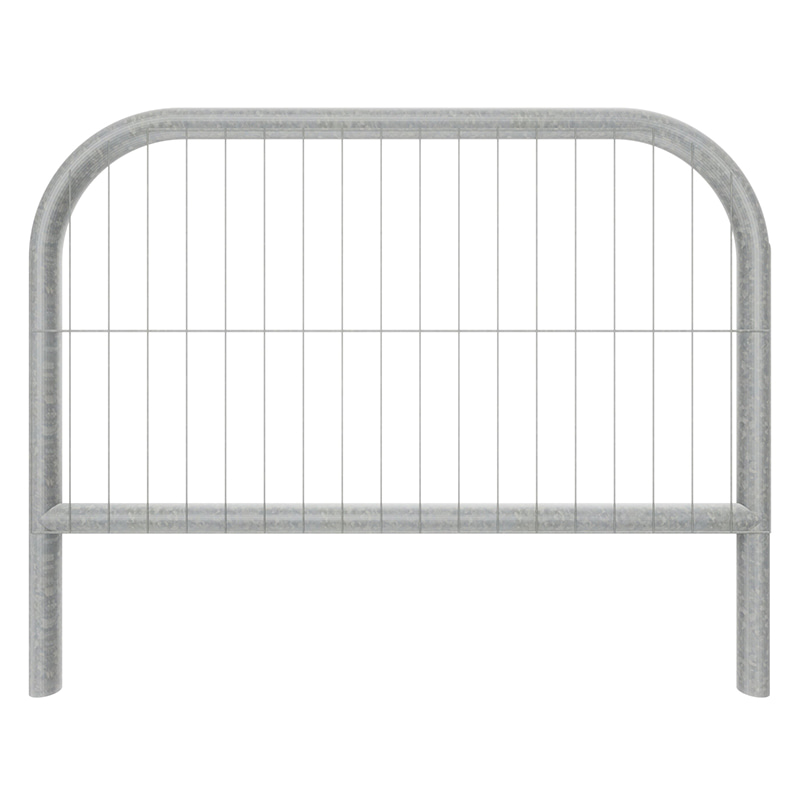
Steel mesh panels fit into the top of most heavy duty barriers and several lighter ones, lifting a run to around 2 m and stopping people stepping over or climbing it. The Hog mesh fence extension fits water filled barriers in galvanised or powder coated white, and the Evo 1 mini mesh extension is made for the Evo 1. Fence panels increase the area the wind acts on, so a fenced line carries a much higher wind load than a bare one, and the heavier units in the range are the better base for it.
Vehicle and pedestrian gates for barrier runs
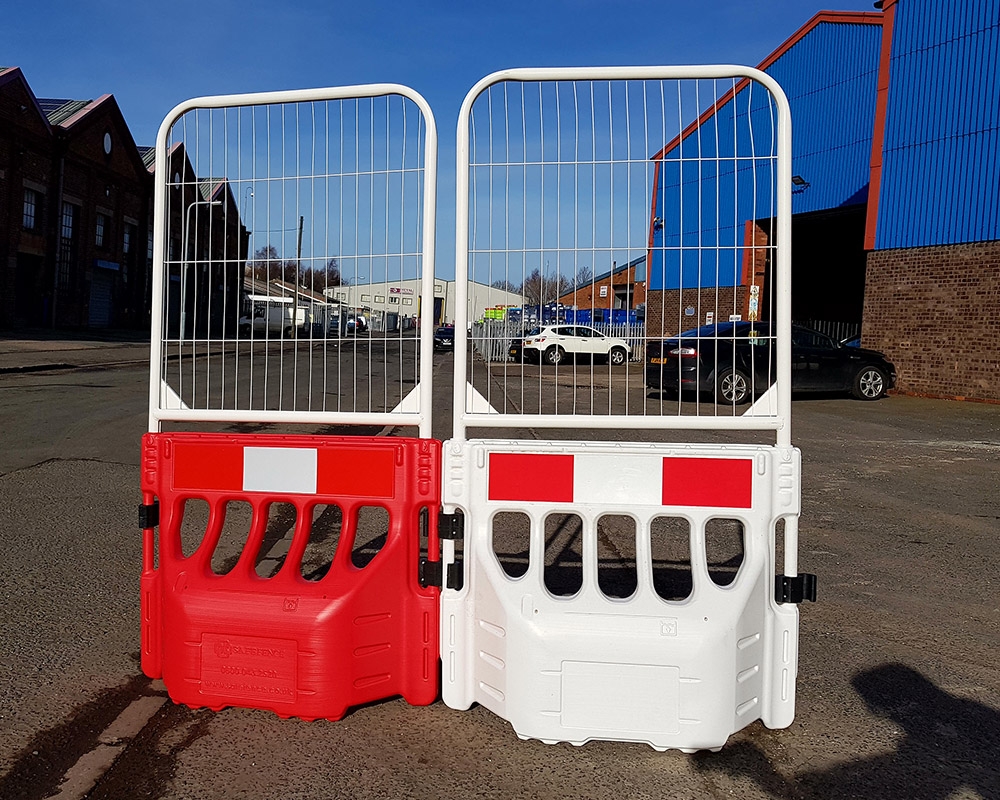
Gates close the openings where plant, deliveries and people pass through the line. The 5m vehicle gate for RB2000 barriers is a steel framed gate for vehicle entrances. For foot traffic, the RB22 walkthrough pedestrian gate links into an RB22 run, while the RB22 DigiNox gate has a DigiLock that limits entry to authorised staff. The pedestrian gate for plastic road barriers connects to barrier fence extensions with flags and has an anti-climb panel.
Water filled bases for mesh fence panels
Water filled fence bases are a different product from a road barrier, as they hold up standard mesh panels, the Heras or harris fencing, or hoarding panels on a temporary fence line. The Slot Block fence base and the Aqua Base fencing stabiliser are red and white pairs that run the length of a 3.5 m panel. The water filled Rota Block is a compact, stackable block for mesh and hoarding panels, and the water filled mesh fence stabiliser ballasts mesh panels for road closures, events and site security.
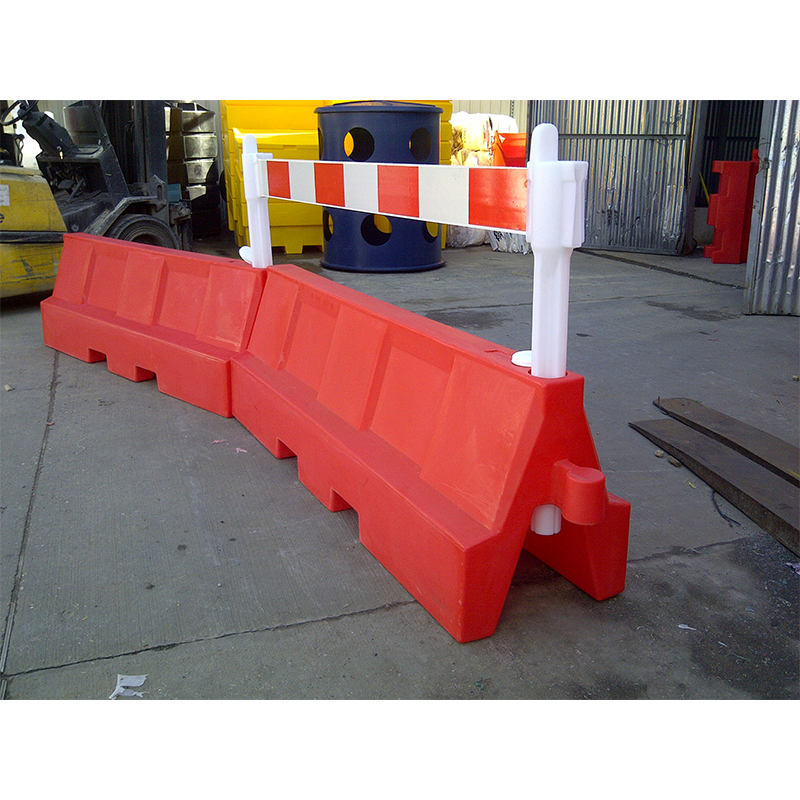
Water barriers for roadworks, building sites and events
Roadworks and footpath closures
A roadworks line has to be continuous, because pedestrians and cyclists will use any gap between units as a shortcut into the works. Interlocking units such as the Evo family keep the line closed, the walking route beside it needs a clear and level width, and cone lamps along the line keep it visible at night. Where a diverted footpath crosses a trench or a kerb, foot ramps and trench covers keep the route passable for wheelchairs and buggies, and the rest of the layout comes from the wider range of traffic management equipment.
Construction site perimeters and hoarding lines
A site boundary stays in place for months, carries fence or hoarding panels and has to resist both wind and people trying to get in. Fenced heavy duty runs such as the GB2 or RB2000 with Hog mesh fence extensions suit it, and the line is best planned around the vehicle entrances and pedestrian access points from the start, so that gates sit where deliveries and the workforce actually arrive.
Events and crowd routes
Event lines go up and come down quickly, often on hard standing with a hose or bowser close by, so units light enough to carry empty and fill where they stand are the practical choice: the Buddha Barrier for pedestrian routes, and the heavier 2m Euro Barrier where a crowd line or perimeter needs more ballast.
Filling, colours and setting out a barrier run
Water or sand ballast
The Evo family takes sand as well as water, which suits sites without a water supply and long-term lines that should not be drained by accident or by tampering. The Road Runner 500 self-weighted barrier needs no fill at all and is used for light vehicle traffic, pedestrian flow and marking safe zones.
Red and white barrier runs
Most barriers come in all red, all white or a half red, half white option, and alternating red and white along a run is the usual way to make a line stand out against traffic and in poor light. The Defender50 is made in all red or all white, so a red and white Defender50 line is built by alternating units, and the 2m Euro Barrier comes in white only.
Measuring, cornering and moving a run
A run is counted by working length, not overall length. Interlocking heavy duty barriers overlap at the joint, so each unit adds less to the run than its overall length, and dividing the run by overall length leaves the line short. Systems also differ in how far each joint turns, from a full 90 degrees on the Bison to a much narrower angle on others, which decides how many units a corner or curve takes and whether angle sections are needed. Barriers are drained before they are relocated, and heavy duty units are then lifted empty by forklift through their fork channels.
Popular Categories

Road Barriers
View Products >

Traffic Cones and Road Cones
View Products >

Roadworks Signs
View Products >
Frequently Asked Questions
The barriers in the range are moulded plastic: the Buddha Barrier, the water fill separator and the City Wall are high density polyethylene (HDPE), and the Evo and Euro barriers are UV stabilised polyethylene, made to withstand long periods outdoors in sunlight. Several of the HDPE units are fully recyclable at the end of their working life.
Filled weights in the range run from 27.5 kg for the Buddha Barrier to 600 kg for the RB22 crash tested barrier. Each litre of water adds about a kilo, so a barrier's fill capacity is the quickest guide to its weight once full.
Water expands as it freezes, and a barrier full of ice cannot be drained or moved until it thaws. In a hard frost, lines that are not needed are drained, and long-term lines are better ballasted with sand where the barrier takes it.
On most temporary works, yes: water filled barriers are delivered and placed empty, then filled on site, so they go in without a crane and come out by draining, while concrete barriers need lifting plant every time they are placed or moved. Where the line must stand up to moving traffic, choose a crash tested unit such as the RB22 or the Defender50.
Lightweight units such as the Buddha Barrier and the Evo range stack when empty, which cuts the space they take in a van, a lorry or a store. The Bison has an anti-slide feature that holds units steady when stacked. All barriers must be fully drained before stacking.