







Spill Kits
Spill kits hold the absorbent pads, absorbent socks and disposal bag needed to contain and clean up a leak on site from plant, machinery and stored liquids, matched to the liquid at risk. Kits run from 10 litres to 1,100 litres of absorbency. Under parked plant, plant nappies and plant mats catch leaks before they reach the ground, and plant mats turn oils and fuels into a solid mass within the textile as soon as a leak starts. HERMEQ supplies spill kits for general purpose, oil and fuel, chemical and AdBlue spills, in formats from bags carried on vehicles to wheeled bins and high capacity kits for bulk storage.


Oil, chemical and general purpose spill kits
The liquid at risk decides the type of spill kit, and the size and format follow from where that liquid is kept on site.
General purpose and maintenance spill kits
Our general purpose spill kits, which the trade also calls maintenance or universal kits, absorb coolants, antifreeze, oil, water, weak chemicals and solvents. They suit workshops, plant maintenance areas and stores where mixed, non-aggressive liquids are handled. Because they take up water as well as oil, they are the kit for indoor and covered areas.
Oil and fuel spill kits for diesel and hydraulic oil
Oil and fuel spill kits are made for hydrocarbons: diesel, engine and hydraulic oil, lubricating oil and oil-based solvents. They belong at refuelling points, bowsers, generators and plant compounds, and beside any outdoor area where a spill could run to a drain or watercourse.
Chemical spill kits for acids and alkalis
Chemical spill kits hold absorbents for acids, alkalis, strong chemicals and solvents, the aggressive liquids a general purpose kit is not intended for. They are the choice for chemical stores, laboratories, battery charging areas, plant rooms and anywhere cleaning or process chemicals are decanted.
AdBlue spill kits
AdBlue is a solution of urea in water, not a hydrocarbon, so an oil and fuel kit is the wrong choice for a leaking AdBlue tank, dispenser or delivery hose. Our dedicated AdBlue spill kits absorb the fluid itself, in formats from a clip close bag for a van to a wheelie bin beside a bulk dispenser. AdBlue pollutes groundwater and surface water, so a site that stores it for newer diesel plant and lorries keeps an AdBlue kit at the AdBlue tank and an oil and fuel kit at the diesel.

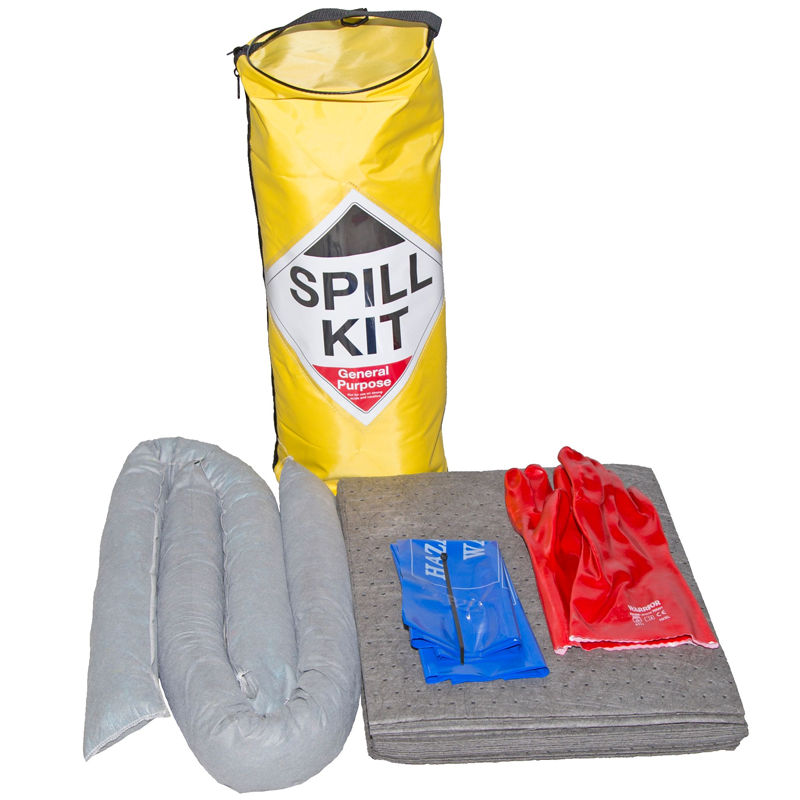
Spill kit sizes and formats
Kits in the range run from 10 litres to 1,100 litres of absorbency, and the format depends on whether the kit travels with a machine, stays at a fixed point or is wheeled to an incident.
Spill kit bags with drip trays and flexi trays
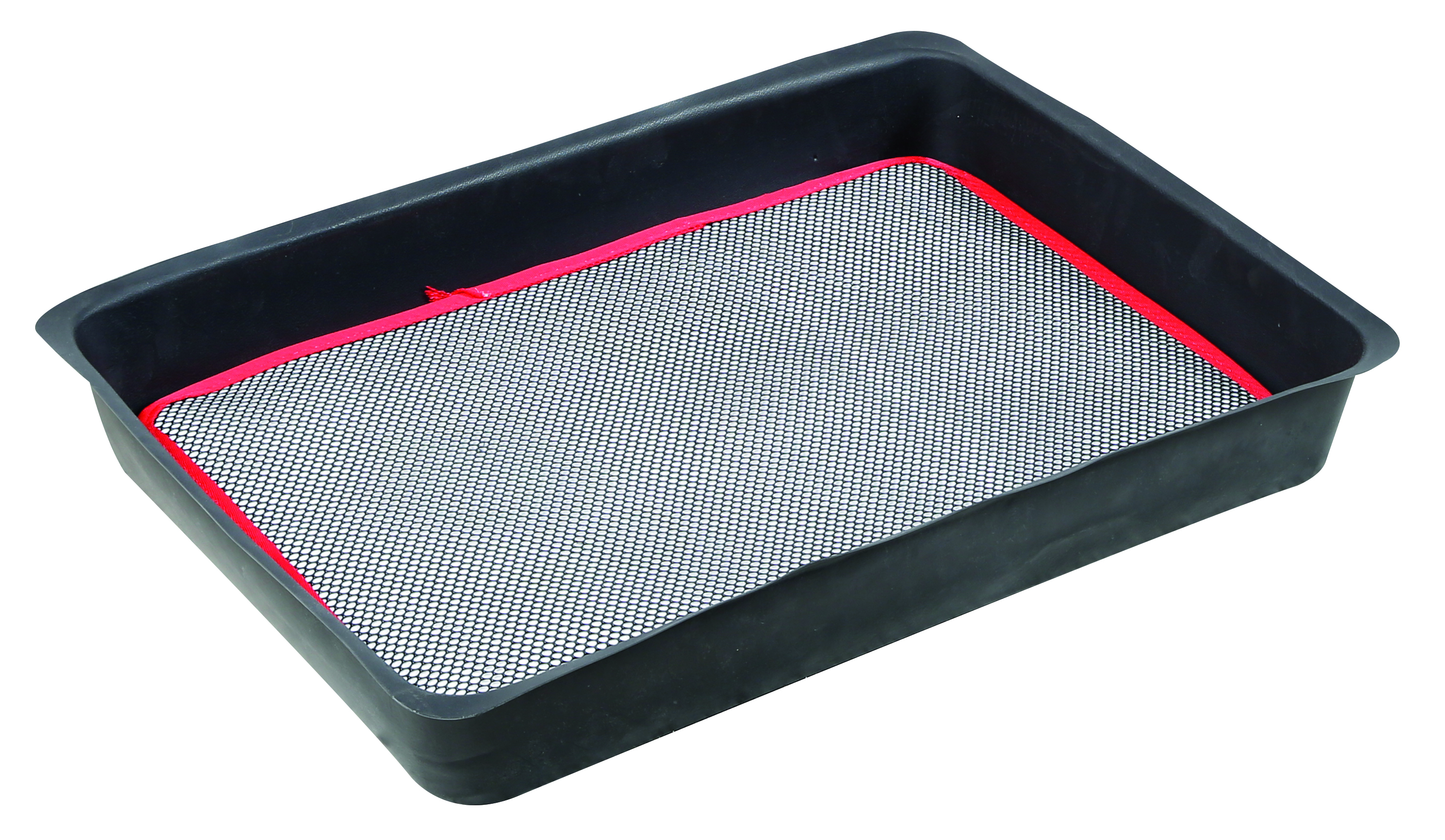
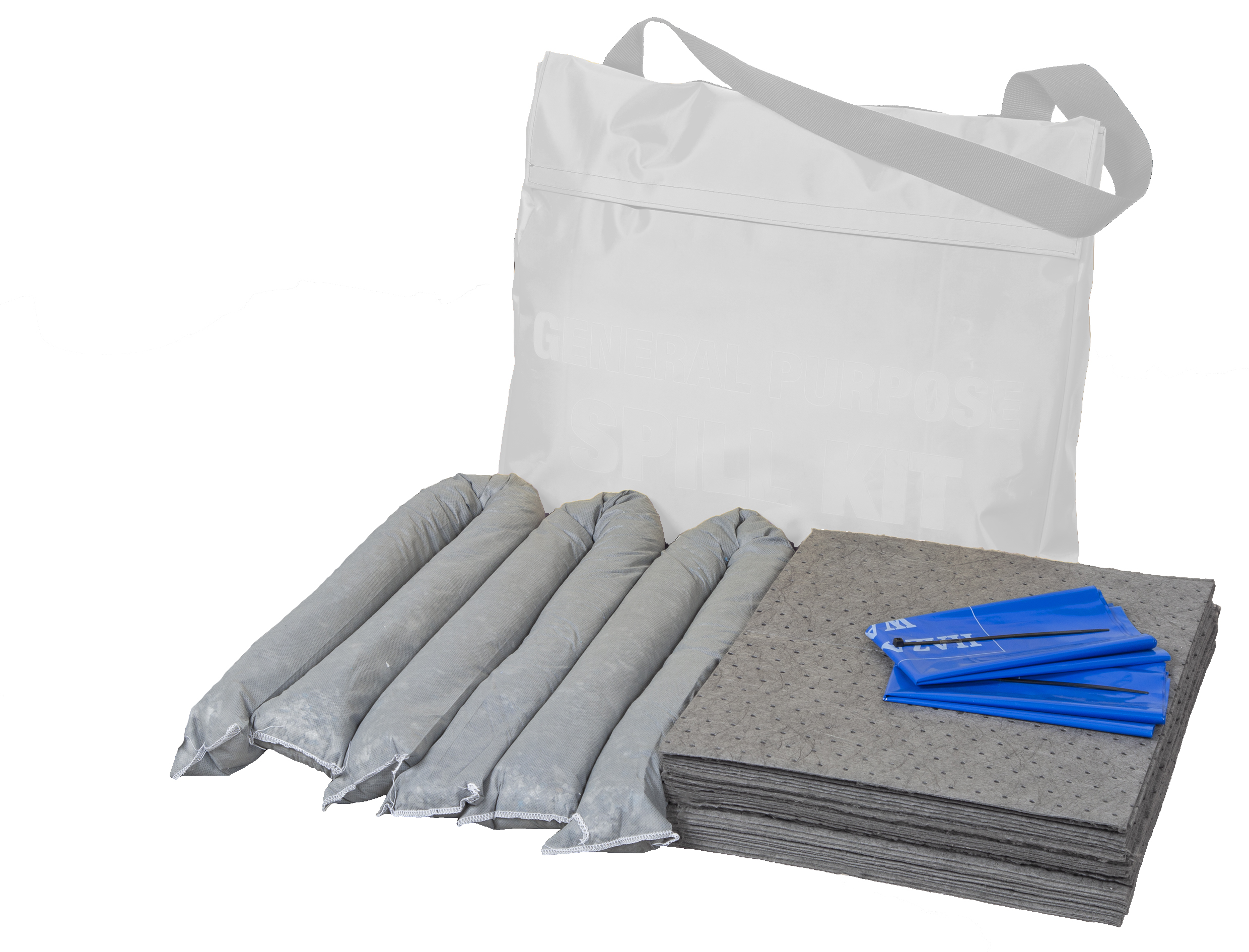
Bag kits are the format for vans, small plant, welfare units and workshop benches, where one person picks the kit up and carries it to the spill. Some bag kits are packed with a drip tray or a flexi tray, which catches a continuing drip from a hose or fitting while the leak is repaired, and the pads deal with what has already reached the ground.
Forklift and vehicle spill kits
Forklift spill kits are packed in a compact hi-vis cylinder bag that travels on the truck, so the kit reaches the spill with the driver. The range covers a general purpose forklift spill kit for paint, fluids and lesser chemicals, an oil and fuel forklift spill kit for engine, hydraulic and lubricating oil, and a chemical forklift spill kit for acids and solvents, each with its own refill pack.
Static drum and wheelie bin spill kits
Static drum spill kits stay at one point, such as a refuelling area, a workshop or the corner of a compound where drums are stored. For a fixed station that needs more absorbent, wheelie bin spill kits hold more and can still be moved across a yard by one person. Larger wheelie bin spill kits suit plant yards and fuel stores, and the 360 litre spill kit covers the largest of these stations. Bins come in yellow or blue, and many sites use the colour as their own code for the liquid each kit covers.
Wheeled lockers and spill kit trolleys
A 60 litre wheeled locker spill kit keeps its absorbents shut away between incidents and is wheeled out to goods-in bays, bulk liquid delivery points and chemical stores, where one delivery can release a large volume at once. The mobile spill kit trolley carries tools and spill materials to an incident in laboratories, industrial units and other places where hazardous materials are handled.
High volume and high capacity spill kits
Where one IBC, bulk tank or tanker delivery could spill more than a bin kit holds, the kit is sized to the store. The high volume oil and fuel spill kit covers fuel stores and bowser parks, the high volume chemical spill kit covers bulk chemical storage and the high volume general purpose spill kit covers maintenance liquids. At the top of the range, high capacity spill kits stand beside IBC yards and tank stores.
Spill containment for plant, drains and bunds
Spill kits deal with a spill after it happens, and the containment products below are chosen by where the leak would start: under plant, around a vehicle or store, or at the drain it would run to.
Drip trays under plant and bowsers
SpillTector drip trays sit under small plant, machinery and tanks and catch oil, fuel and AdBlue leaks while clean rainwater runs off. For mobile plant, plant nappies contain leaks from the machine, with plant nappy liners fitted inside to extend the nappy's life, and plant spill mats are a cost effective alternative under plant and machinery.
Temporary bunds for tankers and drum stores
Bundstrips are crush resistant foam strips in a yellow PVC cover, sealed to the ground to form a bund around trucks, tanks, drum stores and loading bays, and they keep their shape when driven over. The spill bundstrip kit has straight lengths, corners and sealant for a complete sealed area, and separate bundstrips extend or reshape it. Containment bunding mats are portable bunds for oil and contaminated water, from 270 litres to 20,000 litres. Vehicle bunding mats hold a whole road tanker while it loads or unloads. Permanent bunded storage is in the drum and IBC containment range.
Drain covers and drain seals
Surface water drains run to streams and rivers, so the drains near fuel, chemical and delivery points are covered before a spill reaches them. Heavyweight drain covers lie over drains during routine work such as tanker offloading. Plug Rug drain covers bed into rough or uneven surfaces, wet or dry, for a temporary seal. The drain seal barrier keeps liquid out of a drain or diverts its flow to a chosen point.
Dewatering oily water on site
Rainwater that collects in a bund, excavation or plant compound can carry an oil sheen. The dewatering pack filters oil, sediment and slicks out of that water on site, so the job does not wait for a vacuum tanker.
How many spill kits a site needs and where they go
The number of kits follows from the number of places a spill can start, and each kit's size follows from the biggest container at that place.
Sizing a kit to the largest likely spill
Each kit is sized to the largest single container or plant tank it covers: the fuel tank of the biggest machine at a refuelling point, the largest drum in a store, or a full IBC at goods-in. Where one area holds more than one type of liquid, it needs a kit of each type, each sized to its own largest container.
Where spill kits are kept on site
Kits go within a short walk of every point where a spill can start: refuelling points and bowsers, drum and IBC stores, workshops, goods-in and delivery bays, and the drains those areas run to. Each kit is kept unlocked, signed and clear of stacked materials, and the people working nearby know where it is and have practised using it.
Inspection, restocking and refill packs
Each kit is checked on a routine schedule written into the site's spill plan, and again after every use: the seal is intact, the contents are complete and dry, and the disposal bags and ties are present. A used or opened kit is restocked straight away with spill kit refill packs, which cover the general purpose, oil and fuel, chemical and AdBlue kits. Pads and socks for routine drips, kept apart from the emergency kit, are in spill absorbents.
Popular Categories

Wheelie Bins
View Products >

Skips for Sale
View Products >

Forklift Tipping Skips
View Products >
Frequently Asked Questions
A standard spill kit holds absorbent pads, absorbent socks and a disposal bag with a tie, all matched to the liquid the kit is for. Larger kits carry more of each, and a body fluid spill kit holds an absorbent powder instead.
Stop the leak at its source if it is safe to do so, put on gloves and keep people and vehicles clear. Lay absorbent socks around the spill and across its route to any drain, cover nearby drains, then work pads from the edge of the spill towards the centre. Place the used absorbents in the disposal bag, tie it, report the spill and restock the kit.
For oil and diesel outdoors on wet ground, choose an oil and fuel kit, because a general purpose absorbent takes up rainwater as readily as oil and fills before the oil is cleared. For AdBlue in the rain, use an AdBlue kit and act quickly, since the fluid mixes with surface water.
Absorbents used on oil, fuel or chemicals are hazardous waste, so they go into the disposal bag, are tied and labelled with what was spilled, and are kept apart from general waste. They are then collected by a contractor whose waste collection permit covers hazardous waste and taken to an authorised facility.
The Safety, Health and Welfare at Work Act 2005 does not name spill kits, but it requires every employer to assess workplace risks and keep a written safety statement, and where oil, fuel or chemicals are stored or used, the spill response belongs in that statement. On construction projects, it also belongs in the safety and health plan that the PSCS develops under the Safety, Health and Welfare at Work (Construction) Regulations 2013. Separately, the Local Government (Water Pollution) Acts make it an offence to let oil or other polluting matter enter waters, and sites with an EPA licence work to the spill and emergency conditions in their licence.