







Spill Absorbents
Spill absorbents from HERMEQ soak up leaks and spillages before they contaminate the ground on site. The range is graded for general purpose, oil and fuel, and chemical spills, so the response to a leak starts with an absorbent made for the liquid. It covers absorbent pads, rolls, socks and cushions, with land, drain and marine booms and polymer oil absorbents for spills on water. Cushions and pads also work with drip trays and drum containment and keep work areas clean between maintenance jobs.

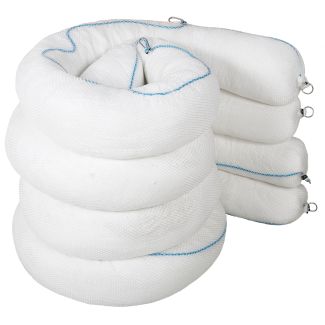
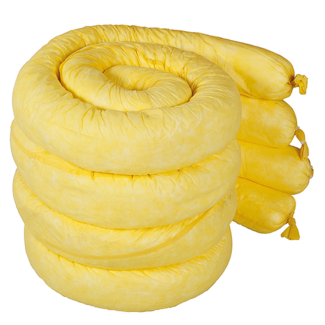


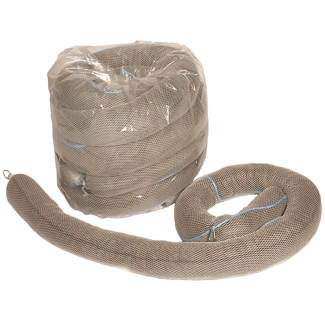
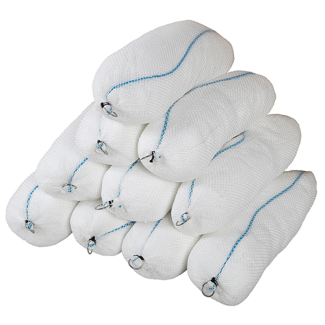


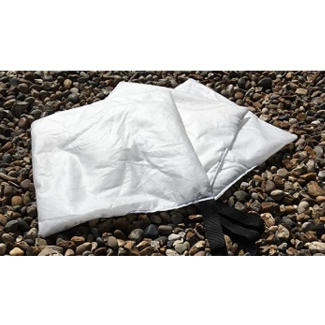
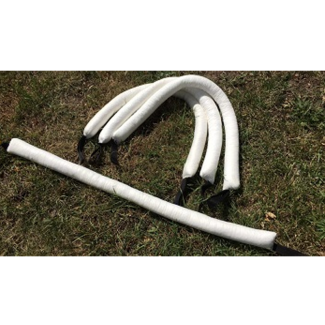
Oil, chemical and general purpose spill absorbents
The first choice with any spill absorbent is the liquid it has to pick up. Each grade in the range is made for a different group of fluids, and the same grades run through the pads, rolls, socks, cushions and booms.
General purpose absorbents
General purpose absorbents, which the trade also calls universal or maintenance absorbents, take water, coolant, oils, fuels, solvents and other non-hazardous liquids. They are the grade for everyday leaks in workshops, plant yards, welfare units and production areas where a spill could be water based or oil based. They are also the grade to reach for when the leak is water, from a burst hose, a dripping pipe or a washdown area.
Oil and fuel absorbents
Oil and fuel absorbents, often sold as oil only, pick up oils, diesel and other fuels, solvents and hydrocarbons and repel water. That water repellence makes them the grade for spills outdoors, on wet ground and in the rain, at refuelling points and on plant standing areas, where an absorbent that also takes water would soak up rainwater along with the fuel. On open water and in drains, the same property lets a boom take the oil and leave the water behind.
Chemical absorbents
Chemical absorbents are made for acids, alkalis and strong chemicals in chemical stores, battery charging areas and production lines. Neither of the other grades is made for these liquids, so wherever acids or alkalis are handled or decanted, a chemical grade belongs on hand next to the general purpose stock.

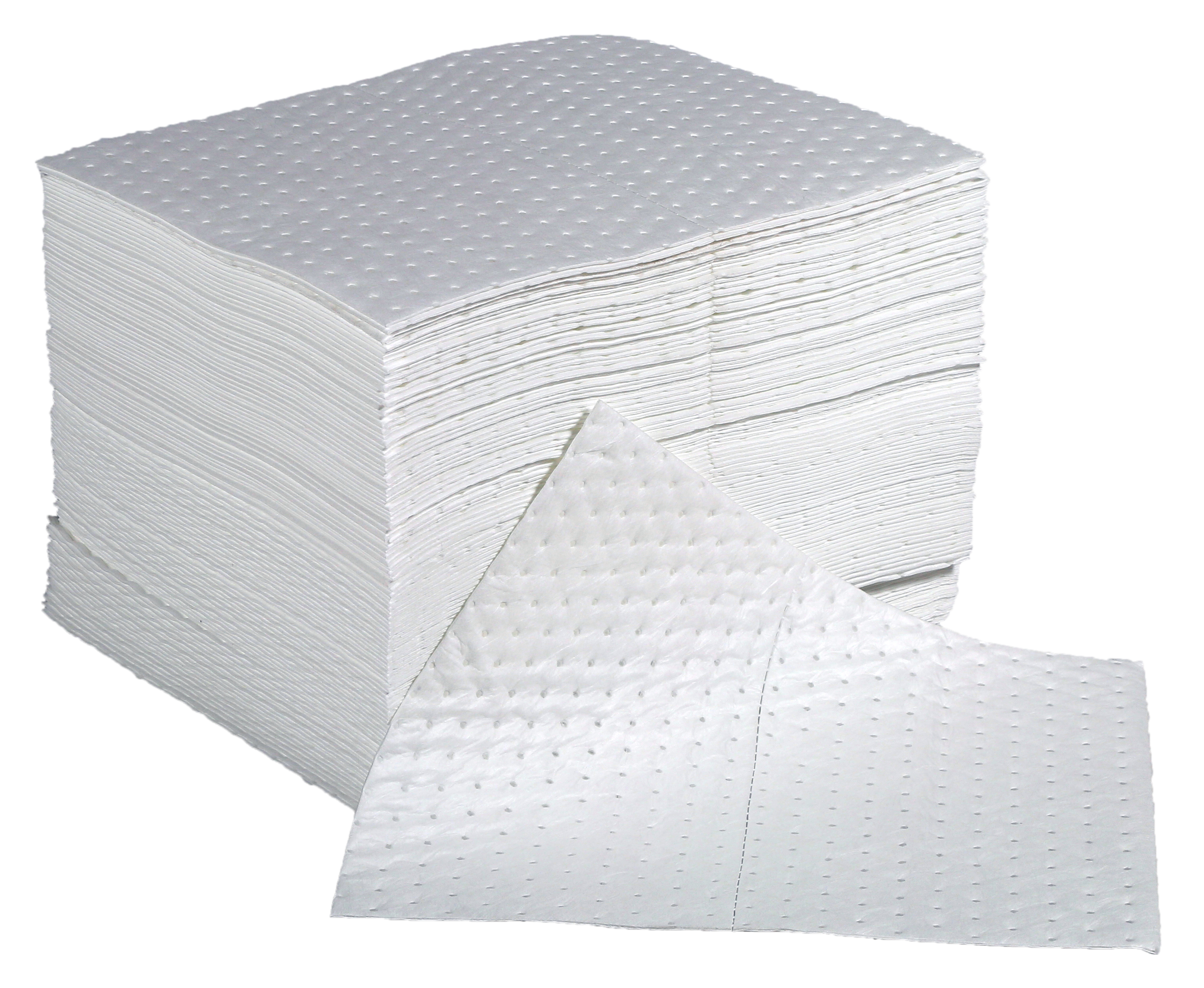
Absorbent pads, rolls, socks and cushions
The everyday formats differ in where the liquid lands: pads lift a spill, rolls cover ground, socks ring a leak and cushions catch a steady drip.
Absorbent pads
Pads are the format for wiping up a spill and for quick everyday clean-up, laid on the liquid and lifted once they have soaked it up. The oil absorbent pads tear along a perforated centre line, so a sheet can be halved for a small drip. General purpose absorbent pads are the everyday stock for mixed workshop fluids, and chemical spill pads complete the three grades.
Absorbent rolls
Rolls cover more ground than pads, so they are the choice for lining walkways, laying under machinery that drips over a wide area and catching overspray. Rolls come as general purpose absorbent rolls and chemical absorbent rolls.
Absorbent socks
Socks are long, filled tubes that bend around the base of a leaking machine, pump or generator and stay there, taking up fluid on contact. They are also laid around a wider spill to stop it spreading across a floor or towards a gully, and on an outdoor yard they pair with drain covers that seal the drain itself. The absorbent socks come in oil and fuel and general purpose grades.
Absorbent cushions
Cushions are filled pillows that sit directly under a leaking hose, coupling or fitting, or inside a drip tray, where they hold the leaked fluid so the tray can be emptied without spilling it again. The range has general purpose absorbent cushions and oil and fuel absorbent cushions for workshops and plant. Chemical absorbent cushions go under chemical lines and in drip trays, and beside drums and IBCs stored on drum and IBC containment.
Absorbent booms for land, drains and water
The right boom depends on where the spill is, because hard ground, a drain and open water each have a boom made for them.
Land booms
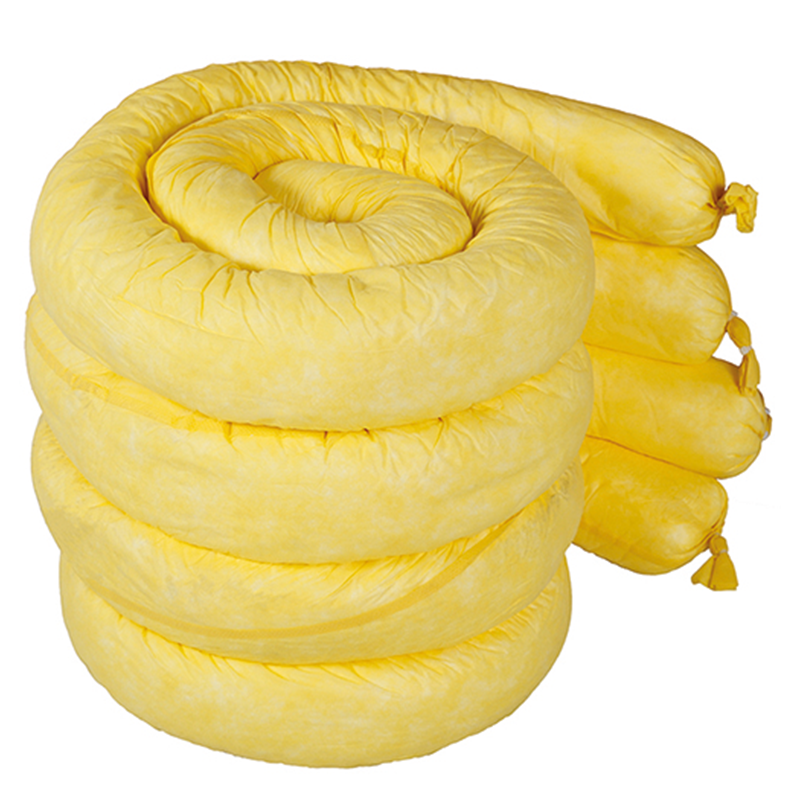
Land booms ring a spill on hard ground, such as a yard, car park or workshop floor, and stop it spreading while it is cleaned up. Their outer skin lets liquid through to the absorbent fill on contact, and they come in general purpose, oil and fuel, and chemical grades. Each boom is 3 m long, and the land boom set with netting, rope, clips and rings has the fittings to join booms into a longer ring around a larger spill.
Mini drain booms
Mini drain booms are compact booms that go into drains, sumps and tanks, and into tight spaces a full size boom cannot reach. They are water repellent, so they can be left in place to take up oil and diesel from the water around them. That suits sumps, interceptors and drainage on plant compounds and refuelling areas.
Marine booms
Marine booms float and take up only hydrocarbons such as diesel, so they are the boom for ponds, lakes, rivers, marinas and harbours, and for works beside them. On a river they are angled across the flow downstream of the source so the current carries the oil along the boom to the bank, and on still water they ring it.
Oil retention booms and absorption pillows
Both are polymer absorbents that turn oil and fuel into a solid, rubber-like mass, so the hydrocarbon does not drain or leak back out when the boom or pillow is lifted. Oil retention booms come in marine and quick deployment types and hold back hydrocarbon spills on water or land near construction sites, harbours and lakes. Oil absorption pillows are for contained standing water, such as a flooded excavation, a bunded area or a sump, and they are reusable.
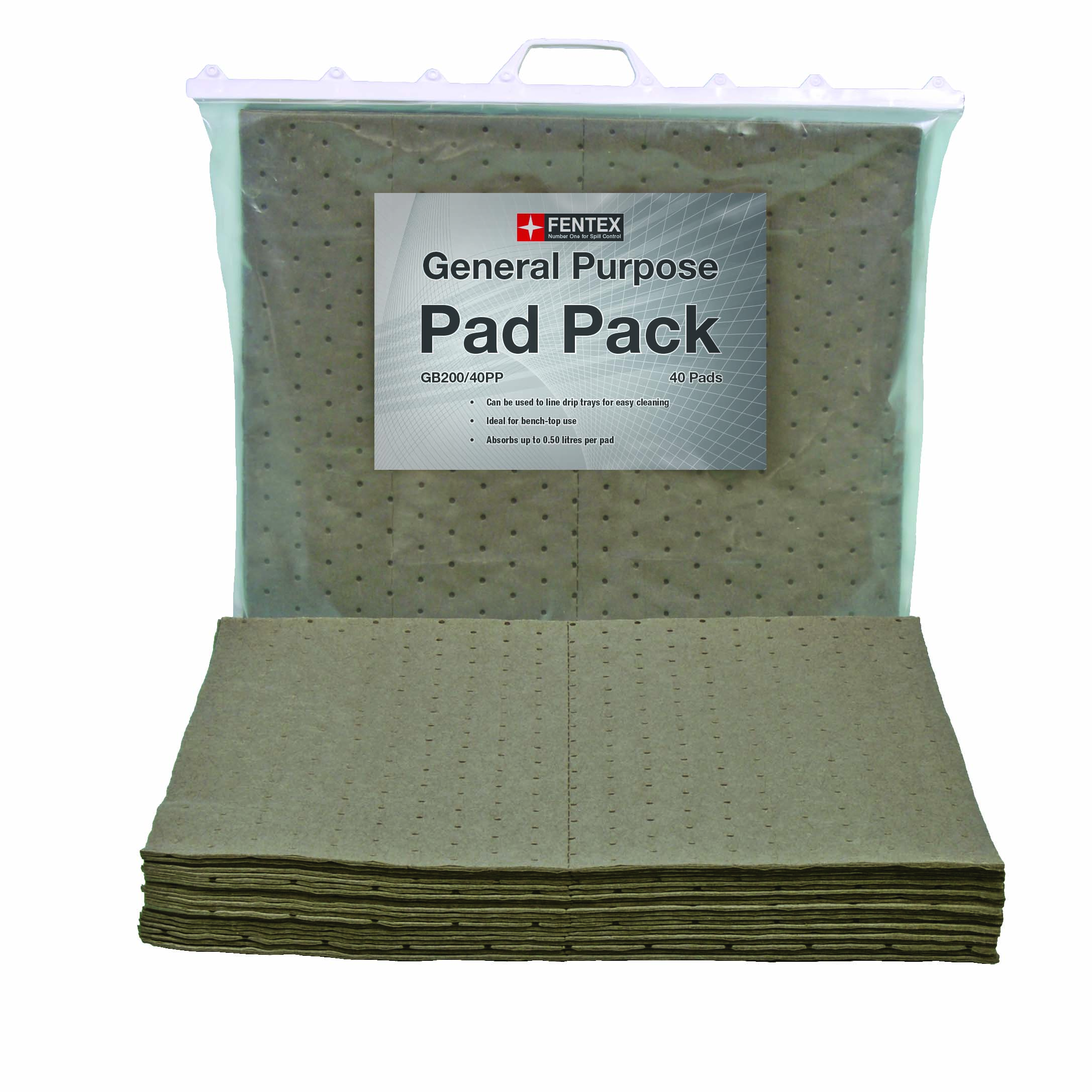
Absorbent pad and roll weights and packs
Once the grade and format are settled, weight and pack decide how far the stock goes and where it is kept.
Single or double weight
Single weight pads and rolls suit light drips and wiping, and double weight takes more liquid per sheet, so fewer sheets go down on a heavier spill. Pads and rolls come in premium and value lines in the same fluid grades, which lets a site stock for the amount of work as well as the type of spill.
Dispenser boxes, clip top bags and bulk packs
A dispenser box keeps pads to hand at a workstation or maintenance bench, one sheet at a time. A clip top bag closes again after use, so it suits a van, a plant trailer or a spill station. Boxed and poly wrapped bulk packs are the stock for a stores container, or for restocking spill kits across a site after use.
Popular Categories

Wheelie Bins
View Products >

Skips for Sale
View Products >

Forklift Tipping Skips
View Products >
Frequently Asked Questions
Pads, rolls and socks lift the liquid out with the absorbent, so nothing loose is left to be walked across a floor or washed into a drain. Loose granular absorbents are often the cause of cross contamination, and the general purpose and chemical pads are made as an alternative to them. On most site, yard and workshop spills, a pad, roll or sock is cleaner to put down and to collect.
A spill kit is a packed set of absorbents in one container, sized for a given spill and grade, so it can be picked up and used in one go. Loose absorbents restock a kit after use and cover jobs a kit is not packed for, such as rolls laid under machinery or a boom in a drain. Spill kits come in the same general purpose, oil and fuel, and chemical grades, sized by the volume of liquid they absorb.
Cover or seal the nearest drain first, then contain the spill with socks or a land boom and absorb it from the edges inwards. Where fuel or chemicals are handled near gullies, keep a drain cover with the spill stock so the drain can be sealed at once.
A used absorbent takes on the hazard of the liquid it holds, so a pad full of diesel or acid is handled as that waste and never as general site rubbish. Bag it, label it with what it absorbed and keep oil and chemical waste apart. Send it for collection by a contractor whose waste collection permit covers hazardous waste, and record the spill and the disposal in the site's environmental records.
Size the stock to the largest single tank, drum, IBC or fuel bowser that could leak on site, so one spill can be held in full. Add stock at each refuelling point, plant area and chemical store, and check it after every use and at routine site inspections.