







Concrete Washouts
Concrete washout equipment gives a site one place to wash off concrete skips, concrete trucks, pumps and tools, so the slurry is caught and kept out of drains and the ground. The range includes a closed loop system that separates the solids and recycles the water for further washing. Concrete skip washout frames take crane skips of up to 2000 litres. Pump trays are used mainly on construction sites to capture waste and dispose of it, and their fork pockets let a forklift move them and tip them to empty.


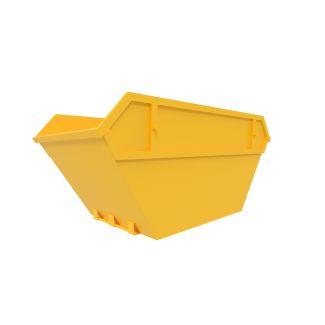


Concrete washout systems, skips and trays
The range sorts by the job. Trays and skip bins catch washout at the concrete pump, the skip washout frame and the closed loop system deal with crane skips and concrete trucks, the 10 yard skip takes mixer washout in bulk, and adsorption sacks handle tools and small equipment.
Plug & Go closed loop concrete washout system
The Plug & Go concrete washout system separates solids from the washwater and recycles the water, so washing out runs as a closed loop on site. Choose it where concrete equipment and concrete trucks are washed out every day, because the water is reused on site and no vacuum tanker is needed to take it away.
Concrete skip washout frame
The concrete skip washout frame holds a crane skip in place while it is washed down, and it is quick to set up at the washout point. It is the choice for frame, slab and foundation work where concrete is placed by crane skip and the skip is washed at the end of every pour.
Concrete washout and pump trays
Concrete washout and pump trays sit under a concrete pump to catch spillage, slurry and the water from washing out the hopper and line. They suit pump days and short pours, where a tray that can be lifted away and tipped is all the containment the job needs.
Concrete washout skip bins
A steel concrete washout skip bin captures pump washout and slurry for sites that wash out regularly, and it works as a temporary container for a single pour or as a permanent wash station. It comes as a plain bin and as a washout skip bin with a ball valve.
10 yard concrete washout skip
The 10 yard concrete washout skip is a heavy duty, leak-proof skip for concrete waste in bulk. Choose it for a fixed washout point where truck mixers wash out their chutes and drums, and where the volume is more than a tray or bin can hold between emptying.
Adsorption sacks and sack frames
Concrete washout bags are lined polypropylene sacks that hold back solids and oil residue while the water filters through. The adsorption sack frames hold a sack open so it can be filled and handled safely, and they come in single, double and enclosed versions. Choose them for washing hand tools and small equipment, or as the filter stage in a larger washout setup.

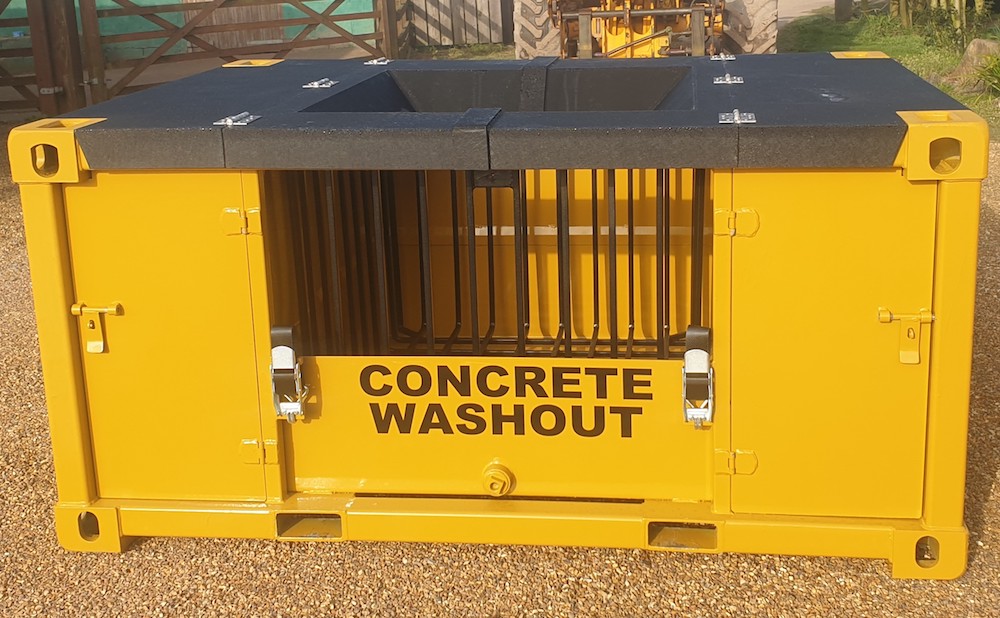
Containing washout or recycling the water
The range turns on what happens to the water once it has been used. Open containment in trays, skip bins and the 10 yard skip holds the slurry where it falls, lets the solids settle and is emptied by tipping or collection. It suits short pours, pump days and sites where concrete arrives only at certain stages of the programme, because the container is used when it is needed and emptied when the work is done.
A closed loop system separates the solids from the washwater and returns the water for the next wash, so the site is not filling and emptying containers of wet waste. It suits sites with daily mixer deliveries and steady crane skip work, where washout volumes build up every day. The parts of the range join into one setup: the concrete skip washout frame works with the Plug & Go system and concrete skips, sack frames drain water that can be pumped to a discharge point or back into the system, and the ball valve outlet on trays and valve skip bins connects to a site pump.
Setting up a concrete washout area
A concrete washout area is the single place on site where mixers, pumps, skips and tools are washed off, so that all slurry and washwater is caught and handled in one spot.
Siting the washout away from drains
The area belongs on firm, level hardstanding away from road gullies, surface water drains and watercourses, so a spill or overflow has nowhere to run. Where a drain sits close to the washout or on the route mixers take to reach it, one of the drain covers seals it for the duration of the pour, and spill kits kept nearby deal with fuel and oil leaks from plant.
Access for mixer lorries and pumps
Mixer lorries need room to reach the washout, position the chute over it and drive away without reversing across the site, and the pump needs a standing where its hopper and line can be washed straight into a tray. Clear signs at the site entrance and at the washout show drivers where to wash out, and they matter most where concrete comes from more than one supplier.
Disposing of settled solids and washwater
Solids are left to settle and harden, then broken out and removed as concrete waste in one of the waste skips, which is far easier to handle than wet slurry. The washwater stays on site until it is dealt with: it is settled, filtered through adsorption sacks or recycled for washing, and it goes only to a discharge point the site holds a licence for, never to the ground or a surface water drain.
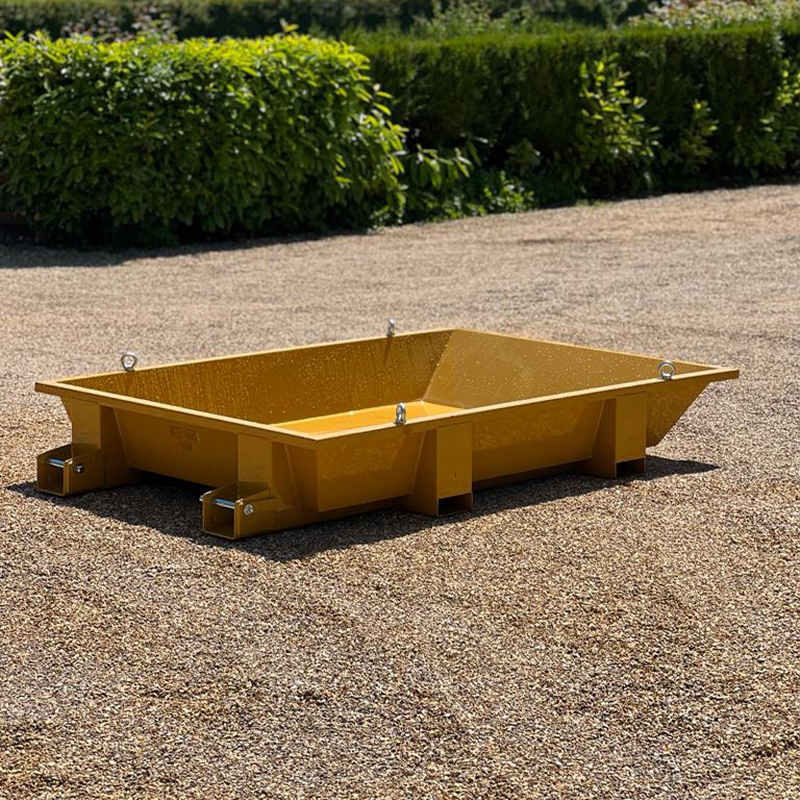
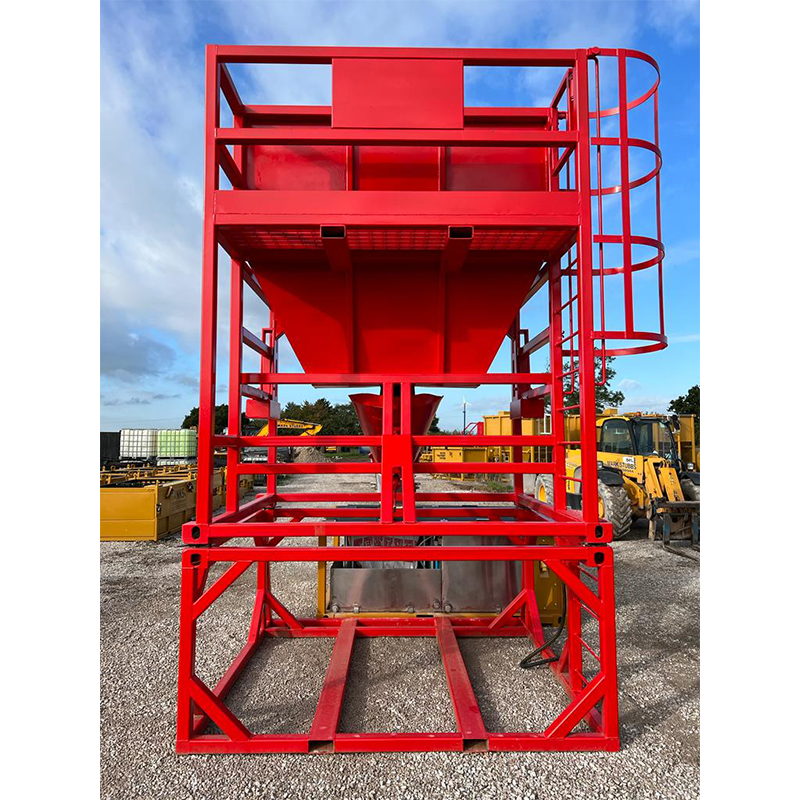
Washout capacity, handling and drainage
With the type chosen, the volume, the lifting plant on site and the way the water comes off decide which version fits the job.
Sizing to the pour and the plant
Size the washout to the largest pour and to the plant washed on that day. A tray or skip bin handles the hopper and line washout from a single pump, while several mixers washing chutes and drums on the same day fill a container quickly, and that volume belongs in the 10 yard skip or a closed loop system.
Lifting, tipping and collection
Trays and skip bins have fork pockets and crane lifting eyes, and retaining pins hold the tray on the forks while it is tipped, so a forklift or crane has to be on site whenever they are emptied. Check that this plant will still be available at the stage the washout is in use. The 10 yard skip is collected full and emptied by skip lorry, so it needs a clear, level standing with lorry access.
Ball valve or plain bin
A plain bin suits sites that let the washout settle and tip the whole load. The ball valve version lets the clearer water be drawn off before the bin is lifted, which makes for a lighter lift and a cleaner tip, and it suits sites that pump washwater on to a recycling system or a settlement tank.
Popular Categories

Wheelie Bins
View Products >

Skips for Sale
View Products >

Forklift Tipping Skips
View Products >
Frequently Asked Questions
Concrete washout is the slurry of water, cement and fine aggregate left when mixer drums, chutes, pumps, skips and tools are rinsed after a pour. The term also covers the place and the equipment used to catch it. On site it is handled as a waste stream of its own, kept apart from general waste and surface water.
Washwater from concrete is strongly alkaline and carries fine cement particles that settle and set. In a surface water drain it travels to streams and rivers, where it harms fish and plant life, and in any drain the solids can build up and block the pipe. For that reason it is contained on site and then settled, filtered or recycled.
Yes. A closed loop system such as the Plug & Go separates out the solids and returns the water to wash the next skip or mixer, so the same water is used again through the working day. The separated solids are removed from the system and disposed of as concrete waste.
A standard waste skip is made for dry waste and is not intended to hold liquid, so wet slurry belongs in a leak-proof container such as the 10 yard concrete washout skip, a washout skip bin or a washout tray. Once the solids have settled and hardened, they can go into a standard skip as concrete waste.
Concrete washout bags, also called adsorption sacks, are filter bags that hold back solids and oil residue while the water drains through. On site they are used to wash out hand tools and small equipment, as the filter stage in a larger washout setup, and to empty flocculated settlement tanks.
Let the solids settle, then filter the water through adsorption sacks or reuse it in a closed loop system. Washwater goes to a foul sewer only under a trade effluent discharge licence, and never to a surface water drain, a watercourse or the ground. The hardened solids go in a skip as concrete waste.