







Forklift Tipping Skips
Forklift tipping skips carry waste and loose material from where it is produced to where it is emptied, and tip it out from the truck without anyone lifting or shovelling the load. The HERMEQ range is built from steel for building sites, groundworks, yards, factories, workshops and warehouses.
It covers self-tipping and heavy duty roll forward skips for forklifts, lidded and mesh extension models, mini swarf bins and low height skips for production lines, auto lock skips for telehandlers, crane lift and circular hanger skips, and rotating skip bins, in standard and heavy duty builds.
-

-

-

-
-
-
 Advanced Forklift Self-Tipping Skips - Mesh ExtensionAs low as €1,037.80 €1,276.49
Quick 5 Day Delivery
-
-

-

-
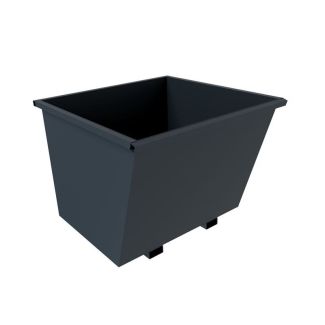
-
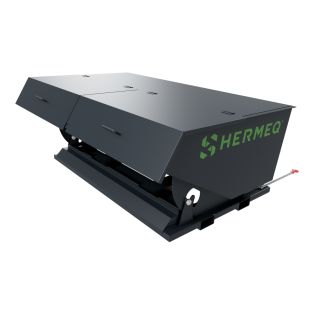
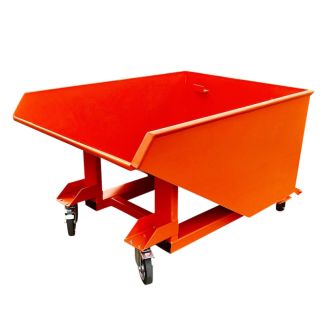
Forklift tipping skips and roll forward skips
The forklift skips divide first by duty, standard or heavy, and then by what sits over the load: an open top, a lid or a mesh extension.
Forklift self-tipping skips
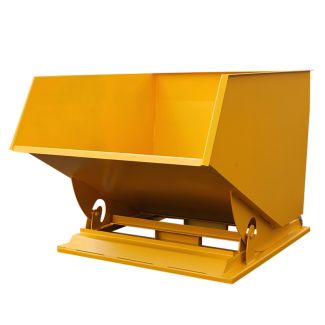
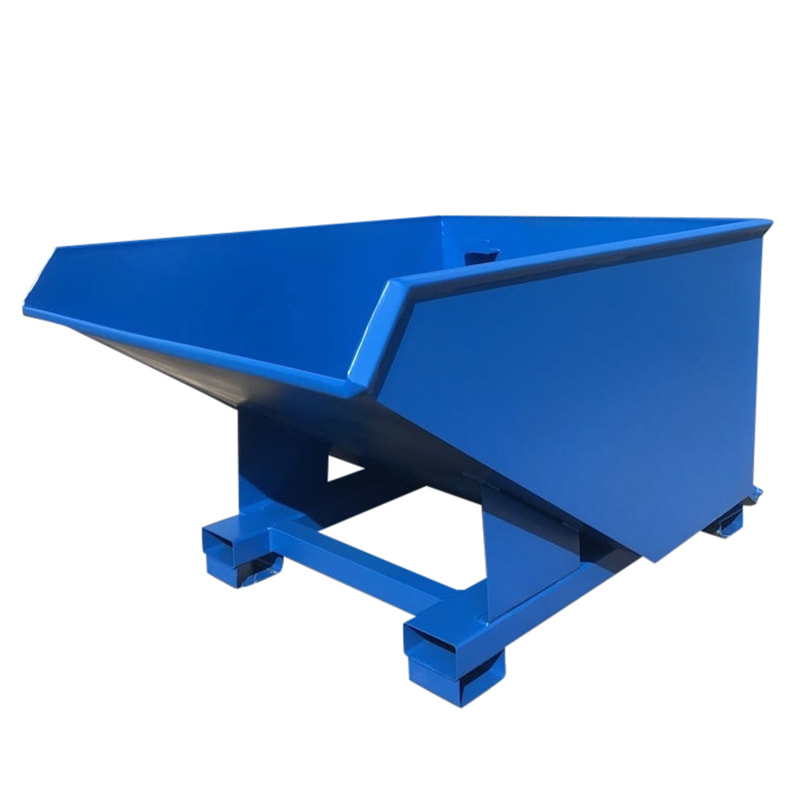
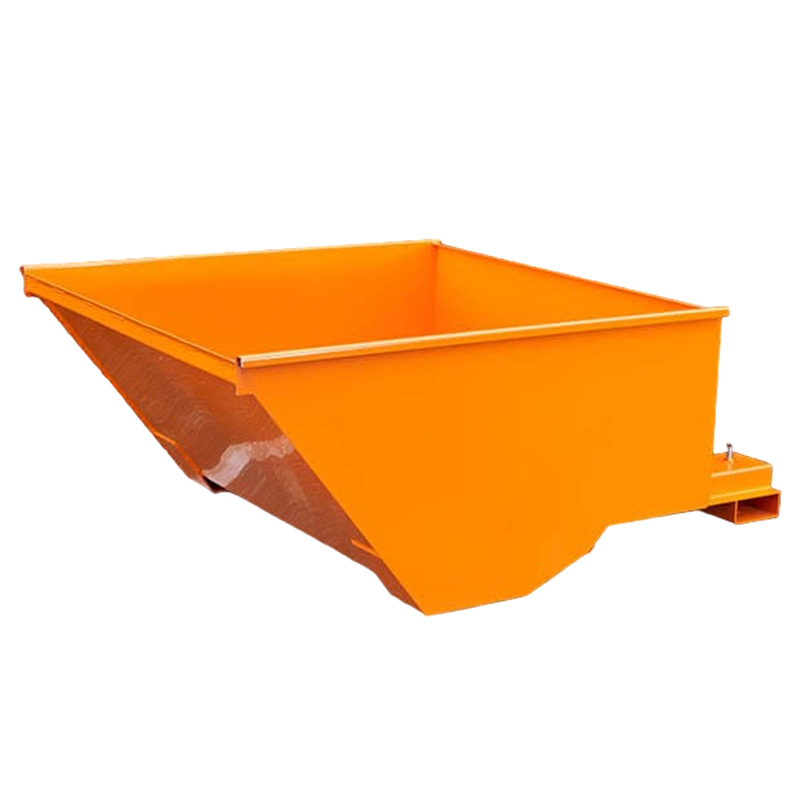
For general waste on sites, yards and factory floors, the standard choice is a self-tipping skip carried on fork pockets, which tips forward at its tipping point and rights itself once empty. The forklift self-tipping skips are built from mild steel in several sizes and colours, and they suit any operation where one driver collects and empties skips through the day.
Lidded forklift skips
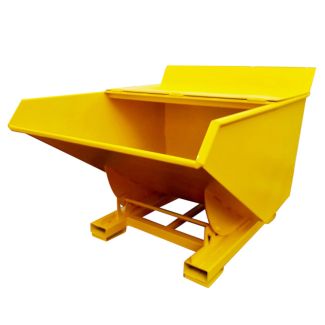
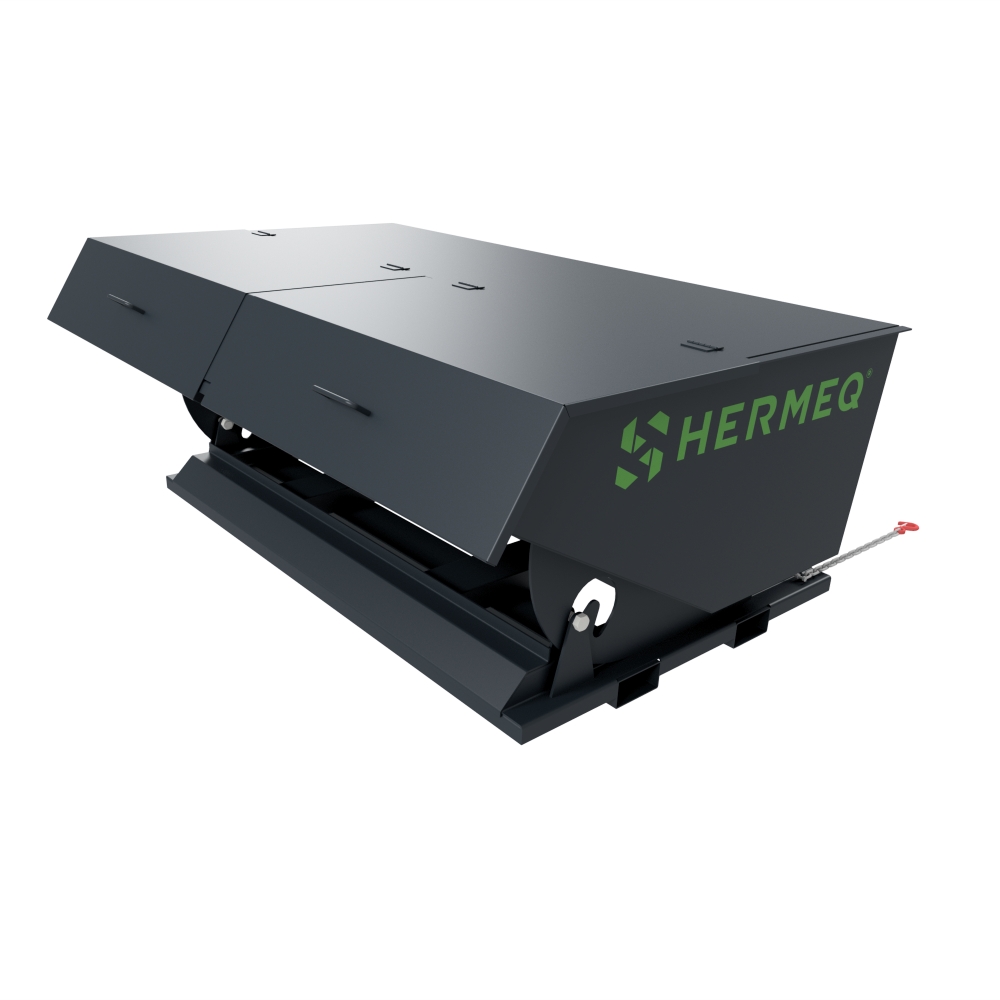
A lid holds the contents inside until the moment the skip tips, so nothing lifts out or spills as the truck crosses a yard or a car park. The lidded self-tipping skips empty with the same self-tipping action as the open model, so the lid changes how the load travels and leaves the tipping routine as it is.
Forklift skips with mesh extension
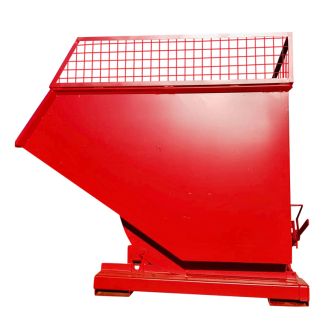
A mesh extension raises the sides of the skip, so light waste can be loaded above the steel rim and still stay in the skip on the move. The self-tipping skips with a mesh extension are made for moving materials and rubbish around building sites and yards where drivers and pedestrians share the route.
Heavy duty roll forward tipping skips
Rubble, scrap metal and other dense or abrasive loads call for the heavy duty roll forward tipping skips, which are made from thicker steel plate and are released mechanically to roll forward and empty. Choose heavy duty over standard duty where the skip is loaded by excavator or loading shovel, or where it carries hardcore, steel offcuts and production scrap every day.
Mini tipper skips and swarf bins
A compact roll forward skip stands beside a lathe, a machining centre or a press to catch swarf, the fine chippings and filings that machining produces. The mini tipper skips and swarf bins take little floor space at the machine and are carried away by forklift when full.
Low height tipping skips
Where waste falls from a conveyor, a dross chute or the end of a production line below waist height, a standard skip is too tall to sit under the discharge point. The low height tipping skips fit beneath it, collect the by-products as they fall and tip automatically when the forklift empties them.
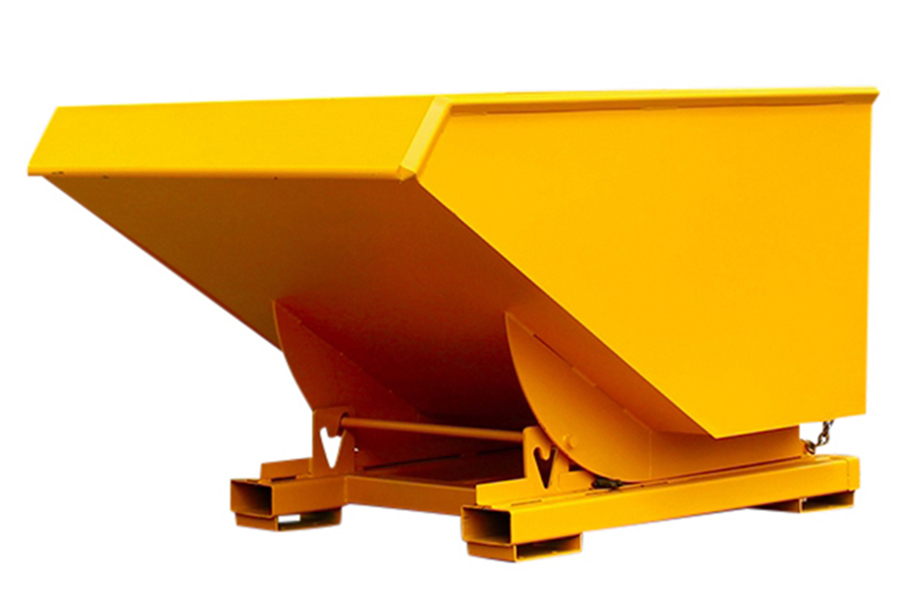
Telehandler, crane and rotating tipping skips
The machine that lifts the skip decides which skip to buy: forklift skips sit on fork pockets, telehandler skips lock onto the forks, crane skips hang from lugs or a hanger, and the rotating skip bin turns on a rotator attachment. Boat skips, drop bottom skips and rubble skips are in the full tipping skips range.
Telehandler tipping skips
A telehandler should carry the auto lock telehandler tipping skips, which lock onto the forks automatically and release the same way, so the driver picks up, tips and sets down without leaving the cab. A standard forklift skip is made for forklift handling and is not the skip to put on a telehandler boom.
Telehandler skips on castors
The telehandler skips on castors use the same auto lock, and between lifts they roll on castors, so a skip can be pushed into a plot or a workshop bay to be filled and collected later. They are made to order to the buyer's requirements.
Crane lift tipping skips
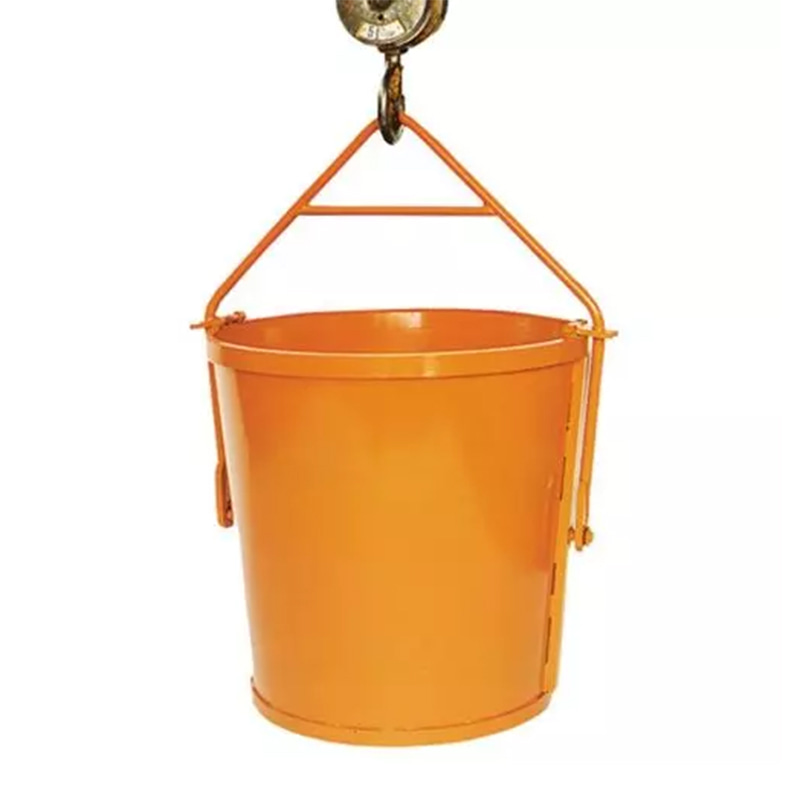
Where an overhead crane moves material, crane lift tipping skips hang from lifting lugs and carry waste across a factory or workshop bay to the tipping point. They are the choice for enclosed bays where a forklift cannot work.
Circular tipping skips
The circular tipping skips hang from a fold-down hanger with a safety lock, and once the lock is released by hand the skip tips under its own centre of gravity. They include the smallest sizes in the range, for workshops and production areas with modest volumes of waste.
Rotating skip bins
Rotating skip bins have integrated forklift pockets and are emptied by turning the whole bin over with a forklift fitted with a rotator attachment.
Self tipping or manual roll forward skips
A self tipping skip empties itself: when the forks tilt it past its tipping point it rolls forward, discharges and comes back upright, so one driver can tip it from the seat as often as the work needs. That suits busy yards, building sites and factory floors where the same skip goes back and forth many times in a shift.
A mechanically released roll forward skip, such as the heavy duty range, or a hanger skip such as the circular model, tips only when the release is operated, so the moment and the place of tipping stay under control. Choose a manual release where a second person works at the discharge point, where the skip empties into a hopper, bin or machine that needs a measured pour, or where an early tip would put people or plant at risk.
Sizing a forklift skip by load, top and mobility
Capacity and load rating
Capacities across the range run from 150 litres to 2400 litres, and rated loads rise with the size and duty of the skip. Dense loads such as rubble, concrete, swarf and scrap reach the rated load before the skip is full, so size the skip by weight for these and by volume for packaging, timber and other light waste. Check the combined weight of the skip and its full load against the truck's rated capacity at its load centre, because a longer skip moves the load centre forward and reduces what the truck can lift.
Lid, mesh extension or open top
An open top is the quickest to load from a shovel, a conveyor or an excavator bucket, and it suits dense waste that stays in place on the move. Light, loose waste such as shredded packaging and insulation offcuts travels better under a lid, especially across an open yard. Bulky light waste that would otherwise be stacked above the rim, such as cardboard, plastic wrap and timber, suits a mesh extension, which keeps it from dropping onto drivers and pedestrians on the way to the tipping point.
Castors and wheels
Castors or wheels suit a skip that is filled in one place and moved short distances by hand, between workstations, bays or plots, with a truck called only to empty it. The heavy duty roll forward skips can be fitted with wheels, and the telehandler skip on castors gives the same freedom on a site run by telehandler. Castor mounted skips move most easily on concrete floors and hardstanding, and on open ground the truck does the moving.
Tipping skips on sites, in workshops and in warehouses
Building sites and groundworks
On building sites and groundworks, tipping skips gather rubble, broken blocks, packaging and timber offcuts at the work face and carry them to the waste skips for collection. The route matters most: loaded skips travel over rough ground, ramps and temporary haul roads, so the load stays low on the forks until the truck reaches the tipping point. Separate tipping skips for timber, metal and mixed waste at the work face keep the main skips segregated, and segregated loads cost less to dispose of than mixed ones.
Factories and engineering workshops
In production, a skip waits at a machine or line and fills steadily, so the questions are how much floor space it can take and how often it must be changed. A spare empty skip at each station lets the operator swap a full one without stopping the machine.
Warehouses, yards and recycling
Warehouses produce mostly light, bulky waste: pallet wrap, cardboard, strapping and broken pallets. The double door dumping hopper holds two waste streams in separate compartments, so each can be tipped into its own larger waste skip or container.
Popular Categories

Wheelie Bins
View Products >

Skips for Sale
View Products >

Spill Kits
View Products >
Frequently Asked Questions
Yes. Tipper skip, tipping skip, tip skip, forklift skip, tipping bucket and roll forward skip are all names for a steel container that a truck lifts and tips to empty. A teleskip is the same idea built to lock onto a telehandler, and a swarf bin is a small tipping skip used beside machine tools.
Tipping skips take loose, solid waste and materials: rubble, broken blocks, soil, timber offcuts, packaging, scrap metal, swarf and production by-products. Dense materials are limited by the skip's rated load and light materials by its volume.
Yes. The truck lifts the tipping skip above the side of the waste skip, positions it over the opening and tips, so the lift height of the forklift or telehandler has to clear the side with the tipping skip still level. A telehandler reaches over the side of larger waste skips that a forklift cannot clear.
Before each use, check that the fork pockets, body and base are free of cracks and distortion, that the locking or release mechanism works and that the load is within the skip's rated load. The forks go fully into the pockets, and on auto lock skips the driver confirms the lock has engaged before lifting. The Safety, Health and Welfare at Work (General Application) Regulations 2007 cover the examination of lifting equipment, and the trucks, cranes and lifting gear used with tipping skips belong in the site's examination records.
A tipping skip needs clear space in front of it to roll forward and discharge, and headroom above the raised forks. Tip on firm, level ground with the truck stationary, and keep pedestrians out of the area in front of the skip until it is upright and lowered.
Yes. Most of the range comes in a choice of colours, so a site can give each waste stream its own colour, for example one for timber, one for metal and one for general waste. The code is the site's own, so it needs a sign at each skip and a mention at site induction.
Ratings rise with size and duty: the heavy duty roll forward skips are rated from 1000 kg to 2000 kg, and the larger rotating skip bin at 3000 kg. Dense loads such as rubble and scrap reach the rating before the skip is full, and the truck must also be rated for the skip and its load at the load centre.